
Tamal Dey - A Framework for Topological Summarization
Explore topological summarization frameworks, covering concepts like nerve complexes, multiscale mapper, persistence diagrams, and stability in hierarchical covers. Gain insights into advanced computational topology techniques.
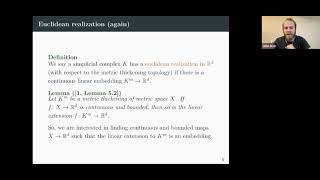
Johnathan Bush - Maps of Čech and Vietoris–Rips Complexes into Euclidean Spaces
Explore simplex-preserving maps in Čech and Vietoris–Rips complexes, their applications, and the challenge of finding such maps from various domains to Euclidean spaces.
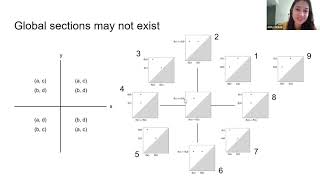
Persistence Diagram Bundles- A Multidimensional Generalization of Vineyards
Explore persistence diagram bundles, a multidimensional generalization of vineyards for analyzing topological changes in data sets with multiple parameters, including computation methods and potential applications.

New Results in Computing Zigzag and Multiparameter Persistence
Explore new advancements in computing zigzag and multiparameter persistence, including efficient conversion methods and improved algorithms for 2-parameter persistence modules.
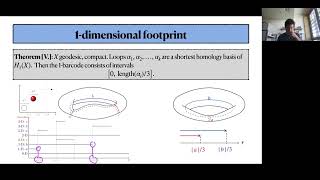
Žiga Virk - Information Encoded in Persistence Diagrams
Explore topological data analysis through persistence diagrams, uncovering spatial properties like homology, geodesics, and proximity in various mathematical contexts.
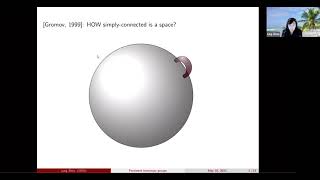
Persistent Homotopy Groups of Metric Spaces
Explore persistent homotopy groups of metric spaces, their stability, and advantages over persistent homology. Learn about tree-like structures and ultrametrics in fundamental groups.
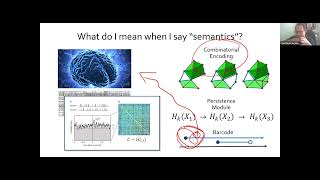
An Approach to Assigning Semantics to Persistent Homology Classes
Explore a novel approach to interpreting persistent homology classes in applied settings, overcoming traditional limitations by leveraging comparative measurements against known models.
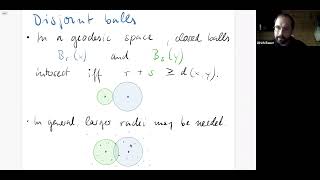
Ulrich Bauer - Gromov Hyperbolicity, Geodesic Defect, and Apparent Pairs in Rips Filtrations
Explore Gromov hyperbolicity, geodesic defect, and apparent pairs in Rips filtrations, extending Rips' results on contractibility and examining computational implications for persistent homology.
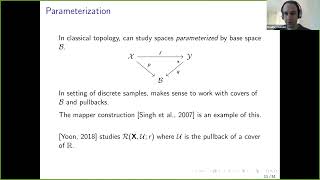
Bradley Nelson: Parameterized Vietoris-Rips Filtrations via Covers
Explore computational topology techniques for large filtered geometric complexes, focusing on Vietoris-Rips filtrations and cover-based methods for parallel computation and compression.
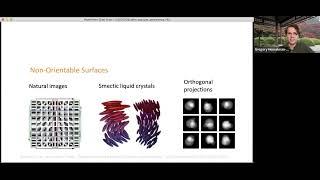
Saecular Persistence
Explore saecular persistence, a method to decompose persistence modules with non-field coefficients. Learn about applications in topology, generalized persistence diagrams, and scientific data analysis.
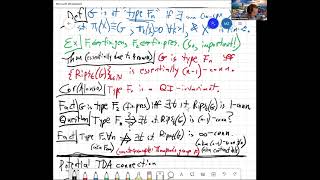
Vietoris-Rips Complexes and Geometric Group Theory
Explore Vietoris-Rips complexes in geometric group theory, focusing on topological finiteness properties, hyperbolic groups, and recent developments in Morse theory and persistent homology.
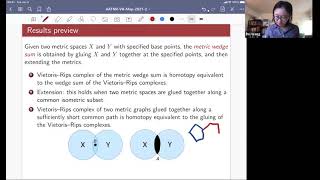
Homotopy Types of Vietoris–Rips Complexes of Metric Gluings
Explore homotopy types of Vietoris-Rips complexes in metric wedge sums and gluings, with applications to persistent homology of metric graphs and insights into open research directions.
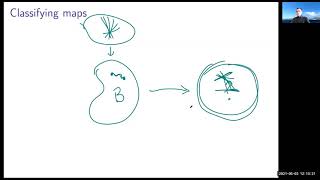
Approximate and Discrete Vector Bundles
Explore synchronization problems and dimensionality reduction through vector bundles. Learn how characteristic classes provide insights into global synchronization and data analysis challenges.
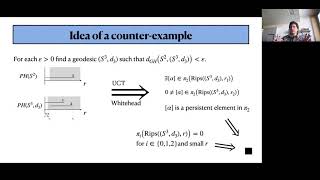
A Counter-Example to Hausmann's Conjecture
Explore a counter-example to Hausmann's conjecture on Vietoris-Rips complexes, challenging long-held beliefs in algebraic topology using persistent homology.
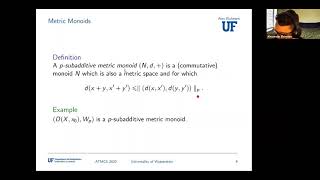
Universality of Persistence Diagrams and Bottleneck & Wasserstein Distances
Explore the mathematical foundations of persistence diagrams and their associated metrics, focusing on universality properties and distance calculations in topological data analysis.
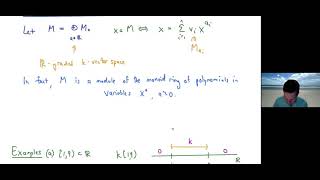
Homological Algebra for Persistence Modules
Introduction to persistence modules in algebraic topology, exploring tensor products, Hom operations, and their role in homological algebra. Insights into preserving exact sequences and advanced concepts.
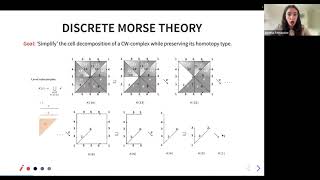
Morse Theory for Group Presentations and the Persistent Fundamental Group
Discrete Morse theory refinement for CW-complexes, with applications in combinatorial group theory and topological data analysis, including persistent fundamental group computation.
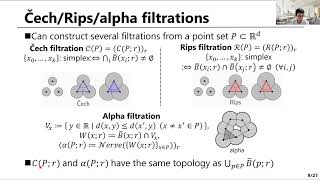
RipsNet- Fast and Robust Estimation of Persistent Homology for Point Clouds
Estimating persistence diagrams of point clouds using neural networks for faster, more robust topological analysis. Overcomes computational complexity and sensitivity to outliers in practical applications.
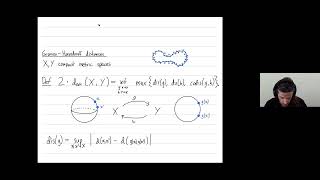
Gromov-Hausdorff Distances, Borsuk-Ulam Theorems, and Vietoris-Rips Complexes
Explore Gromov-Hausdorff distances, Borsuk-Ulam theorems, and Vietoris-Rips complexes in geometry. Learn about recent advancements in lower bounding distances between spheres using innovative mathematical techniques.
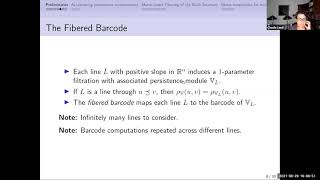
Discrete Morse Theory Meets Multi-Parameter Persistence
Exploring connections between discrete Morse theory and multiparameter persistence in topological data analysis, focusing on critical cells, fibered rank invariant, and computational efficiency.
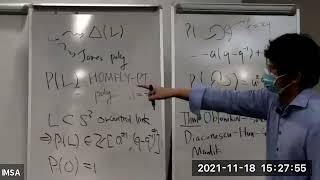
Hilbert Schemes of Plane Curve Singularities and Matrix Factorizations
Explore connections between algebraic geometry and topology through plane curve singularities, Hilbert schemes, and matrix factorizations in this advanced mathematics lecture.