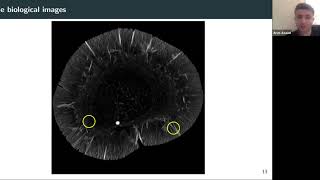
Peter Bubenik - Topological Data Analysis for Biological Images
Explore topological data analysis for biological images, combining persistent homology with machine learning to classify cell structures and analyze various image types.

An Introduction to the Topology ToolKit
Comprehensive introduction to the Topology ToolKit (TTK) for topological data analysis and visualization, covering usage in ParaView and Python, advanced features, and resources for further learning.
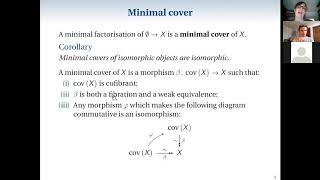
Invariants for Tame Parametrised Chain Complexes
Explore invariants for tame parametrised chain complexes in applied algebraic topology, focusing on explicit constructions, comprehensive frameworks, and discriminative power in topological data analysis.
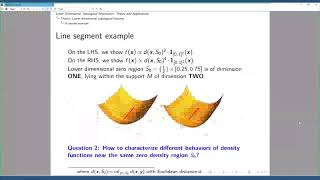
Lower Dimensional Topological Information: Theory and Applications
Explore lower dimensional topological features in data analysis, covering detection methods, theoretical foundations, and applications in image segmentation using topological and statistical approaches.
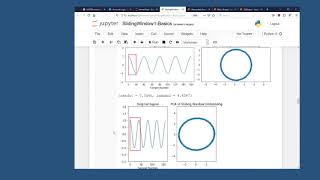
TDALabs - Some of TDA's Greatest Hits in Interactive Python
Interactive exploration of TDA's key applications using Python, covering time series analysis, image processing, 3D shape clustering, and more. Hands-on examples showcase TDA's versatility and practical uses.
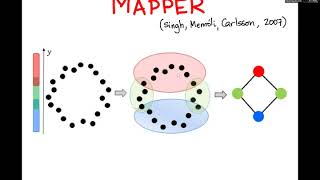
An Introduction to Mapper
Explore Mapper, a topological data analysis technique for visualizing complex datasets. Learn its principles, applications, and how it reveals hidden structures through clustering and graph representation.
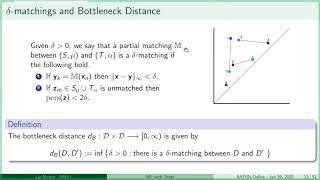
Liz Munch - Featurization of Persistence Diagrams Using Template Functions for ML Tasks
Explore topological data analysis and persistence diagrams for machine learning, focusing on featurization techniques using template functions to map complex data into Euclidean space.
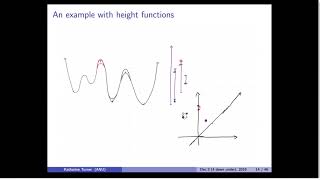
Why Should Q=P in the Wasserstein Distance Between Persistence Diagrams?
Explore Wasserstein distance in persistence diagrams, focusing on q=p choice. Covers geometric implications, stability results, algebraic versions, and computational advantages for central tendencies.
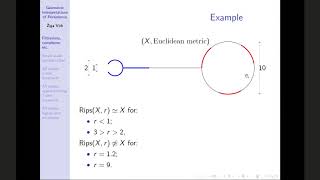
Geometric Interpretation of Persistence
Explore geometric interpretations of persistence in algebraic topology, covering space reconstruction, one-dimensional persistent homology classification, and detection of contractible geodesics using higher-dimensional features.
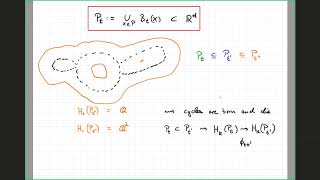
Limit Theorems in Topological Data Analysis
Explore limit theorems in topological data analysis, focusing on barcodes, persistence modules, and random persistence modules. Learn about convergence proofs and expectations for uniform distributions on compact submanifolds.
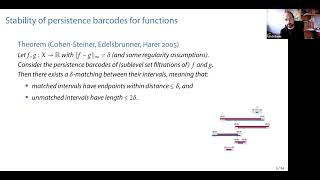
Persistence in Functional Topology
Explore functional topology's evolution, connecting persistent homology to critical point theory and calculus of variations. Gain insights into Morse's theory and its application to minimal surfaces.
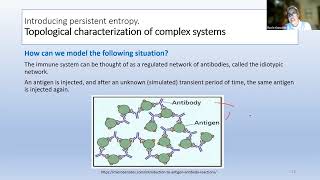
Persistent Entropy, a Tool for Topologically Summarizing Data
Explore persistent entropy as a tool for data summarization, covering its properties, stability, and diverse applications in emotion recognition, cell organization, and literary analysis.
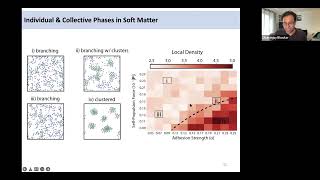
Data-Driven Modeling & TDA of Self-Organized Multicellular Architectures
Explore data-driven modeling and topological data analysis for classifying multicellular structures in cancer and embryonic development, focusing on cell motility and adhesion patterns.

Conversation on the Paper "Persistent Extension and Analogous Bars" by Yoon, Ghrist, Giusti
Explore persistent homology extensions and analogous bars in topological data analysis, discussing novel methods for comparing persistence barcodes and their applications in data science.
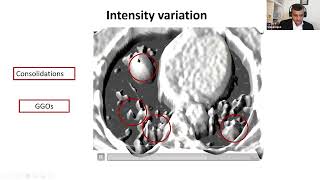
Classification of COVID-19 via Homology of CT-Scans
Explore topological data analysis for COVID-19 detection in CT scans, using persistent homology to quantify shape features and achieve high accuracy in classification.
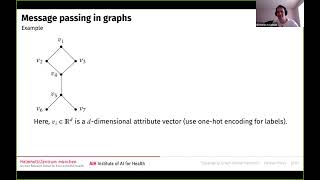
Bastian Rieck - Topological Graph Neural Networks
Explore topological data analysis in graph representation learning, focusing on novel techniques that incorporate topological features to enhance graph neural networks' expressivity and performance.
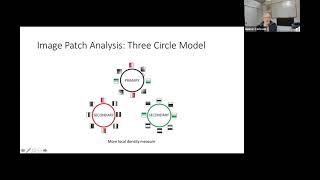
Gunnar Carlsson - Topological Deep Learning
Explore TDA-inspired approaches to deep learning, addressing issues like data hunger and generalization. Discover topological methods for building neural networks and analyzing weight spaces across various datasets.
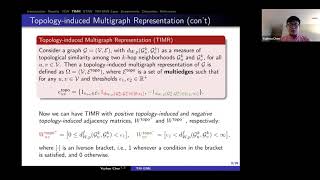
Topological Relational Learning on Graphs
Explore topological relational learning on graphs, enhancing graph neural networks with higher-order information and local structure learning for improved classification and robustness to perturbations.
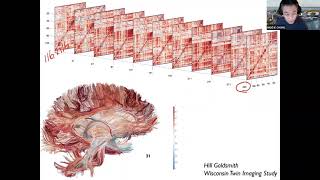
Topological Learning and Its Application to Multimodal Brain Network Integration
Explore topological learning for integrating multimodal brain networks, focusing on a novel framework using persistent homology and Wasserstein distance-based loss for efficient computations in neuroimaging studies.
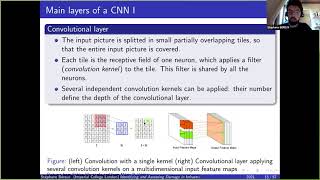
Identifying and Assessing Damage in Infrastructure Using Topological Data Analysis and Machine Learning
Innovative approach using topological data analysis and machine learning for low-cost, imaging-based concrete damage assessment in infrastructure, offering a potential alternative to expensive laboratory diagnostics.
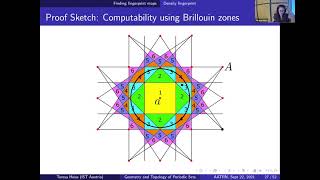
Geometry and Topology of Periodic Point Sets, for Example Crystals
Explore geometric and topological tools for characterizing crystalline materials, including Brillouin zones and persistent homology, and discuss challenges in defining persistent homology for periodic point sets.