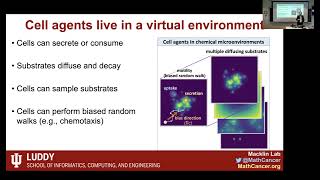
Progress and Next Steps in Agent-Based Modeling of the Hallmarks of Cancer
Explore advancements in agent-based modeling for cancer research, examining current progress and future directions in simulating cancer hallmarks and their interactions.
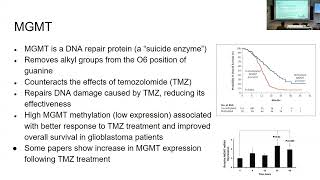
Mathematical Modelling of MGMT Dynamics in Glioblastoma - Influence of Methylation Status and Phenotypic Selection in Cell Death Resistance
Explore MGMT dynamics in glioblastoma through mathematical modeling, examining methylation status and phenotypic selection in cell death resistance.
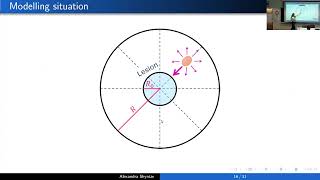
Mathematical Modelling of Microtube-Driven Regrowth of Glioma After Local Resection
Explore mathematical modeling of glioma regrowth post-resection, focusing on microtube-driven mechanisms and their impact on tumor recurrence and treatment strategies.
Identifiability of Causal Models and Applications to Perturb-Seq Data
Explore causal model identifiability, structure learning, and applications to Perturb-seq data. Delve into interventions, latent variables, and causal disentanglement for advancing AI in drug discovery.
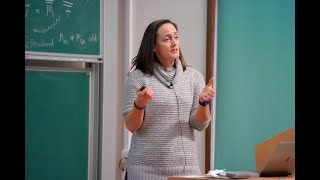
Data-Driven Modelling of Collective Cell Motility - Kirk Lecture
Explore data-driven modeling techniques for collective cell motility with Prof. Ruth Baker. Gain insights into interdisciplinary approaches in animal ecology and cell biology.
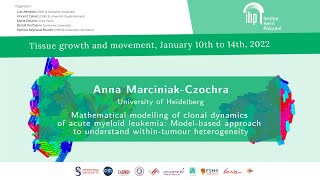
Mathematical Modelling of Clonal Dynamics of Acute Myeloid Leukemia: Model-Based Approach to Understand Within-Tumour Heterogeneity
Explore mathematical models of acute myeloid leukemia's clonal dynamics to understand tumor heterogeneity using a model-based approach.
Predictive Oncology Through Image-Based Mathematical Modeling
Explore image-based mathematical modeling for predictive oncology. Gain insights into cutting-edge techniques for cancer prognosis and treatment planning with Dr. Tom Yankeelov.
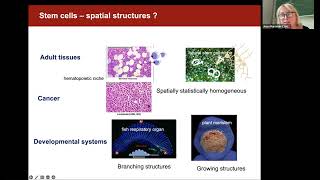
Mathematics of Stem Cells: Mechanistic Mathematical Modelling vs Single Cell Data Analysis
Explore mathematical approaches to stem cell research, comparing mechanistic modeling with single cell data analysis techniques.
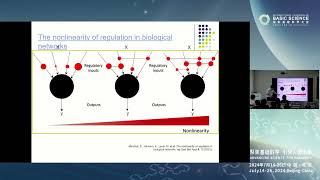
Quasi-Dynamic System Representation of Multiple Nonlinear Regression
Explore evolutionary game theory and allometric scaling to model nonlinear relationships between variables, overcoming limitations of linear regression for complex systems analysis.
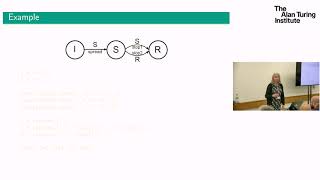
Integrating Inference with Stochastic Process Algebra Models - Jane Hillston, Edinburgh
Explore probabilistic programming for continuous-time systems using ProPPA, an extension of Bio-PEPA. Learn parameter inference methods and applications in biology, ecology, and urban transport.

Embracing Complexity: Integrating Data for Predictive Disease Models
Explore how supercomputing and biology integration revolutionizes disease research, breaking linear thinking to uncover complex pathways and innovative treatments.

The Cell Programming Revolution – With Mark Kotter
Neurosurgeon Mark Kotter explores breakthroughs in cell therapy, discussing genetic reprogramming, its potential to revolutionize medicine, and the collaborative effort needed across scientific disciplines to unlock cellular "operating systems."
Dynamical Systems Biology of Cancer Metastasis by Mohit Kumar Jolly
Explore cancer metastasis through systems biology, focusing on EMT/MET processes, hybrid cell states, and their clinical implications. Gain insights into cellular plasticity and tumor progression mechanisms.

Chemical Reaction Networks - Lecture 1
Explore stochastic chemical reaction networks, their examples, definitions, and the deficiency zero theorem in this comprehensive lecture on statistical physics of complex systems.

Future of Biological Physics - Key Questions and Challenges for the Next Decade
Exploring key scientific questions in biological physics for the next decade, including organism problem-solving, information processing, and emergence of macroscopic functions in living systems.
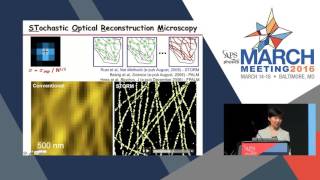
Illuminating Biology at the Nanoscale with Single-Molecule and Super-Resolution Fluorescence Microscopy
Explore super-resolution fluorescence microscopy techniques like STORM and MERFISH, enabling nanoscale imaging of cellular structures and RNA quantification for groundbreaking biological discoveries.
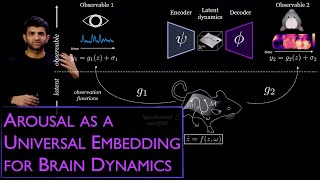
Arousal as a Universal Embedding for Spatiotemporal Brain Dynamics
Exploring how arousal dynamics can reconstruct and model diverse brain measurements, integrating neuronal, metabolic, and behavioral data into a unified framework for understanding brain-wide physiology.
Using Dynamics to Constrain Connectivity of Neuronal Population in Respiratory Brainstem
Explores models of neuronal connectivity in respiratory brainstem, focusing on synchronized bursting activity and network architecture insights using multi-state bootstrap percolation.
What Do We Want to Know and How Will a Connectome Help Us Know It?
Explore the potential of connectome analysis in neuroscience with Gwyneth Card, discussing its applications, limitations, and future directions in understanding brain function and behavior.
Design and Dynamics of Biological Networks - The Case of Cancer Progression - Lecture 2
Explore biological network dynamics and design, focusing on specific case studies. Gain insights into complex systems and their applications in theoretical approaches to cancer research.
A Systems Analysis of Temozolomide Response in a Model Glioblastoma Cell-line
Explore systems analysis of temozolomide response in glioblastoma, uncovering insights into cancer treatment through advanced modeling and data interpretation techniques.