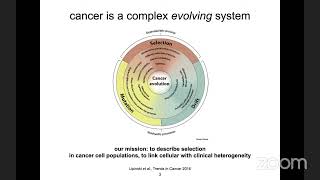
How Diversity Indices Help Understand Cancer Ecology and Evolution
Explore diversity indices and entropy to gain insights into cancer ecology and evolution, enhancing understanding of tumor dynamics and progression.
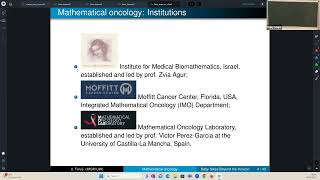
Mathematical Oncology: Insights into Cancer Treatment from a Mathematical Perspective
Explore mathematical models for cancer treatment, gaining insights into tumor growth, drug delivery, and therapeutic strategies from a quantitative perspective.

Setting the Stage with Networks and Network Dynamics
Explore fundamental concepts in network science and dynamics, including various network types and their applications in connectome analysis, with interactive discussions and project formulation.
From Genomes to Life: Computing Cell Phenotypes Using Biochemical Network Reconstruction
Explore computational approaches to predict cell phenotypes from genomic data using biochemical network reconstruction, advancing our understanding of cellular behavior and disease mechanisms.
Computational Cancer Biology: An Expedition Towards Precision Oncology
Explore computational approaches in cancer research, from mathematical modeling to machine learning, aimed at understanding disease progression and developing precision treatments.
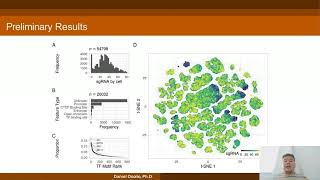
Systematic Characterization of Gene Regulatory Networks Rewiring Patterns Mediated by Non-Coding Regions
Explore gene regulatory network rewiring patterns through innovative experimental methods and computational approaches for characterizing effects of perturbations at single-cell level.
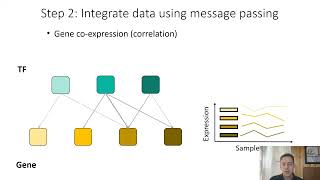
Developing Disease Insights with Genotype-Specific Regulatory Networks
Explore a new method for estimating genetic variant effects on transcription factor regulatory events, integrating diverse omics data to build interpretable regulatory networks for disease insights.
Why Networks Matter: Embracing Biological Complexity
Explore how genetic regulatory networks provide insights into health, disease, and potential therapies through examples from large-scale genomic datasets.
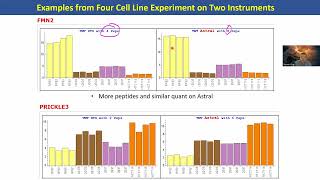
Targeted Pathway Proteomics Using TMT and Real-Time Analytics to Create GoDig Assays
Explore targeted pathway proteomics using TMT and real-time analytics for GoDig assays. Learn innovative techniques for hypothesis-driven research in systems biology.
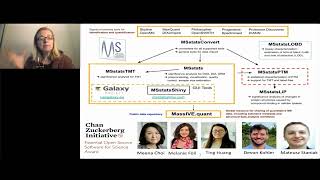
Multilevel Statistical Modeling for Proteomic Experiments With Complex Designs and Isobaric Labeling
Learn advanced statistical modeling techniques for complex proteomic experiments using isobaric labeling, focusing on multilevel designs and time-series data analysis.
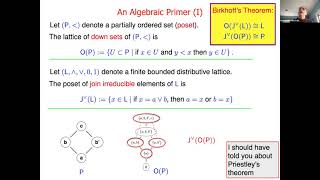
Nonlinear Dynamics in an Age of Heuristic Science
Explore nonlinear dynamics through combinatorial topology, offering efficient computational methods and new perspectives for multiscale systems and data-driven science in biology and engineering.
The Mathematics of Life - Making Diffusion Your Friend
Explore how diffusion processes in biology can be modeled mathematically, with insights from a leading expert in mathematical biology and biophysics.

Immunology for Mathematicians
Explore mathematical approaches to immunology, including modeling immune responses and viral dynamics, in this lecture by renowned researcher Alan S. Perelson from Los Alamos National Laboratory.
Understanding Tumour Responses to Radiotherapy Using Mathematical Models - Lecture 2
Explores mathematical modeling of tumor responses to radiotherapy, focusing on theoretical approaches to understand and predict treatment outcomes in cancer progression.
Mathematical and Computational Modelling to Explore Various Potential Cancer Treatments
Explore mathematical and computational modeling approaches for cancer research, covering topics from age-structured populations to machine learning techniques for understanding disease progression and treatment.
Structural and Stochastic Modeling to Study the Dynamics of Tumor-Immune Interactions
Explore structural and stochastic modeling techniques to analyze tumor-immune interactions, enhancing understanding of cancer dynamics and potential treatment strategies.
Using Mathematical Approaches to Describe and Understand Cancer
Explore mathematical modeling in cancer research, covering population dynamics, systems biology, and machine learning to enhance understanding and treatment of this complex disease.
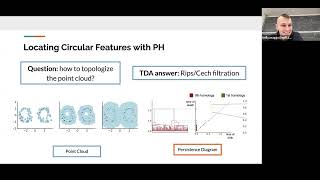
Cohomology Classes in the RNA Transcriptome
Explore how cohomology classes in single-cell sequencing data can model transient biological processes, using persistent cohomology and differential forms to infer gene expression dynamics.
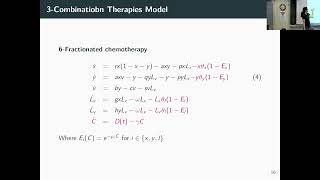
Comparing Combination Therapies with Oncolytic Viruses in a Simple Mathematical Framework
Explore mathematical models for comparing combination cancer therapies using oncolytic viruses, examining their effectiveness and potential outcomes in treatment strategies.
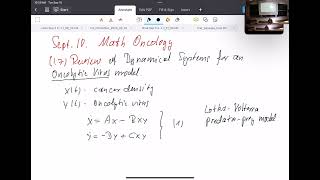
Nondimensionalization and Biochemical Reaction Networks in Mathematical Oncology
Explore nondimensionalization and biochemical reaction networks in mathematical oncology, enhancing your understanding of complex biological systems and their analysis.
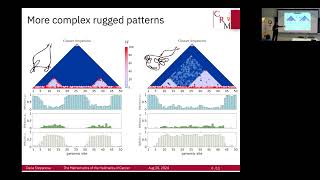
Modelling the Erosion of Epigenetic Landscapes in Cancer and Ageing
Explore mathematical models of epigenetic landscapes in cancer and aging, focusing on erosion processes and their implications for disease progression and cellular behavior.