Police Chase Simulation with Obstacles - Episode 7
Explore a physics simulation of a police chase with random obstacles, analyzing motion, probability, and decision-making using Scilab programming.
The Coulomb Cube: Estimating Charge in Grains of Sand - Back of the Envelope 0
Explore the fascinating calculation of sand grains needed to create a Coulomb of charge, guided by physicist Bree Barnett Dreyfuss in this engaging and educational discussion.

Giorgio Parisi and Team Discuss the Configuration of Jammed Packings
Nobel Laureate Giorgio Parisi and team discuss long-range correlations in jammed packings, revealing insights into the structure and behavior of three-dimensional systems of hard spheres at jamming.
Critical Phenomena Through the Lens of the Ising Model by Hugo Duminil-Copin
Explore critical phenomena in the Ising model, a powerful tool for understanding cooperative phenomena in statistical physics, with insights on recent progress in three and four dimensions.
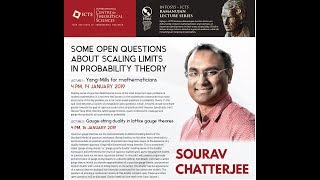
Yang-Mills for Mathematicians by Sourav Chatterjee
Exploration of Yang-Mills theories, lattice gauge theories, quark confinement, mass gap, and gauge-string duality as probabilistic problems in quantum field theory construction.
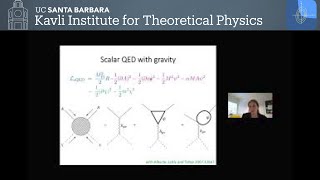
Causality and Positivity with Gravity - Claudia de Rham
Explores causality and positivity in gravitational theories, examining effective field theory bounds, scalar QED, and the interplay between gravity and quantum field theory concepts.
Thermal Dark Energy and Other String Candidates - Susha Parameswaran - EFTBounds
Explores string theory's implications for low-energy physics, focusing on thermal dark energy and other string candidates. Discusses swampland program, Weak Gravity Conjecture, and connections to particle phenomenology.
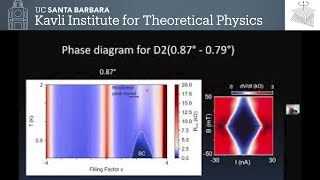
Superconductivity, Correlations and Chern Insulators in Twisted Bilayer Graphene - Stevan Nadj-Perge
Explore superconductivity, correlations, and Chern insulators in twisted bilayer graphene, focusing on recent developments and experimental findings in Moiré materials physics.
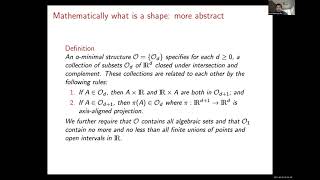
Modeling Shapes and Fields - A Sheaf Theoretic Perspective
Explore topological transforms for shape and field modeling, including Euler Characteristic and Lifted Euler Characteristic. Learn about sheaf theory in shape space construction and its applications in statistical analysis.
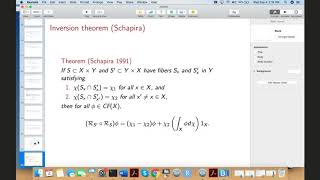
A Fiber Bundle Theory for Shapes
Explore fiber bundle applications in probabilistic modeling for shapes and surfaces, focusing on regression, variable selection, and Gaussian processes in evolutionary biology and biomedicine.
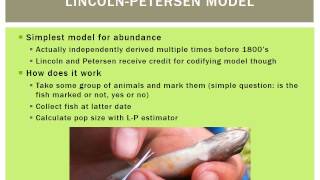
Introduction to Mark-Recapture Studies and Closed Population Models
Learn about mark-recapture models and closed population studies, including Lincoln-Petersen and Schnabel estimators, to understand wildlife population dynamics and estimation techniques.
Statistical Physics and Computation in High Dimension
Explore probability, geometry, and computation in high dimensions through statistical physics, focusing on key concepts and applications in complex systems analysis.
Uncertainty-Aware Machine Learning Models of Many-Body Atomic Interactions
Explore symmetry-aware machine learning models for atomic interactions, focusing on E(3)-equivariant neural potentials and Bayesian force fields for improved accuracy in materials modeling.
Nonequilibrium Response Theory - Lecture 1
Explore nonequilibrium response theory, covering fluctuations, linear response, and the fluctuation-dissipation theorem. Gain insights into equilibrium and dynamic responses in statistical physics.
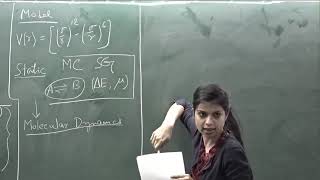
Surface Critical Dynamics and Casimir Forces in a Binary Fluid by Sutapa Roy
Explore critical dynamics and Casimir forces in binary fluids through molecular dynamics simulations, focusing on surface properties, scaling behavior, and correlation functions in confined fluid systems.
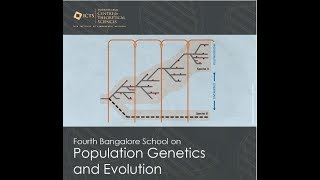
Drift, Inbreeding, and Ne
Explore genetic drift, inbreeding, and effective population size through probability theory, distributions, and evolutionary concepts. Gain insights into population genetics and its applications in evolutionary biology.
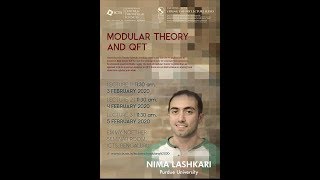
Modular Theory and Quantum Field Theory - Lecture 1
Explore modular theory in quantum field theory, covering observables, operators, and superselection sectors. Gain insights into correlation functions and state sewing in QFT.
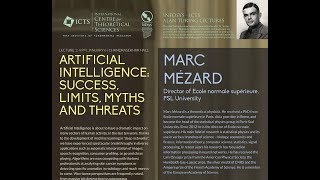
Statistical Physics and Statistical Inference - Lecture 2
Explore statistical physics and inference, covering Bayesian methods, error correction, spin glasses, and advanced algorithms like belief propagation. Gain insights into phase transitions and applications in machine learning.
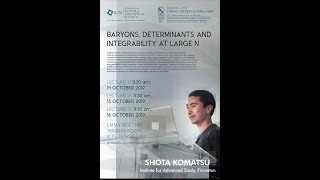
Baryons, Determinants and Integrability at Large N - Lecture 1
Explore baryonic and determinant operators in large N gauge theories, their relation to D-branes, and new approaches for computing correlation functions using emergent semi-classical descriptions and integrability.
Cosmology - Back to the Future - Lecture 1
Explore fundamental concepts in cosmology, including quantum mechanics, wave functions, and correlation functions. Delve into inflation theory and particle physics applications in understanding the universe's origins.
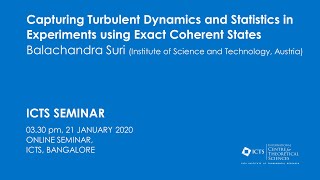
Capturing Turbulent Dynamics and Statistics in Experiments Using Exact Coherent States
Explore turbulent dynamics using Exact Coherent States, revealing coherent structures in experiments, forecasting turbulent evolution, and providing a geometric description of transient turbulence.