Choosing the Right Static Code Analyzers Based on Hard Data
Learn to select effective static code analyzers using data-driven insights, exploring tool capabilities, integration, coverage, and result quality for improved software security.

Strangling the Monolith - Applied Patterns & Practices from the Trenches
Practical strategies for incrementally modernizing legacy systems, focusing on the strangler pattern, domain-driven design, and team topologies to evolve towards a reactive architecture.
Hacking the DevOps Butler - From Nothing to Admin
Explore Jenkins vulnerabilities and exploitation techniques, focusing on two critical flaws that allow unauthenticated attackers to gain admin access and control entire infrastructures.

OTRazor - Static Code Analysis for Vulnerability Discovery in Industrial Automation Scripts
Explore industrial robot programming security, focusing on vulnerabilities in automation scripts. Learn about a static code analyzer for detecting unsafe patterns and discuss mitigation strategies.
Discover Vulnerabilities with CodeQL
Explore CodeQL's static and taint analysis capabilities to uncover vulnerabilities, including potential RCE flaws. Learn key concepts for effective code analysis and security testing.
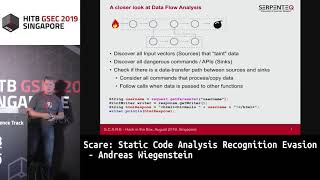
Scare - Static Code Analysis Recognition Evasion
Explore techniques to evade static code analysis tools, including covert data flow, deep call stacks, and taint laundering. Learn how malicious code can be camouflaged to avoid detection.

Static Code Analysis - Judging a Forest by Its Trees
Explore tools for automated code reviews, best practices, and dependency visualization to enhance code quality and maintainability in PHP projects.

Protect Your Code with GitHub Security Features
Learn to protect your code using GitHub's security features, including signed commits, Dependabot, vulnerability scanning, secret detection, and CodeQL for comprehensive software security.

What Can We Learn from 750 Billion GitHub Events and 42 TB of Code
Explore insights from GitHub's vast dataset, including coding patterns, project design, community health, and static code analysis, to enhance software development practices.
Controlling Technical Debt With Continuous Delivery
Learn to manage technical debt using continuous delivery, focusing on automated pipelines for static code analysis and fixing in Java projects with Fabric8 and Jenkins.

What Can We Learn from 750 Billion GitHub Events and 42 TB of Code
Explore GitHub's vast dataset to gain insights on coding patterns, project design, community dynamics, and effective collaboration in open-source development.

Static Code Analysis - A Behind-the-scenes Look
Explore the inner workings of static code analysis tools, their challenges, and techniques used to analyze program code, including abstract syntax trees, byte code, flow tracking, and handling complex scenarios.
Bug Hunting with Static Code Analysis
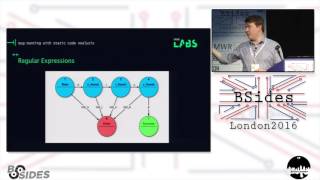
Explore automated techniques for identifying security flaws in source code, from simple scripts to advanced analyzers, and learn to integrate them into continuous integration systems for early bug detection.

CodeQL - Also a Powerful Binary Analysis Engine
Unveiling CodeQL's potential as a binary static analysis tool, exploring its engine capabilities and applications beyond traditional static analysis for enhanced software security.
Applying the Toyota Production System - TPS - Lean - to Software Engineering - A Static Code Analysis Example
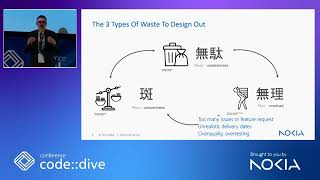
Explore how Toyota Production System principles can enhance software quality and developer productivity through static code analysis techniques.
So Hopelessly Broken - The Implications of Pervasive Vulnerabilities in SOHO Routers
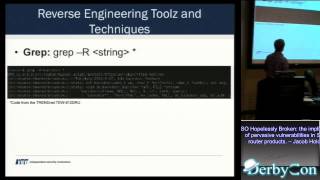
Explore vulnerabilities in SOHO routers, covering security risks, testing methods, and exploit development. Learn about command injection, directory traversal, and buffer overflows with live demonstrations.
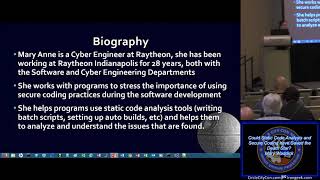
Could Static Code Analysis and Secure Coding Have Saved the Death Star
Explore how static code analysis and secure coding practices could have prevented the Death Star's destruction, using Star Wars as a fun analogy for cybersecurity principles.
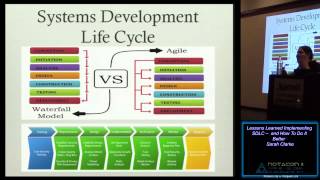
Lessons Learned Implementing SDLC and How To Do It Better
Insights on implementing SDLC effectively, covering management buy-in, security awareness, threat modeling, code review, and testing for better software development practices.
Improving the Security of Your Code with Free Analysis Tools
Explore free static and dynamic analysis tools to enhance code security. Learn when and how to use these tools in development to reduce vulnerabilities and produce more secure software.
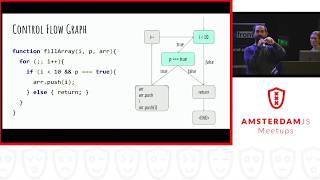
SonarJS - How to Build a Static Code Analyzer
Explore SonarJS for bug prevention, learn about code analyzer construction, and discover how static analysis integrates into development workflows for improved code quality.
Implementing Innovations in a Safe and Secure Way
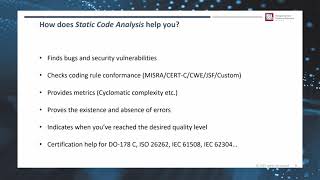
Explore automated static code analysis for software safety and security. Learn to prove absence of runtime errors using formal methods and tools like Polyspace for exhaustive testing.