Efficient Exposure of Partial Failure Bugs in Distributed Systems with Inferred Abstract States
Introduces Legolas, a framework for exposing partial failure bugs in distributed systems using static analysis, code instrumentation, and abstract state inference for efficient fault injection testing.
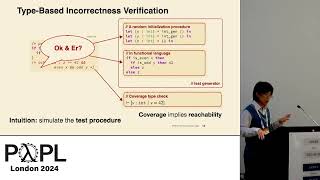
Type-Based Incorrectness Reasoning - Integrating Underapproximate Analysis in Refinement Types
Explore coverage types and their connection to Incorrectness Logic, integrating underapproximate reasoning within refinement type systems for enhanced program analysis and verification.
Inductive Program Synthesis via Iterative Forward-Backward Abstract Interpretation
Explore a novel approach to inductive program synthesis using iterative forward-backward abstract interpretation, enhancing search space pruning and improving synthesis efficiency.

Consolidating Smart Contracts with Behavioral Contracts
Explore ConSol, a Solidity extension enhancing smart contract reliability through behavioral contracts. Learn to express critical conditions, prevent attacks, and improve code robustness and readability.
Falcon: A Scalable Analytical Cache Model
Explore a scalable analytical cache model for affine programs, improving performance prediction efficiency and enabling faster optimization decisions in large-scale software development.

Measuring Configuration in Code - Risk Assessment and Metrics
Explore techniques for assessing configuration impact on code, including propagating complexity metrics and test coverage to configuration level, to mitigate outage risks and improve system reliability.
Towards a Language-parametric DSL for Refactoring - Short Paper
Explore a language-parametric DSL approach for refactoring, examining its potential to streamline code improvement across multiple programming languages.
Automated Verification - Session Preview
Explore automated verification techniques and advancements in program analysis with expert Viktor Kunčak at POPL'24's session preview.
Abstract Interpretation for Automatic Differentiation
Explore abstract interpretation for automatic differentiation, analyzing its application in machine learning, scientific computing, and graphics.

PreVice - Static Detection of Hooking Capabilities in Machine Code
Explore static analysis techniques for detecting hooking capabilities in Windows executables, including Detours, import, and syscall hooking, with insights from scanning millions of files.
Rattle - An Ethereum EVM Binary Analysis Framework
Explore Rattle, an innovative framework for analyzing Ethereum smart contracts, enhancing auditability and security in blockchain interactions through advanced binary analysis techniques.
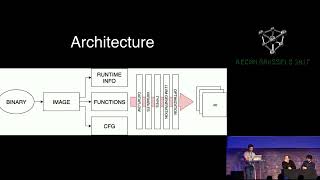
Analyzing iOS Apps - Road from AppStore to Security Analysis Report
Toolset for detecting vulnerabilities in iOS apps: download and decrypt, decompile, statically analyze, and present results. Focuses on high-level semantics reconstruction and common mobile app security flaws.
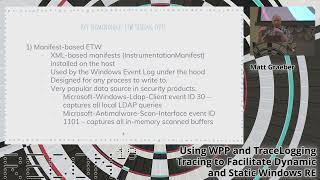
Using WPP and TraceLogging Tracing to Facilitate Dynamic and Static Windows
Explore advanced Windows tracing techniques using WPP and TraceLogging for enhanced dynamic and static analysis in cybersecurity investigations.

Unveiling the Underground World of Anti-Cheats
Explore the ongoing battle between cheat developers and anti-cheat technologies in gaming. Learn about bypassing techniques and tools for testing anti-cheat software effectiveness.
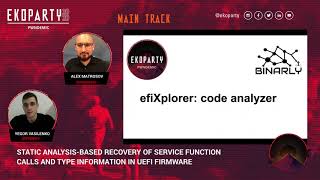
Static Analysis-Based Recovery of Service Function Calls in UEFI Firmware
Discover a new tool for automated recovery of service calls and EFI type info in UEFI firmware, simplifying vulnerability hunting and making firmware code resemble original source.
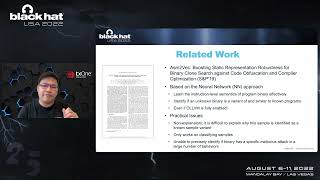
A New Trend for the Blue Team - Using a Symbolic Engine to Detect Evasive Forms of Malware - Ransomware
Explore symbolic engines for detecting evasive malware and ransomware, enhancing blue team capabilities in reverse engineering and threat analysis.
Intel ME - The Way of the Static Analysis
Explore static analysis techniques for Intel Management Engine, uncovering its inner workings and potential security implications through reverse engineering.
Invoke-DOSfuscation - Techniques for S-level CMD Obfuscation
Explore advanced CMD obfuscation techniques used by threat actors, including string manipulation and encoding methods. Learn about new obfuscation approaches and their detection implications for cybersecurity professionals.
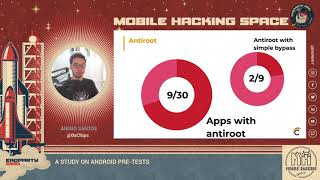
A Study on Android Pre-Tests - Mobile Hacking
Explore Android app security techniques like root detection, SSL pinning, and code obfuscation. Learn to bypass these measures using Frida and static analysis in this beginner-friendly talk on mobile app hacking.
Attack on Titan M, Reloaded - Vulnerability Research on a Modern Security Chip
Exploración de vulnerabilidades en el chip Titan M de Google, desde análisis estático hasta ejecución simbólica dinámica. Incluye demostración de explotación de CVE-2022-20233 para obtener ejecución de código.
Using Ancient Math to Speed Up Security Assessments of Windows Executables
Discover how to accelerate Windows executable security assessments using Euclidean Distance and Bayes Theorem, enabling rapid triage and efficient risk reduction in regulated environments.