
Qodana Code Analysis - From IDE to Quality Gates
Explore IntelliJ IDEA's code quality tools and Qodana platform for static analysis, quality gates, and project health monitoring. Learn integration techniques through live coding demonstrations.
Automatically Instrument Your Go Source Code with Orchestrion
Explore Orchestrion, an extensible tool for automatic Go code instrumentation. Learn about parsing, code analysis, distributed tracing, and using annotations for cross-cutting concerns.

React Testing Tutorial
Comprehensive guide to React testing, covering Jest, React Testing Library, TDD, queries, user interactions, mocking, and static analysis. Ideal for beginners seeking practical skills.

A Rails Server in Your Editor: Using Ruby LSP to Extract Runtime Information
Explore how Ruby LSP connects with Rails runtime to expose database, migration, and route information, enhancing developer productivity through advanced editor features.

Algorithmic Verification - Session Preview at POPL 2023
Explore algorithmic verification techniques and their applications in program analysis, presented by expert Umang Mathur at POPL 2023's innovative session preview track.

Synthesizing Precise Static Analyzers for Automatic Differentiation
Explore Pasado, a technique for synthesizing precise static analyzers for Automatic Differentiation, improving precision in nonlinear operations and demonstrating applications in various domains.

Type-Safe Dynamic Placement with First-Class Placed Values
Explore type-safe dynamic placement in distributed systems using first-class placed values. Learn about Dyno, a language enabling static reasoning with dynamic placement flexibility.

Pipelines and Beyond: Graph Types for ADTs with Futures
Explore a novel graph type system enabling arbitrary combinations of futures and recursive data types in parallel programming, enhancing pipelining and performance optimization techniques.
Targeted Static Analysis for OCaml C Stubs - Eliminating Gremlins from the Code
Explore a static analyzer for OCaml C bindings, addressing safety issues and aiding migration to OCaml 5. Learn about tools and techniques to improve code reliability.
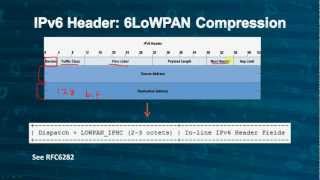
FlexibleIP - IPv6 Stack for Low-Power Devices Paper Presentation
Explore IPv6 stack optimization for low-power devices, covering cross-layer design, hardware acceleration, header compression, and implementation examples with performance analysis.
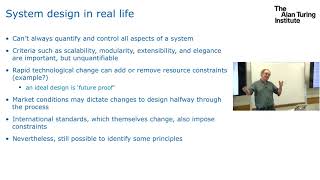
Systems and Security - Advanced
Explore advanced system architectures, performance optimization, and security concerns in layered systems. Learn debugging techniques and architectural strategies for addressing bottlenecks and vulnerabilities.
Prusti - Deductive Verification for Rust
Explore deductive verification techniques for Rust programs using Prusti, enhancing code reliability and correctness through formal methods.
HotBPF - On-demand and On-the-fly Memory Protection for the Linux Kernel
On-demand, on-the-fly Linux kernel memory protection mechanism: lightweight, hardware-independent, and deployable without rebooting. Enhances security during vulnerability disclosure to remediation window.
Securing Your Infrastructure as Code Pipeline
Explore techniques for securing Infrastructure as Code pipelines, including static analysis, RBAC, and open-source tools like Open Policy Agent and Sigstore, to enhance productivity and compliance.
SELint - An SELinux Policy Static Analysis Tool
Explore SELint, a static analysis tool for SELinux policies, addressing challenges and improving security through practical examples and insights.
Node.js Project CI/CD Pipeline - Docker Community All-Hands Replay
Explore CI/CD jobs for Node.js backend projects, covering static analysis, testing, and Docker image creation for production deployment.
Protect Containerized Applications with System Call Profiling
Explore system call profiling for containerized application security. Learn to develop accurate profiles, monitor runtime behavior, and detect anomalies with low performance overhead and false positives.
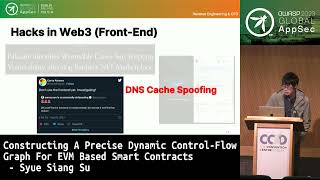
Constructing a Dynamic CFG for EVM-Based Smart Contracts
Explore dynamic control flow graph construction for Ethereum smart contracts, enhancing security analysis and vulnerability detection in blockchain applications.
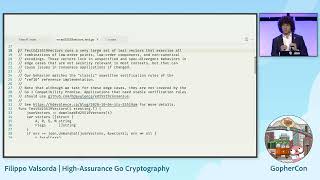
High-Assurance Go Cryptography - Ensuring Safety in Cryptographic Libraries
Explore techniques for ensuring safety and reliability in Go's cryptography standard library, including testing, fuzzing, and formal proofs.

What Are Types For, Or Are They Only Against? - Exploring Type Systems in Programming
Explore the purpose and benefits of types in programming, examining their role beyond just preventing errors, with insights into functional programming concepts and type theory.
Value Tracking in BPF Verifier
Explore value tracking techniques in BPF verifier, enhancing understanding of Linux kernel's security mechanisms and performance optimization strategies.