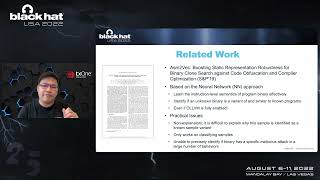
A New Trend for the Blue Team - Using a Symbolic Engine to Detect Evasive Forms of Malware - Ransomware
Explore symbolic engines for detecting evasive malware and ransomware, enhancing blue team capabilities in reverse engineering and threat analysis.
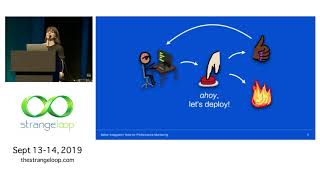
Better Integration Tests for Performance Monitoring
Discover how Slack built "Slerf" to detect and prevent performance regressions, improving product stability while maintaining high development velocity.

Behind the New York Times Crossword
Explore the tech behind The New York Times Crossword: serverless architecture, Go rewrite, traffic management, and innovation driving the popular puzzle from creation to solving.
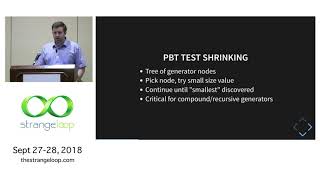
Browser Testing Using Grammars and a Consensus Oracle
Explore property-based testing for browser rendering using grammar-based generators and consensus oracles. Learn innovative techniques to identify and minimize failing test cases.
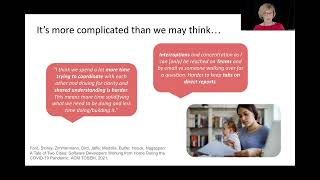
What Does 'Productivity' Actually Mean for Developers?
Explores the complex concept of developer productivity, challenging simplistic metrics and highlighting multifaceted factors that influence software engineering effectiveness.
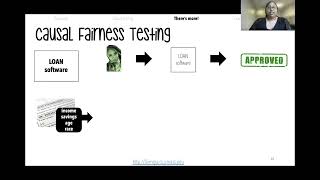
Causal Testing - Understanding the Root Causes of Defects
Explore causal testing techniques to trace software defects to their origins, enhancing fault detection and improving overall software quality and reliability.
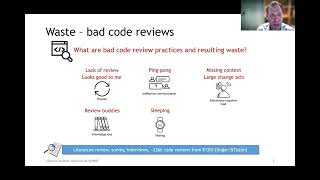
Value and Waste in Software Engineering
Explore sources of waste in software development, including bad code reviews and technical debt, and learn strategies to create value and reduce inefficiencies in the development process.

Challenges and Opportunities for Software Engineering in Papua New Guinea
Exploring software engineering in Papua New Guinea: regional challenges, opportunities, and lessons for global developers on considering local contexts in their work.

A Commerce-centric Approach to Queuing Fairly at High Throughput
Explore Shopify's evolution from edge-tier rate limiting to application-tier user queueing, enhancing fairness and UX during high-traffic events. Learn strategies for load testing and migrating throttling mechanisms.
Intel ME - The Way of the Static Analysis
Explore static analysis techniques for Intel Management Engine, uncovering its inner workings and potential security implications through reverse engineering.
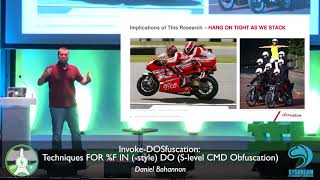
Invoke-DOSfuscation - Techniques for S-level CMD Obfuscation
Explore advanced CMD obfuscation techniques used by threat actors, including string manipulation and encoding methods. Learn about new obfuscation approaches and their detection implications for cybersecurity professionals.
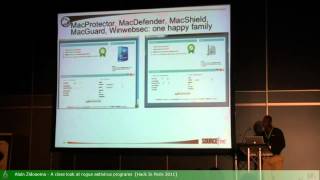
A Close Look at Rogue Antivirus Programs
Comprehensive analysis of rogue security software, examining characteristics, behavioral patterns, and potential benefits. Explores methods to differentiate from legitimate antivirus programs and investigates the financial aspects behind these products.

iPhone Hacking - Fuzzing and Payloads
Explore advanced iPhone hacking techniques, focusing on fuzzing methodologies and payload creation for exploiting vulnerabilities in iOS devices.
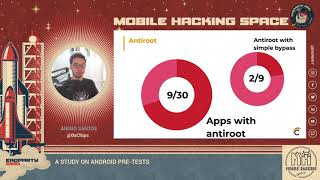
A Study on Android Pre-Tests - Mobile Hacking
Explore Android app security techniques like root detection, SSL pinning, and code obfuscation. Learn to bypass these measures using Frida and static analysis in this beginner-friendly talk on mobile app hacking.
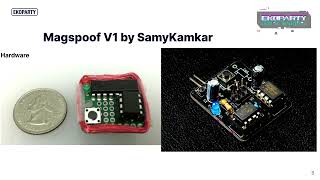
BomberCat Hardware Abierto para Pruebas a Terminales Bancarias
Desarrollo de BomberCat: hardware abierto para pruebas de terminales bancarias. Emula y lee tarjetas NFC y banda magnética, permite experimentos como relay de información y modificación de datos en tiempo real.
Attack on Titan M, Reloaded - Vulnerability Research on a Modern Security Chip
Exploración de vulnerabilidades en el chip Titan M de Google, desde análisis estático hasta ejecución simbólica dinámica. Incluye demostración de explotación de CVE-2022-20233 para obtener ejecución de código.

eBPF ELFs JMPing Through the Windows
Análisis pionero de vulnerabilidades en eBPF para Windows, explorando su diseño, superficie de ataque y descubrimiento de fallos mediante fuzzing y ingeniería inversa automatizada.

Not Yet Another Fuzzer
Explore NYAF, a multi-platform fuzzer using emulation and Generation Search algorithm for improved analysis of IOT devices, embedded systems, and firmware. Learn about its advantages in scalability and efficiency.

Raining CVEs on WordPress Plugins with Semgrep
Leveraging Semgrep to identify vulnerabilities in WordPress plugins, reducing false positives, and automating XSS validation. Includes demos on custom rule creation and the XSSBomb tool.
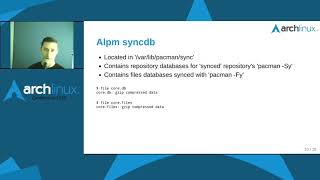
Pytest-Pacman - Generating Test Data for Libalpm with Python
Explore generating test data for libalpm using Python, focusing on creating local and sync databases for pyalpm testing without relying on pacman or internet fetching.

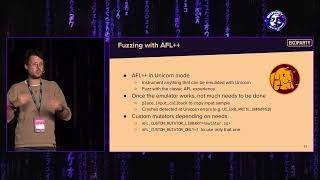
Emulate - Fuzz - Break Kernels
Introducción a la fuzzing de kernels usando unicorefuzz: emulación de CPU para encontrar bugs en parsers del kernel de forma simple y efectiva.