Android Rootkits - Analysis from Userland and Kernelland
Explore Android rootkit analysis using memory forensics, dynamic binary instrumentation, and machine learning for actionable threat intelligence in userland and kernelland.
Using Ancient Math to Speed Up Security Assessments of Windows Executables
Discover how to accelerate Windows executable security assessments using Euclidean Distance and Bayes Theorem, enabling rapid triage and efficient risk reduction in regulated environments.
Fuzzing Ruby and C Extensions
Explore fuzzing techniques for Ruby and C extensions, focusing on security implications and using AFL fuzzer to identify vulnerabilities in Ruby language and gems.

The SecDevOpronomicon - Arcane Secrets for Scaling Your Company’s Security
Uncover arcane secrets for scaling security efforts in fast-paced development environments. Learn high-value engineering techniques, custom analyses, and CI/CD pipeline integration to enhance SecDevOps practices.

Automating Web Application Bug Hunting
Discover techniques for automating web application vulnerability scanning to enhance bug bounty hunting and application security analysis efficiency.
Fuzzing Malware for Fun & Profit
Explore coverage-guided fuzzing to find vulnerabilities in malware, potentially stopping DDoS attacks and controlling botnets. Learn about netAFL tool and see real-world exploitation demos.
Collaborating to Improve Open Source Security - How the Ecosystem Is Stepping Up
Explore industry-wide efforts to enhance open source security, covering discovery, tools, and best practices for software producers and consumers.
Run-Time Tools to Aid Application Security Assessments
Explore runtime tracing tools and techniques for application security assessments, enhancing your ability to uncover vulnerabilities in real-world testing scenarios.
Sanitize, Fuzz, and Harden Your C++ Code
Explore dynamic testing tools for C/C++, including Sanitizers and libFuzzer, to find and prevent various bugs. Learn about security hardening techniques like Control Flow Integrity and Safe Stack.
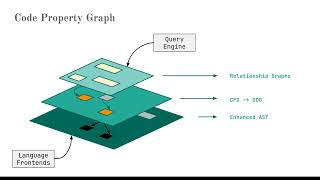
Building an Automated Machine for Discovering Privacy Violations at Scale
Exploring static analysis techniques for detecting and fixing privacy leaks in large codebases, addressing challenges in building privacy-focused tools for developers and privacy engineers.
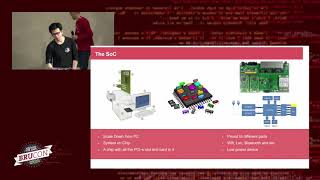
Finding 0days in Embedded Systems with Code Coverage Guided Fuzzing
Innovative fuzzing technique for embedded systems, overcoming challenges to discover critical vulnerabilities in network devices through emulation, dynamic binary instrumentation, and guided fuzzing.
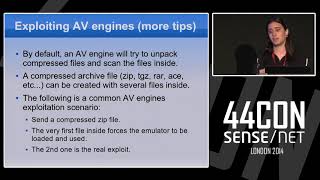
Breaking AV Software
Explore vulnerabilities in antivirus software, focusing on discovery and exploitation techniques. Learn about attack surfaces, fuzzing, and specific vulnerabilities in popular AV engines.
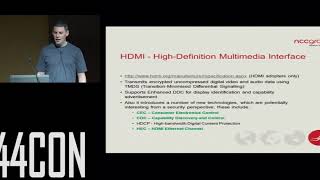
What the HEC - Security Implications of HDMI Ethernet Channel and Other Related Protocols
Explore security implications of HDMI protocols like CEC and HEC, including potential vulnerabilities and corporate risks. Includes demonstration of CEC security testing tool.
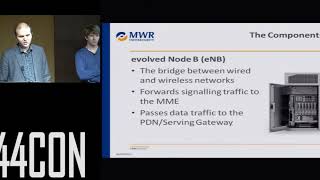
Security Testing 4G - LTE Networks
Explore 4G/LTE network security, potential vulnerabilities, and testing methods. Learn about LTE deployments, attack vectors, and strategies for securing these networks.

Exploits with Scratch
Explore network exploitation using Scratch programming language, extending its capabilities to create exploits and fuzz vulnerable services through custom TCP/IP function blocks.
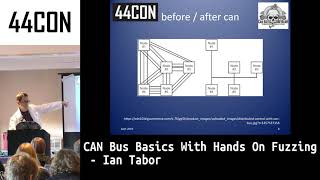
CAN Bus Basics With Hands On Fuzzing
Explore CAN bus fundamentals and hands-on fuzzing techniques for automotive systems, covering ECUs, attack surfaces, and practical demonstrations using various tools and setups.
Damn GraphQL - Attacking and Defending APIs
Explore GraphQL security: attack vectors, defense strategies, and hands-on learning with the Damn Vulnerable GraphQL Application. Gain insights into protecting this emerging API technology.
Stay Quantum Safe - Future-Proofing Encrypted Secrets
Explore quantum-safe cryptography's progress, standardization, and implementation in TLS, SSH, and VPN. Learn to future-proof encrypted data against potential quantum computer decryption.
What is Our Ethical Obligation to Ship Secure Code?
Explore ethical obligations in secure coding, data breaches, and developer responsibilities. Gain insights on improving security practices and addressing user privacy concerns.
Trick or Treat - Unveil the "Stratum" of the Mining Pools
Unveil mining pool strategies, identify Stratum servers, and explore cryptomining malware detection techniques through static and dynamic analysis, web scraping, and network scanning.
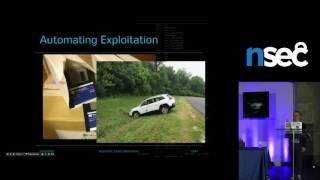
Practical Uses of Program Analysis - Automatic Exploit Generation
Explore automatic exploit generation through program analysis techniques, including instrumentation and symbolic execution, with practical demonstrations and tool insights.