
Counterexample Driven Quantifier Instantiations with Applications to Distributed Protocols
Explore a novel interactive verification methodology using relational abstraction to tackle quantifier reasoning challenges in infinite-state systems, with applications to distributed protocols.

Message Chains for Distributed System Verification
Explore an automated bookkeeping method using message chains to simplify verification of asynchronous distributed programs, revealing execution structure and aiding in system-level reasoning.

Resource-Aware Soundness for Big-Step Semantics
Explore resource-aware extensions to lambda calculus semantics and type systems, ensuring well-typed programs avoid resource exhaustion through coinductive reasoning and big-step formalization.

Deep Dive into Data Mesh Principles
Explore Data Mesh principles: domain ownership, data as product, self-serve platform, and federated governance for modern business success.

Little Things and Big Things - Lessons for Building Large Systems
Explore essential lessons for designing large-scale systems, covering crucial rules, buffer management, distributed system challenges, and effective strategies for maintaining system stability and performance.

Tackling Technical Debt at Adobe: A Story from Frame.io - Scaling for Enterprise Software Development
Discover strategies for managing technical debt, improving scalability, and integrating enterprise software. Learn from Frame.io's experience transitioning post-Adobe acquisition and enhancing their Elixir codebase.

The Unbearable Weight of Glue - Tackling Complexity in Software Development
Explore how type-safe functional programming exposes and tackles glue code complexity, with insights from Elm community projects and interactive audience participation.
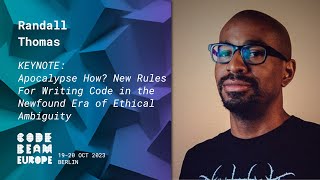
Apocalypse How? New Rules for Writing Code in the Era of Ethical Ambiguity
Explore ethical considerations in software development, examining the responsibility of engineers in creating tools with far-reaching impacts and potential unintended consequences.
FOLD-SE: An Efficient Rule-based Machine Learning Algorithm with Scalable Explainability
Explore FOLD-SE, an efficient rule-based ML algorithm for classification tasks, offering scalable explainability and competitive performance with state-of-the-art methods.
Cutting the Cake Into Crumbs: Verifying Envy-Free Cake-Cutting Protocols using Bounded Integer Arithmetic
Explore envy-free cake-cutting protocols verification using bounded integer arithmetic. Learn to reduce fairness checks to SAT instances for efficient protocol analysis.
NUMAlloc: A Faster NUMA Memory Allocator
Explore a novel memory allocator designed for NUMA architecture, offering improved performance and scalability for multithreaded applications through innovative memory management techniques.
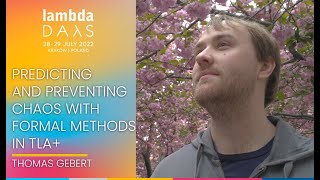
Predicting and Preventing Chaos with Formal Methods in TLA+ - Lambda Days 2022
Explore formal methods in TLA+ to predict and prevent chaos in distributed computing. Learn how to design robust systems beyond untestable whiteboard drawings and ad-hoc scripts.
A New Perspective on Commutativity in Verification
Explore a fresh perspective on commutativity in program proofs, focusing on its application in automated verification goals for various program types and properties.
Internalizing Indistinguishability with Dependent Types
Explore a novel type system combining dependency tracking and dependent types, internalizing indistinguishability for enhanced information flow control and program equivalence reasoning.
A Universal, Sound, and Complete Forward Reasoning Technique for Machine-Verified Proofs of Linearizability
Explore a universal, sound, and complete proof method for machine-verifiable linearizability proofs. Learn about its application to complex algorithms and verification using TLAPS.
Mechanizing Refinement Types
Explore the mechanization of refinement types, combining semantic subtyping and parametric polymorphism. Learn about λRF calculus, data propositions, and metatheory proofs in LiquidHaskell and Coq.
Some Things I Wish I Hadn't Seen - Challenging Concurrency Patterns in Code
Explore complex concurrency patterns in code bases, examining challenging examples that push the boundaries of theoretical understanding and practical implementation.
In-Order Execution Nails Every Weak Memory Behavior
Explore in-order execution's comprehensive coverage of weak memory behaviors, unveiling its significance in modern computing systems.
Certification of Confluence- and Commutation-Proofs via Parallel Critical Pairs
Explore formalization of parallel critical pairs in Isabelle, simplifying definitions and generalizing criteria for confluence and commutation in term rewrite systems.
Weighted Refinement Types for Counterpoint Composition
Explore weighted refinement types for music composition, blending programming concepts with music theory to create flexible counterpoint systems.
Semi-Automated Direction-Driven Functional Conversion - miniKanren'23
Explore semi-automated direction-driven functional conversion techniques in miniKanren, enhancing program transformation and optimization capabilities.