
How Profilers Can Help Navigate Type Migration
Explore strategies for guiding migratory typing using profiling tools, focusing on deep types to eliminate costly boundaries between typed and untyped components in code refactoring.

Verifying Indistinguishability of Privacy-Preserving Protocols
Explore a novel approach to verifying privacy-preserving protocols, balancing precision and accessibility. Learn about indistinguishability proofs and their application to TLS and PIR protocols.

Melocoton - A Program Logic for Verified Interoperability Between OCaml and C
Explore Melocoton, a groundbreaking program logic for verifying interactions between OCaml and C components through OCaml's foreign function interface, featuring a formal semantics and Coq mechanization.

Run-Time Prevention of Software Integration Failures of Machine Learning APIs
Explore run-time prevention of ML API integration failures. Learn about SmartGear, a tool detecting and converting mismatching outputs to prevent software incompatibilities.

A Deductive Verification Infrastructure for Probabilistic Programs
Explore a novel deductive verification infrastructure for probabilistic programs, featuring an intermediate verification language and real-valued logic for quantitative property verification.

Formally Verifying Optimizations with Block Simulations
Explore formal verification of compiler optimizations using block simulations. Learn about enhancing CompCert with efficient, verified validators for advanced optimizations like LCM and SR.
Automated Testing and Continuous Integration in APL Development
Explore automated testing and continuous integration in APL development using free tools, from basic function testing to GitHub Actions for automatic test runs on commits.
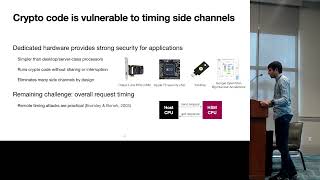
Leakage Models: A Leaky Abstraction in Cryptographic Software Verification
Explore gate-level verification for cryptographic software timing, abandoning leakage models. Discover a novel approach to ensure constant-time execution in hardware implementations.
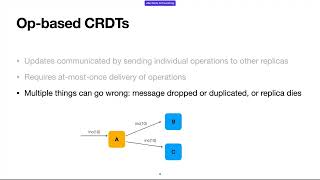
Modular Verification of Op-Based CRDTs in Separation Logic
Explore modular verification of op-based CRDTs using separation logic. Learn about Reliable Causal Broadcast and OpLib for simplified CRDT implementation and correctness proofs.

Scalable Linear Invariant Generation with Farkas' Lemma
Explore scalable linear invariant generation techniques using Farkas' Lemma, improving efficiency and accuracy for affine programs without compromising completeness.
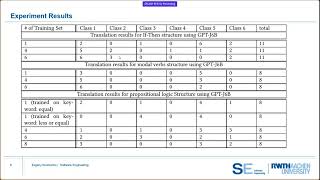
Neural Language Models and Few-Shot Learning for Systematic Requirements Processing in Model-Driven Software Engineering
Explore neural language models and few-shot learning for efficient processing of automotive engineering requirements in model-driven software engineering.
Synthesis II - Session Preview for POPL 2023
Explore advanced program synthesis techniques and their applications in software development, presented by expert Nate Foster at POPL 2023.
Algorithmic Verification - Session Preview at POPL 2023
Explore algorithmic verification techniques and their applications in program analysis, presented by expert Umang Mathur at POPL 2023's innovative session preview track.
Type Theory Session Preview - POPL 2023
Explore type theory fundamentals and recent advancements in this expert-led session preview for POPL 2023, enhancing accessibility of upcoming talks.
Probabilistic Inference - Session Preview at POPL 2023
Explore probabilistic inference concepts with expert Alexandra Silva in this POPL 2023 session preview, enhancing accessibility of advanced programming language topics.

Explainable Program Synthesis by Localizing Specifications
Explore explainable program synthesis through subspecifications, enhancing implementation understanding with logical formulas. Learn algorithms for constructing and verifying subspecifications, their properties, and impact on code comprehension.

WheaCha: An Explanation Method for Models of Code
Explore WheaCha, a novel method for explaining code model predictions by separating input programs into 'wheat' and 'chaff', demonstrating its efficiency and usefulness in identifying defective models.
Yes, Configuring is Good, But Have You Ever Tried Justifying? - Extending Justification Diagrams for Configuration Choices
Explore how justification diagrams can enhance configuration choices in complex systems, extending their operational support for decision-making processes.
Heap Size Adjustment with CPU Control
Explore automatic heap sizing in JVM garbage collection, trading memory for computation based on CPU utilization. Learn about implementation in ZGC and its impact on performance and energy.

A Tool for the Definition and Deployment of Platform-Independent Bots on Open Source Projects
Explore a tool for creating platform-independent bots in open-source projects, enhancing automation and community interaction through a Domain-Specific Language.

Synthesizing Specifications - Automatic Generation of Program Behavior Descriptions
Explore automatic synthesis of program specifications using Spyro, a tool that generates precise L-properties based on user queries and domain-specific languages, applicable in various programming contexts.