
Monad I Love You Now Get Out Of My Type System
Explore a novel programming paradigm that separates business logic from execution concerns, offering automated asynchronous execution, caching, and more without invasive type system changes.
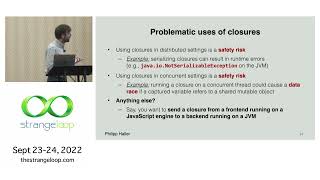
How to Avoid Safety Hazards When Using Closures in Scala
Explore safety hazards in Scala closures, learn to identify unsafe code, write safer closure-using code, and utilize new library components for increased flexibility and safety in parallel and distributed programming.

Incident Commanders to Incident Analysts - How We Got Here
Explore the transition from incident management to incident analysis, highlighting the distinct skills required and the value of post-incident learning for driving meaningful organizational change.
Coverage-based Greybox Fuzzing as Markov Chain
Explore coverage-based greybox fuzzing as a Markov chain process, enhancing software testing efficiency and vulnerability detection in computer security applications.
Systematic Fuzzing and Testing of TLS Libraries
Explore systematic fuzzing and testing techniques for TLS libraries, enhancing security in cryptographic protocols and network communications.
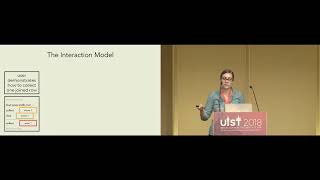
Rousillon - Scraping Distributed Hierarchical Web Data
Novel web scraping tool enabling efficient collection of hierarchical data across multiple pages. Demonstrates 8x faster scraper creation through programming by demonstration, benefiting data scientists and researchers.
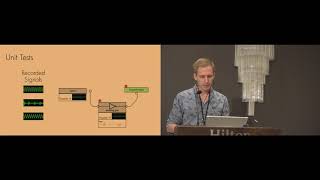
Scanalog - Interactive Design and Debugging of Analog Circuits with Programmable Hardware
Interactive tool for rapid analog circuit design using programmable hardware. Enables real-time manipulation, feedback, and testing without manual assembly, streamlining the iterative design process.
An In-Depth Study of More Than Ten Years of Java Exploitation
Comprehensive analysis of Java exploitation trends over a decade, examining vulnerabilities, attack vectors, and security implications for developers and researchers.
Go Get My - Vulnerabilities - An In-Depth Analysis of Go Language Runtime and the New Class of Vulnerabilities It Introduces
Explore Go language runtime vulnerabilities, their impact on applications, and potential security risks in this in-depth analysis of Golang's growing adoption across various programming domains.
Bypassing Secure Boot Using Fault Injection
Explore fault injection techniques to bypass Secure Boot in embedded systems, focusing on hardware-based attacks when logical vulnerabilities are absent.
Effective File Format Fuzzing – Thoughts, Techniques and Results
Explore advanced file format fuzzing techniques for vulnerability hunting, including setup, scalability, and achieving optimal results against modern software.

Security Analysis of CHERI ISA
Explore CHERI ISA's memory-protection features for C/C++, its security guarantees, and how it enhances memory safety in legacy code through architectural and compiler innovations.
Controlled Chaos - The Inevitable Marriage of DevOps and Security
Explore DevOps basics, resilience, and chaos engineering. Discover factors behind elite organizations and how DevOps aligns with modern infosec goals in today's software-driven landscape.

Secure Boot Under Attack - Simulation to Enhance Fault Attacks & Defenses
Explore fault injection attacks on Secure Boot, their impact on embedded systems, and strategies for enhancing defenses through simulation techniques.

Portable Document Flaws 101
Dive deep into PDF's insecure features and vulnerabilities, exploring malicious capabilities affecting major viewers through systematic analysis and in-depth examination.

Fuzzing and Exploiting Virtual Channels in Microsoft Remote Desktop Protocol for Fun and Profit
Explore coverage-based fuzzing of RDP client virtual channels, targeting complex functionalities like Sound, Graphics, USB, and Filesystem to uncover potential vulnerabilities and crashes.
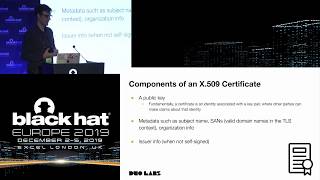
Chain of Fools - An Exploration of Certificate Chain Validation Mishaps
Explore implications of poor cryptographic API design, insecure certificate chain validation, and widespread usage of APIs like Android SafetyNet. Recommendations for implementers and API authors are proposed.

Shifting Knowledge Left - Keeping up with Modern Application Security
Explore modern application security challenges in DevSecOps, including evolving web technologies, persistent vulnerabilities, and emerging framework defenses against common threats.
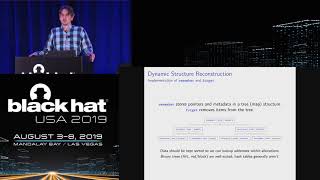
Automation Techniques in C++ Reverse Engineering
Explore dynamic analysis techniques for C++ reverse engineering, focusing on structure usage and function argument types through DLL injection-based automation.

Detecting Fake 4G Base Stations in Real Time
Learn to detect and understand 4G/LTE IMSI-catchers, explore their capabilities, and discover software solutions for identifying fake base stations. Gain insights into cell network security improvements.

Demigod - The Art of Emulating Kernel Rootkits
Explore advanced techniques for emulating and analyzing kernel rootkits, enhancing cybersecurity defenses against high-privilege malware operating at the OS level.