
What Breaks Our Systems - A Taxonomy of Black Swans
Explore categories of unforeseen, catastrophic system failures and strategies to fortify against them, including capacity testing, incident management, and communication.
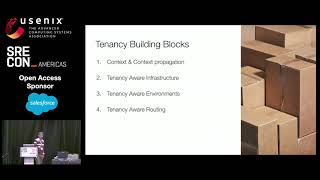
Testing in Production at Scale
Explore real-world insights on implementing testing in production for large-scale microservices, focusing on architecture, capacity planning, and infrastructure components.
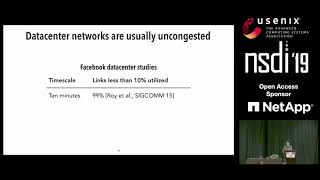
Datacenter RPCs Can Be General and Fast
Efficient RPC library for datacenter networks offering high performance without sacrificing generality. Handles packet loss and congestion while achieving low latency and high bandwidth on commodity hardware.
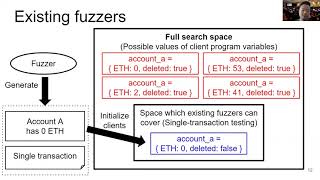
Finding Consensus Bugs in Ethereum via Multi-transaction Differential Fuzzing
Explore multi-transaction differential fuzzing for detecting Ethereum consensus bugs, improving security and reliability in blockchain networks.
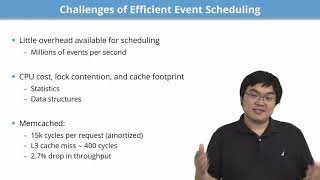
SKQ - Event Scheduling for Optimizing Tail Latency in a Traditional OS Kernel
Explore SKQ, a FreeBSD Kqueue redesign that significantly improves application tail latency and low-latency throughput through scalable architecture and event scheduling policies.
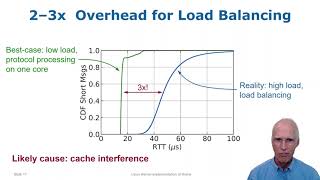
A Linux Kernel Implementation of the Homa Transport Protocol
Explore Homa/Linux: a high-performance transport protocol outperforming TCP and DCTCP in latency and congestion control, with potential for further optimization through software overhead reduction.
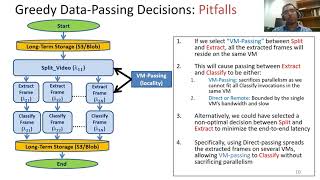
SONIC - Application-Aware Data Passing for Chained Serverless Applications
Optimizes data passing in serverless workflows, adapting to dynamic factors for improved performance and cost-efficiency in analytics applications.
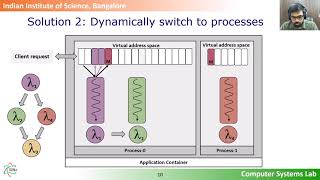
Faastlane - Accelerating Function-as-a-Service Workflows
Accelerating FaaS workflows by executing functions as threads, providing lightweight isolation, and dynamically identifying parallelism opportunities to enhance performance and reduce latency.
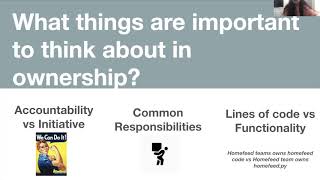
Building Actionable Code Ownership
Discover Pinterest's scalable API ownership framework, designed to manage 1700+ endpoints across 70+ teams, addressing challenges and implementing effective solutions for large-scale code management.
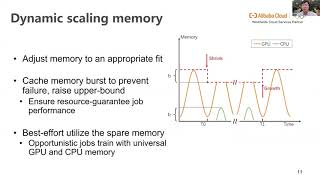
AntMan - Dynamic Scaling on GPU Cluster for Deep Learning
Dynamic scaling system for efficient GPU utilization in deep learning, improving memory and computation usage without compromising fairness or performance in large-scale clusters.
Project Everest - Fast, Correct, and Secure Software for Deployment Now
Explore Project Everest's verified, high-performance secure communication components. Learn about F* programming, EverCrypt, EverParse, and EverQuic-transport, and their adoption in major projects.

A Novel Dynamic Analysis Infrastructure to Instrument Untrusted Execution Flow Across User-Kernel Spaces
Explore a cutting-edge dynamic analysis infrastructure for instrumenting untrusted execution flow, bridging user and kernel spaces in system security.

STOCHFUZZ - Sound and Cost-effective Fuzzing of Stripped Binaries by Incremental and Stochastic Rewriting
Explore innovative techniques for efficient fuzzing of stripped binaries, including incremental and stochastic rewriting, static writing, and delta debugging.
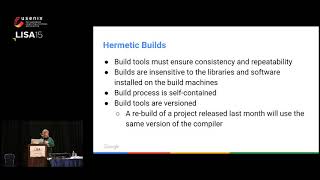
Release Engineering Best Practices at Google
Explore Google's release engineering practices, including bazel usage, branching strategies, and automated systems. Learn about disciplines, philosophies, and techniques for improving release processes.
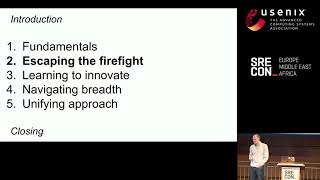
How Stripe Invests in Technical Infrastructure
Explore Stripe's approach to prioritizing technical infrastructure investments, balancing firefighting and innovation, and enabling long-term success through strategic decision-making and resource allocation.
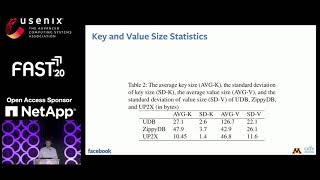
Characterizing, Modeling, and Benchmarking RocksDB Key-Value Workloads at Facebook
Detailed analysis of RocksDB workloads at Facebook, revealing key-value usage patterns and proposing improved benchmarking methods for more accurate representation of real-world scenarios.
Speeding Up Linux Disk Encryption
Explore techniques to optimize Linux disk encryption performance, focusing on dm-crypt architecture and potential improvements for faster transparent data protection.
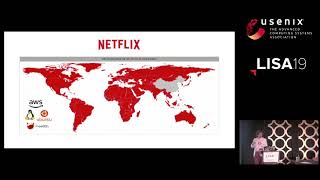
Linux Systems Performance
Comprehensive overview of Linux systems performance, covering tools, methodologies, and techniques for analysis and tuning. Ideal for developers and sysadmins seeking to optimize Linux environments.

When -bin-sh Attacks - Revisiting "Automate All the Things"
Explores human factors in automation, challenges for system administrators, and strategies for coping with complex socio-technical systems. Discusses resilience, expertise development, and the ironies of automation.
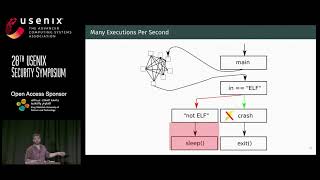
AntiFuzz - Impeding Fuzzing Audits of Binary Executables
Explore techniques to protect binary executables against automated bug-finding tools, focusing on impeding fuzzing, symbolic execution, and hybrid fuzzing approaches while maintaining performance.
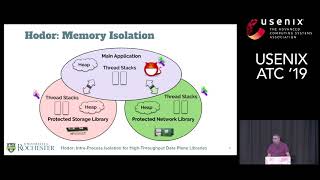
Hodor - Intra-Process Isolation for High-Throughput Data Plane Libraries
Explores intra-process isolation for high-throughput data plane libraries, proposing protected libraries as a new OS abstraction to achieve safety and performance in kernel-bypass approaches for managing high-speed devices.