Patterns for Resilient Architecture
Explore resilient architecture patterns, including graceful degradation, timeouts, and circuit breakers. Learn chaos engineering methodology to build robust systems by embracing and learning from failures.

Ctrl-Alt-Del - Learning to Love Legacy Code
Discover techniques for effectively working with and improving legacy code systems, focusing on understanding, refactoring, and modernizing outdated applications to enhance their functionality and maintainability.

Structure and Interpretation of Test Cases
Explore effective unit testing strategies, from naming and nesting to data-driven and property-based approaches. Learn to structure tests for clarity, maintainability, and maximum benefit in software development.

Reading Other Peoples Code
Explore techniques for efficiently reading and understanding large codebases, fostering curiosity and connection with fellow programmers through their work.
Build Nodejs APIs Using Serverless on Azure
Discover how to migrate an API to Azure Functions, using Visual Studio Code and Azure Functions extension to streamline development and join the ranks of serverless developers.

Code the Future, Now
Discover techniques to integrate future requirements into current code, avoiding batch jobs and scaling efficiently. Learn to capture business logic as first-class citizens for seamless temporal integration.
Modern Continuous Integration with Azure Pipelines
Explore modern CI with Azure Pipelines, leveraging cloud-first strategies, containers, and cross-platform testing to enhance software quality while minimizing costs and overhead.
Getting Started with Azure DevOps
Explore Azure DevOps for efficient team transformation, covering CI/CD, project management, and collaboration tools to enhance productivity and streamline development processes.

Introducing Jak - Safely Share Sensitive Files via Git
Learn about Jak, a tool for securely sharing sensitive files through Git, including its features, demo, and lessons learned during development.
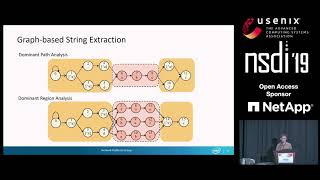
Hyperscan - A Fast Multi-pattern Regex Matcher for Modern CPUs
Efficient regular expression matching for network security using graph decomposition and SIMD acceleration, improving performance of applications like Snort by 8.7x on real traffic.
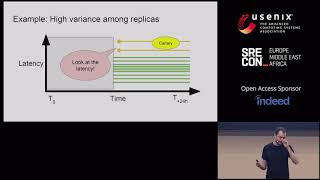
Canarying Well - Lessons Learned from Canarying Large Populations
Explore canarying best practices, pitfalls, and strategies for safe production changes. Learn to balance priorities, handle diverse scenarios, and implement effective canary processes in software deployment.
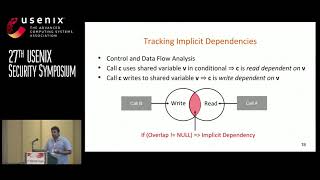
MoonShine - Optimizing OS Fuzzer Seed Selection with Trace Distillation
Optimizing OS fuzzer seed selection through trace distillation, improving code coverage and vulnerability detection in Linux kernel testing.
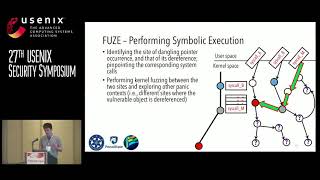
FUZE - Towards Facilitating Exploit Generation for Kernel Use-After-Free Vulnerabilities
Explore automated exploit generation for kernel Use-After-Free vulnerabilities using FUZE framework, enhancing security analysis efficiency and exploitability evaluation for complex OS kernels.
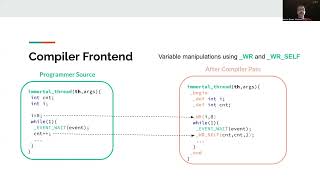
Immortal Threads - Multithreaded Event-driven Intermittent Computing on Ultra-Low-Power Microcontrollers
Explore a novel programming model for intermittent computing on ultra-low-power microcontrollers, enabling efficient multithreaded processing and event handling with minimal progress loss during power failures.
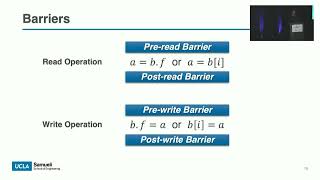
MemLiner - Lining up Tracing and Application for a Far-Memory-Friendly Runtime
MemLiner: Runtime technique improving far-memory systems by aligning application and garbage collection memory accesses, reducing local-memory working set and enhancing remote-memory prefetching for better performance.
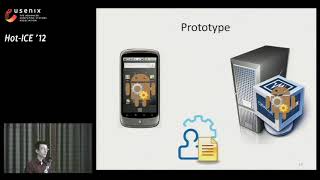
ECOS - Practical Mobile Application Offloading for Enterprises
Explore ECOS, an enterprise-centric offloading system for mobile applications, addressing privacy concerns and resource management to improve handheld device performance and energy efficiency.
Opening Closed Systems With GlitchKit
Explore GlitchKit, an open-source solution for fault injection in closed systems. Learn techniques to bypass firmware protection and extract secrets through hardware hacking and reverse engineering.
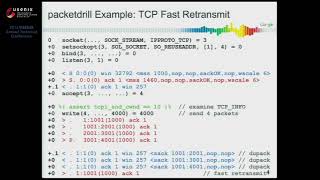
Packetdrill - Scriptable Network Stack Testing, from Sockets to Packets
Explore packetdrill, a scripting tool for testing TCP/UDP/IP network stack implementations. Learn its design, usage, and impact on developing Linux TCP features and bug fixing.
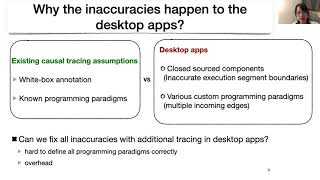
Argus - Debugging Performance Issues in Modern Desktop Applications with Annotated Causal Tracing
Innovative tool for debugging performance issues in desktop applications, using annotated causal tracing to model ambiguities and efficiently diagnose root causes of slowdowns.
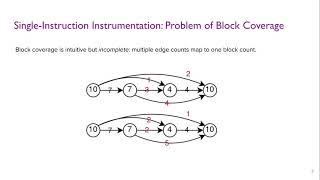
RIFF - Reduced Instruction Footprint for Coverage-Guided Fuzzing
Efficient coverage measurement technique for fuzzing, reducing overhead in runtime collection and post-execution processing. Improves fuzzer performance and coverage exploration.
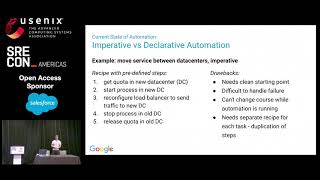
Sublinear Scaling in Practice - The 1k SRE Project
Explore Google's SRE team's approach to sublinear scaling, automation, and cultural shifts for managing 1000+ services efficiently without increasing staff.