Gravitational Waveforms for Compact Binaries - Jan Steinhoff
Exploring gravitational waveform modeling for compact binaries, covering time and frequency domains, Hamiltonians, and post-Newtonian approximations to advance gravitational wave detection and analysis.
Large Scale High Temporal Resolution Effective Connectivity Analysis
Explore effective connectivity analysis in MEG, addressing challenges in neural data interpretation and introducing advanced techniques for high-resolution brain network mapping.
MEG-EEG Source Estimation Approaches: A Spectrum of Purpose-Built Optimal Tools
Explore MEG/EEG source estimation techniques, from dipole models to cortically-constrained approaches. Learn about neural source localization, forward modeling, and applications in neuroscience research.
Exploring Autogenic and Allogenic Processes in Lobyte3D
Explore autogenic and allogenic processes in deep-water fan systems using Lobyte3D, a stratigraphic forward model, to investigate signal recording and extraction in sedimentary strata.
Graph Signal Processing for Neuroimaging - When Anatomy Meets Activity
Explore brain imaging through graph signal processing, connecting anatomy and activity. Learn MRI techniques, brain graphs, and innovative analysis methods for neuroimaging data.
Increasing Value to SPS Members Through IEEE HAC-SIGHT
Learn how IEEE HAC/SIGHT offers high-impact humanitarian engagement opportunities, advancing technologies for marginalized communities worldwide. Discover achievements, benefits, collaborations, and ways to get involved in this impactful initiative.
Statistical Physics and Statistical Inference - Lecture 2
Explore statistical physics and inference, covering Bayesian methods, error correction, spin glasses, and advanced algorithms like belief propagation. Gain insights into phase transitions and applications in machine learning.
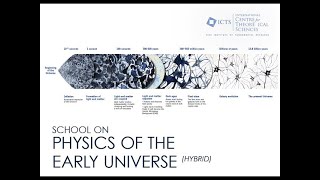
Cosmological Perturbation Theory - Lecture 1
Explore cosmological perturbation theory, from the universe's history to advanced concepts like scalar, vector, and tensor perturbations, Fourier transforms, and power spectra. Gain insights into cosmic microwave background and general relativity.
Computational Principles of Sensorimotor Control - Lecture 1
Explore computational principles of sensorimotor control, including optimal feedback control, state estimation, motor learning, and Bayesian decision theory in human movement and robotics.
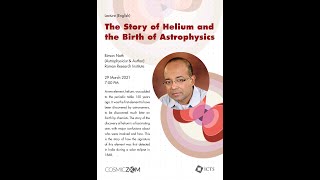
The Story of Helium and the Birth of Astrophysics by Biman Nath
Explore the captivating discovery of helium, from its first detection during a solar eclipse in India to its impact on astrophysics, unraveling scientific mysteries and historical confusions.
Basic Lectures on Bethe Ansatz - Pedagogical Lecture 2
Comprehensive lecture on Bethe Ansatz, covering integrable models, spin excitations, prethermalization, and algebraic approaches. Explores key equations, Fourier space, and the 6-vertex model for advanced physics students.
Introduction to Random Walks and Markov Processes - Preparatory Lecture 1
Comprehensive introduction to random walks and Markov processes, covering discrete and continuous cases, evolution equations, and master equations for advanced statistical physics students.
Unbiasing Procedures for Scale-Invariant Multi-Reference Alignment - IPAM at UCLA
Explore unbiasing techniques for scale-invariant multi-reference alignment in signal processing, focusing on applications in cryo-electron microscopy and distribution learning from biased, sparse batches.
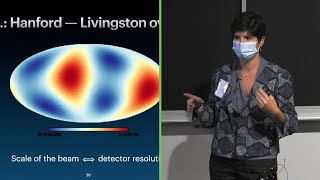
Stochastic Background Searches in GW Experiments - IPAM at UCLA
Explore stochastic gravitational wave backgrounds, their characteristics, detection methods, and future prospects in ground-based and space-borne observatories with insights from recent LVK collaboration searches.
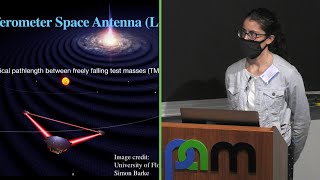
LISA and the Global Analysis of Galactic Binary Gravitational Wave Signals
Explore LISA's role in detecting galactic binary gravitational waves, including data analysis challenges, global fitting techniques, and future prospects for multi-source gravitational wave detection.
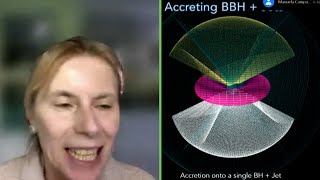
Merging Black Hole Binaries - Accretion Dynamics and Outflows
Explore accretion dynamics and outflows in merging black hole binaries, covering simulations, evolution, and multimessenger astronomy implications.
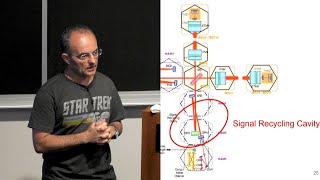
Characterization of Ground-Based Gravitational-Wave Detector Data - IPAM at UCLA
Explore techniques for distinguishing gravitational wave signals from noise in detector data, including traditional methods and innovative approaches to improve data quality and reduce search backgrounds.
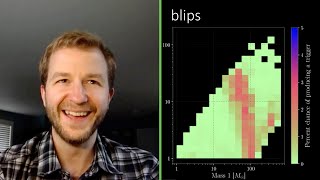
Nobody Likes a Glitch - IPAM at UCLA
Explore transient noise artifacts in gravitational wave astronomy, their impact on signal detection, and innovative approaches for understanding and mitigating these glitches in data analysis.
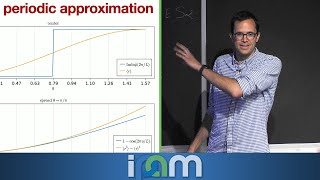
Localization Methods - Perspectives on Initialization and Optimization - IPAM at UCLA
Explore Wannier localization in quantum mechanics, its mathematical formulation, challenges, and new approaches for efficient orbital localization in condensed matter systems.
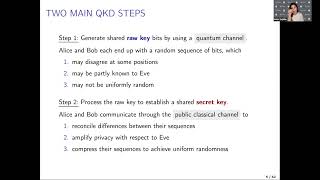
Quantum Independence and Interdependence in Signal Processing
Explore quantum independence and interdependence concepts in signal processing with expert Emina Soljanin, delving into cutting-edge research and applications in the field.

Repurposing EEG Technology for Brain Understanding and Disease Detection
Discover how repurposed EEG technology can unlock insights into brain function and potential diseases, revolutionizing our understanding of neuroscience.