
Yocto on the Edge - Unusual Challenges for Intel-Based Systems - Lecture 8
Explore challenges and solutions for Yocto-based edge computing systems on Intel platforms, covering provisioning, secure user management, and A/B updates with secure boot.
Providing Confidential Guest Services with a Secure VM Service Module on AMD
Explore AMD's SEV-SNP architecture, VMPL, and SVSM for enhanced guest security in virtualization. Learn about Linux kernel support and open-source SVSM development for secure boot and live migration.
Verifiable End-to-End Secure OCI Native Machines
Explore a secure toolchain for verifiable workloads using signed OCI images, ensuring tamper-proof boot processes and authenticated communication with hosts.
PowerVM Platform Keystore - Securing Linux Credentials Locally
Explore PowerVM's Platform Keystore for secure Linux credential storage, focusing on boot-time security, kernel interfaces, and challenges in developing unified interfaces for diverse platforms.
DIGLIM eBPF - Secure Boot at Application Level with Minimal Distro Changes
Explore secure boot implementation at the application level using eBPF technology, minimizing distro modifications for enhanced system integrity and security.
KMM - Your Swiss Army Knife for Kernel Modules on Kubernetes
Explore KMM for efficient kernel module management in Kubernetes. Learn to build, load, and upgrade modules, enabling AI/ML, edge computing, and software-defined storage solutions at scale.

Creating a Secure IoT Platform Using Common Linux Distributions
Explore creating a secure IoT platform using Fedora, focusing on maintenance, updates, and security measures for robust edge-to-cloud solutions and large-scale device management.
Apache Mynewt Bootloader for Reliable and Secure Firmware Upgrades
Learn about Apache Mynewt's open-source bootloader for MCUs, covering design, fail-safe mechanisms, security features, and implementation across architectures. Gain insights into reliable firmware upgrades.
TrenchBoot: Enhancing System Security with Intel TXT and AMD SVM
Explore TrenchBoot's integration of hardware-rooted security for open and proprietary systems, reducing attack surfaces and enhancing platform integrity through Intel TXT and AMD SVM technologies.
Protecting Your System from Security Threats - Linux Security Mechanisms
Comprehensive overview of Linux security mechanisms for embedded systems, covering encryption, secure boot, and integrity measures to protect against various attacks.
Enhancing System Security by Integrating Zephyr Bootloader and MCUboot
Learn to enhance system security by integrating Zephyr Bootloader and MCUboot. Explore implementation techniques, benefits, and best practices for secure firmware development in embedded systems.
Using Linux as a Secure Boot Loader for OpenPOWER Servers
Explore enhancements to Linux's Integrity Management Architecture for secure boot loading on OpenPOWER servers, addressing limitations and providing flexible run-time decision-making capabilities.
OpenPOWER Host OS Secure Boot Key Management
Explore OpenPOWER's flexible key management for Linux-based secure boot, covering architecture, ownership, updates, storage, and compatibility across firmware, kernel, and userspace.
Fort Kairos - A New Dawn for Secure Linux in Untrusted Environments
Explore Fort Kairos, an open-source project revolutionizing secure Linux for untrusted edge environments using Trusted Boot, TPM, and disk encryption.
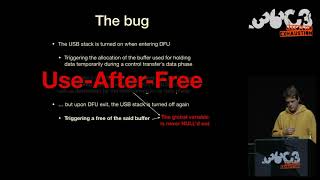
The One Weird Trick SecureROM Hates
Explore the unfixable Checkm8 vulnerability in iPhones' SecureROM, its exploitation for jailbreaking, and implications for iOS security research and device control.

20 Ways Past Secure Boot
Explore 20 methods to bypass secure boot, including debug access, exploits, timing attacks, glitches, and design flaws. Learn about real-world examples and security implications.
Using the TPM NVRAM to Protect Secure Boot Keys in POWER9 OpenPOWER Systems
Explore TPM NVRAM's role in safeguarding secure boot keys for POWER9 OpenPOWER systems, covering design and implementation aspects in firmware and Linux kernel layers.
Device Security in IoT
Explore IoT device security principles, challenges, and solutions using Trusted Firmware for M and Platform Security Architecture. Learn about secure boot, communication, and compartmentalization.
Open Source CVE Monitoring and Management - Cutting Through the Vulnerability Storm
Learn to monitor, assess, and address open source vulnerabilities effectively. Explore challenges in CVE tracking, improve accuracy, and enhance device security through practical techniques and community-driven solutions.
Booting Automotive ECUs Really Fast with Modern Security Features
Explore fast booting techniques for automotive ECUs with modern security features, focusing on BMW's approach to meeting strict performance requirements in various vehicle domains.
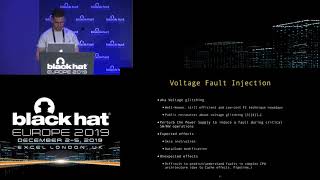
Fatal Fury on ESP32 - Time to Release Hardware Exploits
Methodical exploration of defeating ESP32 security features using low-cost hardware techniques, including voltage glitching and analog side-channels, with implications for IoT device security.