Diffprivlib - Privacy-Preserving Machine Learning with Scikit-Learn
Explore differential privacy in machine learning using Diffprivlib, a tool for training accurate models with robust privacy guarantees, seamlessly integrating with scikit-learn and numpy.
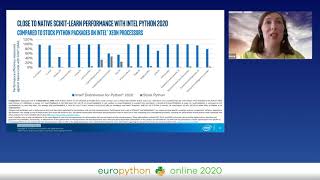
The Painless Route in Python to Fast and Scalable Machine Learning
Learn to optimize Python for high-performance machine learning, from Intel-enhanced packages to scalable data processing and analytics pipelines that rival C++/MPI performance on large datasets and clusters.
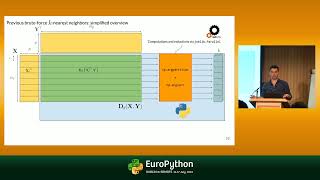
Scaling scikit-learn - Introducing New Sets of Computational Routines
Discover recent performance improvements in scikit-learn, exploring computational patterns, new routine implementations, and future hardware-specialized developments for enhanced machine learning efficiency.
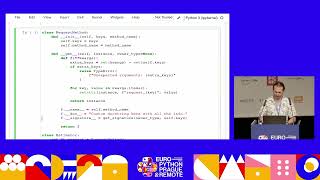
Dynamically Generated Methods with a Non-Generic Signature
Explore dynamic method generation in Python using Descriptors, PEP-362, and PEP-487. Learn scikit-learn's approach to attaching generated methods to classes, understanding use-cases and challenges.
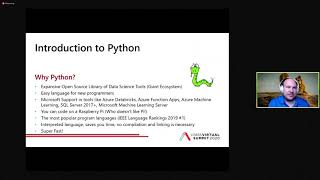
Code Like a Snake Charmer Version 2.0 - Introduction to Python
Comprehensive introduction to Python for data science, covering basics and machine learning using real-world datasets. Ideal for beginners looking to integrate Python into Microsoft tools.
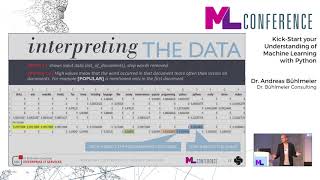
Kick-Start Your Understanding of Machine Learning with Python
Practical guide to building ML applications in Python, focusing on text classification using unsupervised and supervised learning techniques with visualization and deep learning examples.
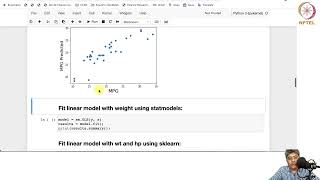
Hands-on Python: Fitting Regression Models with Sklearn and Statsmodels - Part 3
Fit regression models using sklearn and statsmodels in Python. Learn model setup, evaluation, and implementation techniques.
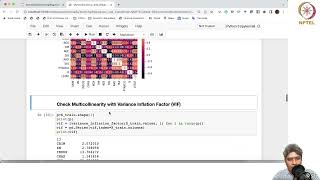
Handling Multicollinearity with Ridge Regression in Python
Implement Ridge Regression using Python and sklearn to handle multicollinearity in data analysis.
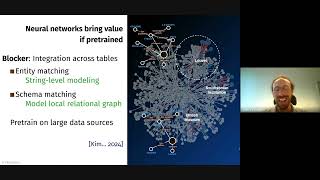
Tabular Learning: Skrub and Foundation Models - Automating Data Wrangling
Explore tabular learning with skrub library, automating data wrangling and simplifying complex pipelines for efficient machine learning on organizational data.

A Python Developer's Guide to AI in 2024
Comprehensive guide for Python developers on AI trends in 2024, covering machine learning, neural networks, computer vision, LLMs, RAG, and AI agents.
Fixing the Image Problems of the Web Using Machine Learning
Explore how machine learning can address web image issues, enhancing user experience and accessibility. Learn innovative techniques for optimizing visual content on the internet.
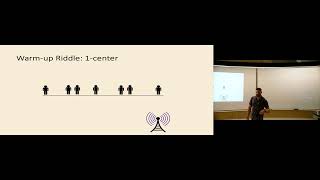
Coresets and Decision Trees for Machine Learning Optimization
Discover how coresets can optimize decision tree algorithms, boost computation speed by 10x, and maintain accuracy in machine learning applications through geometric partitioning techniques.
Reproducible ML Experimentation with Rubicon-ML
Explore reproducible ML experimentation using rubicon-ml, an open-source Python library for capturing and storing model training information in a searchable way, ensuring full reproducibility and audit-ability.
What's New with rubicon-ml? Capital One's Solution for Logging the ML Lifecycle
Explore rubicon-ml, Capital One's open-source solution for standardizing ML lifecycle logging. Learn to integrate it with popular libraries for efficient model development, monitoring, and governance.
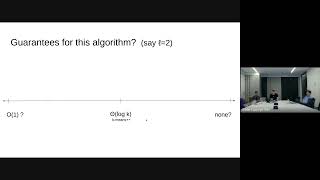
A Nearly Tight Analysis of Greedy k-means++
Explore the greedy k-means++ algorithm's performance, analyzing its approximation guarantees and comparing it to the original k-means++ method for solving the k-means problem.
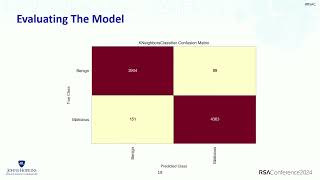
Threat Hunting with Python and Pandas - Data Science Techniques for Cybersecurity Analysis
Explore data science techniques for efficient threat hunting using Python, Pandas, and Scikit-Learn. Gain insights into applying these tools for enhanced cybersecurity analysis and operations.
Advanced Python Libraries for Data Science
Explore advanced Python libraries for data science, focusing on scikit-learn, TensorFlow, and PyTorch Geometric. Learn implementation, methodologies, and practical applications through code exercises.
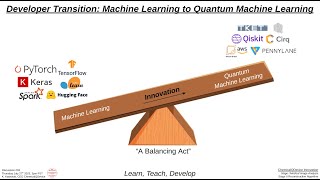
Developer Transition: Machine Learning to Quantum Machine Learning
Explore quantum machine learning frameworks, tools, and resources to transition from classical ML. Gain insights into QML algorithms, simulators, and future developments in the field.
Predicting Healthcare Insurance Costs with Python - Real-World Data Science Problem Solving
Predict healthcare insurance costs using Python and machine learning. Clean data, visualize with pandas, and apply scikit-learn for linear regression in this hands-on tutorial with real-world data analysis.
Essential Python Libraries for Data Science and Development - 2024
Master essential Python data science libraries including NumPy, Pandas, Matplotlib, Scikit-learn, and more through hands-on examples and practical demonstrations, culminating in building a Tic Tac Toe game.