How to Create Data-Cleaning Auto-Pipelines With Python
Develop automated data cleaning pipelines using Scikit-Learn to streamline data processing, reduce time spent on preprocessing, and enhance reproducibility in your data science projects.
Introduction to Machine Learning with Python
Explore machine learning fundamentals using Python, covering key concepts and practical applications in this hands-on workshop led by a field engineer from Domino.
Introduction to Python for Data Science
Learn Python for data science: cleanse data, perform exploratory analysis, and build predictive models using pandas and scikit-learn. Ideal for beginners with basic Python knowledge.
Data Processing Fundamentals - Smarter Python Code With Classes
Learn to write smarter Python code using classes for efficient data processing, including DatasetSelector and DatasetManager implementation with Scikit-learn integration.
Data Processing Fundamentals - Writing Smarter Python Code With Classes
Learn to write smarter Python code using classes for efficient data processing, including creating custom classes, adding methods, and integrating Scikit-learn for dataset management.
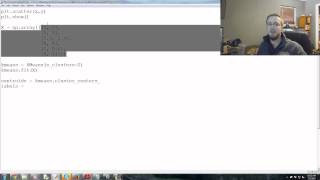
Unsupervised Machine Learning - Flat Clustering with KMeans with Scikit-Learn and Python
Explore flat clustering with KMeans using Scikit-learn and Python. Learn to categorize unlabeled data into specified groups through hands-on coding and visualization techniques.
Python for Machine Learning - Machine Learning Tutorial for Beginners
Learn Python for machine learning, covering key concepts, popular packages, and algorithms like linear regression and K-nearest neighbor. Gain practical skills for a high-paying career in this rapidly growing field.
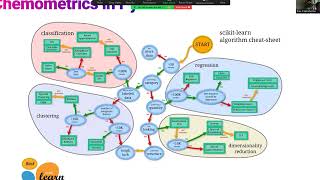
Chemotools - Integrating Chemometrics and Scikit-Learn for Spectral Data Analysis
Explore chemotools, a Python library unifying chemometrics and machine learning for spectral data analysis, streamlining model development and implementation in the scientific community.

Real-World Python Machine Learning Tutorial With Scikit Learn
Comprehensive Python machine learning tutorial covering sentiment analysis using scikit-learn, from data preparation to model evaluation and optimization, with practical examples using Amazon reviews.

Build Your First Machine Learning Model in Python
Learn to build a machine learning model in Python using scikit-learn. Covers data loading, splitting, model building with linear regression and random forest, comparison, and visualization.
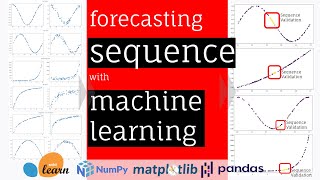
Forecast Any Mathematical Number Sequence with Regression - Machine Learning
Learn to generate and forecast mathematical number sequences using Python, pandas, numpy, and scikit-learn. Visualize data with matplotlib and apply regression models to predict future numbers in various function-based series.
Getting Started with Machine Learning - Machine Learning Tutorial for Beginners
Learn to build a machine learning model for diabetes prediction using data manipulation, visualization, and exploratory analysis with Python libraries like pandas, NumPy, Matplotlib, and scikit-learn.
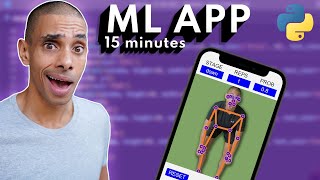
Building a Machine Learning Python App for Deadlift Tracking - Coding Challenge
Build a machine learning app to track deadlifts using Python, Scikit-Learn, MediaPipe, and Tkinter in this coding challenge. Learn to create a practical application combining ML and GUI development.
Deploying Machine Learning Models Online with Watson Machine Learning - Python Scikit-Learn
Learn to deploy Scikit-Learn models to the cloud using Watson Machine Learning, enabling online access and integration with various programming languages in under 30 minutes.
Machine Learning Basics - Machine Learning for Beginners
Comprehensive introduction to machine learning basics, covering key concepts, data manipulation, visualization, and model building using Python libraries and real-world datasets.
Scikit-Learn Pipeline and Cross-Validation - Day 13 of 30 Days of ML
Learn advanced machine learning techniques with Scikit-Learn, focusing on pipelines for organized code and cross-validation for improved model performance evaluation. Part of a 30-day ML challenge.
Experiment Management for Machine Learning
Explore best practices for managing machine learning experiments, addressing reproducibility, documentation, and code dependency issues to improve workflow efficiency and results.
Complete Guide to Cross Validation
Comprehensive guide to cross-validation in machine learning, covering setup, datasets, common pitfalls, train-test splits, and practical applications using scikit-learn in Python.
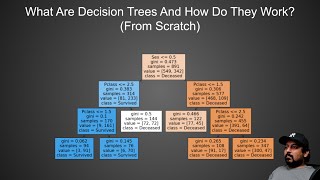
What Are Decision Trees and How Do They Work - From Scratch
Comprehensive guide to decision trees in machine learning, covering basics, implementation, and advanced concepts using real-world examples and scikit-learn comparisons.
Tuning Machine Learning Models - Scaling, Workflows, and Architecture
Automating and scaling ML model tuning using Hyperopt and Apache Spark. Best practices for workflows, architecture, and optimization in hyperparameter tuning for improved performance and accuracy.
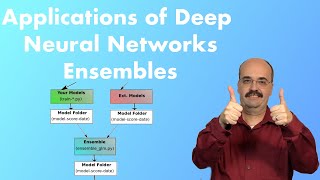
Neural Networks with Ensembles for TensorFlow and Keras
Learn to create and evaluate ensemble models using random forests and deep neural networks with TensorFlow, Keras, and scikit-learn. Explore feature importance and perturbation ranking techniques.