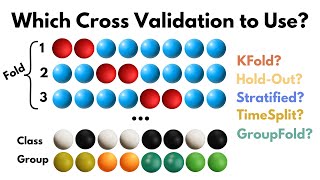
Selecting the Right Cross-Validation Method in Machine Learning
Learn to choose the right cross-validation method for your machine learning model based on data characteristics, including hold-out, k-fold, time-split, and group-fold techniques.
Data Science Way to Deal With Advanced Threats
Explore data science methods for advanced threat detection in SOCs, combining unsupervised and supervised learning to reduce false positives and streamline anomaly triage using ML and interactive visualizations.
Python and Machine Learning
Explore machine learning for malware categorization using Python and scikit-learn. Learn to transform data, apply clustering algorithms, and generate YARA rules for effective malware hunting.
Deploying Machine Learning Models for Forensic Anthropology with Docker and Streamlit
Deploy ML models for forensic anthropology using Docker and Streamlit. Learn to create a web application for skeletal sex prediction, combining archeology, physics, and technology for impactful research in bioarchaeology.
Histogram-based Gradient Boosting in scikit-learn 0.21
Explore the new Histogram-based Gradient Boosting implementation in scikit-learn 0.21, offering competitive performance with XGBoost and LightGBM for efficient machine learning on tabular data.
Applied Machine Learning for Data Exfil and Other Fun Topics
Explore machine learning applications in cybersecurity, including data exfiltration, network mapping, and botnet detection. Hands-on examples and tool demonstrations provided for practical implementation.
Practical Cyborgism - Machine Learning for Bro Logs
Explore machine learning techniques for analyzing Bro logs, focusing on supervised and unsupervised methods to enhance cybersecurity threat detection and analysis.
Charlas - Laura Gutiérrez Funderburk: Reduciendo prejuicio en la inteligencia artificial
Aprende a identificar y reducir sesgos en modelos de IA para salud usando Python. Explora técnicas de evaluación de datos, entrenamiento de modelos y optimización con Fairlearn para mejorar la equidad en las predicciones.
Assessing and Mitigating Unfairness in AI Systems
Learn to assess and mitigate fairness issues in AI systems, focusing on healthcare disparities. Hands-on practice with Fairlearn library to evaluate and improve ML model performance across racial groups.
Building a Model Prediction Server
Learn to create a FastAPI application that serves real-time predictions from a trained scikit-learn model, bridging the gap between model development and production deployment.
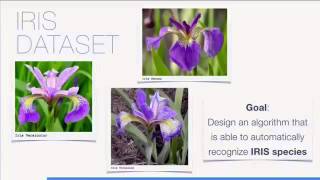
Scikit-learn to "Learn Them All"
Overview of Scikit-learn for machine learning in Python, covering supervised and unsupervised techniques, with code examples and insights on implementation. Includes comparison to other ML libraries and scaling to big data.
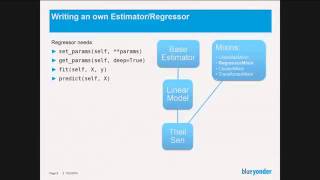
Extending Scikit-Learn with Your Own Regressor
Learn to extend Scikit-Learn by implementing a robust Theil-Sen estimator, exploring its advantages over ordinary least squares and understanding Scikit-Learn's design and contribution process.
Using Scikit-Learn's Interface for Turning Spaghetti Data Science into Maintainable Software
Learn to structure data science code using Scikit-Learn's estimator and meta-estimator interfaces. Discover how to transform spaghetti code into maintainable, testable, and reusable machine learning models.
Machine Learning - Power of Ensembles
Explore ensemble methods in machine learning, combining diverse models for improved accuracy. Learn bagging, boosting, and stacking techniques with real-world examples and practical insights.
Scientist Meets Web Dev - How Python Became the Language of Data
Explore Python's evolution as a data science powerhouse, blending scientific computing with web development. Learn how this versatile language empowers researchers and analysts to tackle complex data challenges.
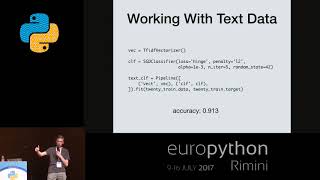
Explaining Behavior of Machine Learning Models with ELI5 Library
Explore techniques for interpreting and debugging ML models using eli5 library. Learn to explain linear models, decision trees, ensembles, and classifiers, improving trust and quality in ML solutions.
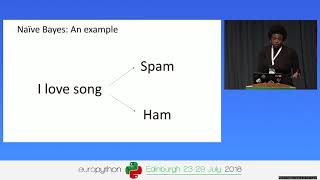
Building a Naive Bayes Text Classifier with scikit-learn
Learn to build a Naive Bayes text classifier using scikit-learn, exploring preprocessing techniques and feature extraction methods for effective spam detection in YouTube comments.
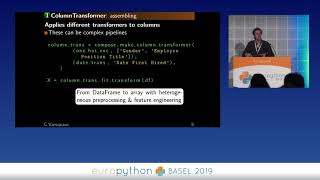
Machine Learning on Non-Curated Data
Techniques for handling missing values and non-normalized categories in machine learning, focusing on practical solutions using scikit-learn and DirtyCat for efficient data analysis without extensive cleaning.
Image Processing with Scikit-Image and Dash
Explore image processing using scikit-image and Dash. Learn to build interactive applications for transforming, analyzing, and visualizing images with Python tools in various scientific and industrial contexts.
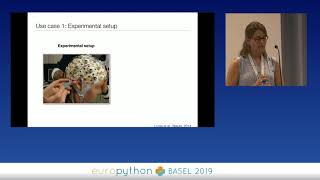
Boosting Research with Machine Learning
Explore machine learning applications in research, from neuron recognition to EEG-based movement prediction. Learn Python techniques for data preparation and analysis using various ML methods.

Astro Pi - Python on the International Space Station
Explore Python programming on the International Space Station with Astro Pi, a collaboration between Raspberry Pi Foundation and ESA, offering exciting opportunities for students to conduct space experiments.