Numerical Methods for PDEs - Class 19
Explore advanced numerical methods for solving partial differential equations, focusing on techniques applicable to complex mathematical problems in doctoral-level research.
Numerical Methods for PDEs - Class 18
Explore advanced numerical methods for solving partial differential equations in this doctoral-level lecture, focusing on cutting-edge techniques and applications in mathematical modeling.
Numerical Methods for PDEs - Class 17
Explore advanced numerical methods for solving partial differential equations, focusing on complex mathematical techniques and their applications in doctoral-level research.
Root Finder in Space - Calculating Aphelion - Episode 2
Learn to calculate the aphelion of orbiting bodies using Scilab. This tutorial covers code setup for determining the farthest point in various celestial orbits.
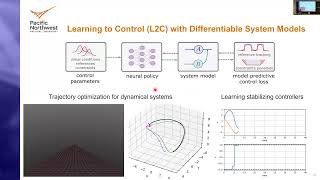
Differentiable Programming for Data-driven Modeling, Optimization, and Control
Explore data-driven modeling, optimization, and control through differentiable programming techniques in this symposium talk by Jan Drgona from Pacific Northwest National Laboratory.
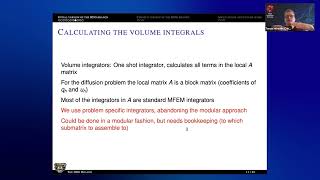
Implementation of Hybridizable Discontinuous Galerkin Methods - MFEM Workshop 2023
Explore advancements in hybridizable discontinuous Galerkin methods for high-order finite element calculations, featuring flexible implementations for diverse PDEs and applications.
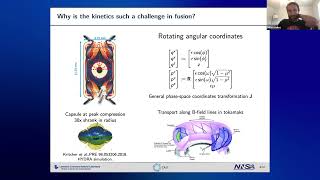
Deterministic Transport MFEM-Miniapp - MFEM Workshop 2023
Explore high-order phase-space simulations for Boltzmann transport using MFEM's new multidimensional discretization, enhancing fusion energy experiment modeling.
MFEM: High-Performance Finite Element Methods Tutorial - 2024
Explore MFEM, a parallel C++ library for finite element methods. Learn to develop scalable algorithms for various platforms, from laptops to supercomputers.
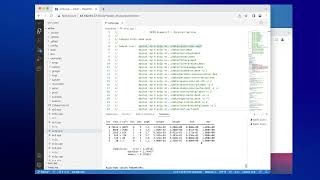
MFEM in the Cloud: AWS Tutorial for Scalable Finite Element Applications
Learn to use MFEM in the cloud for scalable finite element discretization application development with step-by-step instructions and hands-on demonstration.
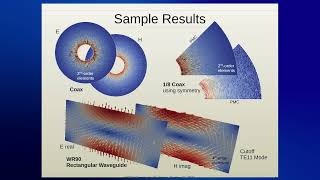
OpenParEM2D: A Free, Open-Source Electromagnetic Simulator for 2D Waveguides and Transmission Lines
Explore OpenParEM2D, a free 2D electromagnetic simulator for guided waves and transmission lines. Learn its capabilities, methodology, and applications in this insightful presentation.

Introduction to Numerical Computing with NumPy - SciPy 2019 Tutorial
Learn NumPy's powerful array processing capabilities, including array syntax, indexing, mathematical functions, and custom routines. Gain practical skills through hands-on examples and visualize results using matplotlib.
Jupyter for First-Time Users - Introduction to Notebooks and Code Execution
Learn to use Jupyter notebooks for coding projects, including markdown, LaTeX, code execution, and debugging. Ideal for beginners in scientific computing and data analysis.
Gael Varoquaux at ODSC Boston 2015 - Scikit-Learn for Easy Machine Learning
Explore machine learning with scikit-learn: its popularity, capabilities, and future. Learn about easy predictive analysis, development process, and exciting new features in this data science ecosystem.

Using PHP Outside the Web Context
Explore PHP's potential beyond web development, delving into scientific computing, machine learning, and data science applications. Discover recent projects and advancements in PHP for solving complex problems.
Towards Reproducible Climate Research Using Docker Containers
Exploring Docker's role in advancing reproducible climate research, focusing on data delivery, analysis, and transparency for credible, accessible, and reusable scientific outcomes.
Jupyter Notebook Assignment Development - Introduction and Learning Goals
Explore the process of creating Jupyter Notebook assignments for computational research methods, focusing on setting learning goals and structuring effective content.

Scivision: Applying Computer Vision Methods - AIUK 2022 Workshop
Explore computer vision applications in real-world problem-solving through an interactive workshop from the Alan Turing Institute's Research in Action series.
Enhancing Scientific Computing Through Physics-Informed Neural Networks
Explore physics-informed neural networks (PINNs) as an alternative to traditional scientific computation, addressing challenges in high-dimensional problems and incorporating noisy data in inverse problems.
The Dynamic Mode Decomposition - A Data-Driven Algorithm for Complex Systems Analysis
Explore the Dynamic Mode Decomposition algorithm for analyzing complex systems, including its theory, applications, and implementation using PyDMD package in Python.
Data Science with Julia - Hands-on Tutorial
Hands-on tutorial exploring Julia for data science, covering interactive analysis, visualization, and machine learning algorithms. Equips participants to apply Julia in their own projects.
Julia for Python Programmers
Hands-on introduction to Julia for scientific computing and data science, focusing on its efficiency and interactive capabilities for technical applications and scalable computing.