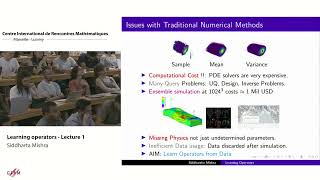
Learning Operators - Lecture 1
Explore learning operators in scientific machine learning, covering traditional methods, neural networks, and practical applications for mathematical problem-solving.
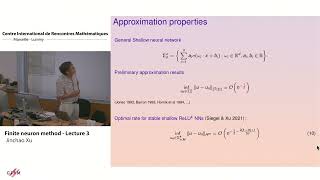
Finite Neuron Method - Lecture 3
Explore advanced mathematical concepts in finite neuron methods through an in-depth lecture by Jinchao Xu, focusing on theoretical foundations and practical applications.
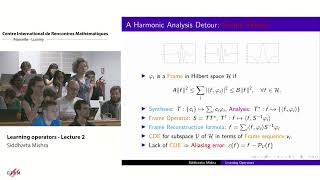
Learning Operators - Lecture 2
Explore advanced concepts in operator learning, focusing on mathematical techniques and applications in scientific machine learning.
PRyMordial - The First Minutes of the Universe Computed in Seconds
Explore the computational simulation of the universe's earliest moments, uncovering insights into cosmic origins and evolution.
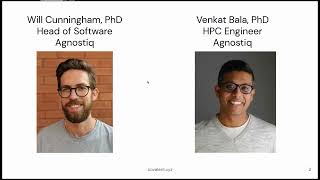
Research Ops - Challenges and Practical Solutions for Distributed Scientific Computing
Explore challenges and practical solutions for distributed scientific computing in research operations, focusing on advanced cyberinfrastructure.
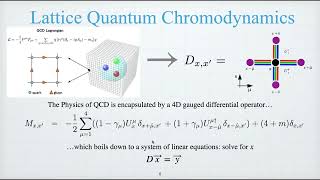
GPU Computing and Krylov Solvers
Explore GPU computing and Krylov solvers for advanced numerical computations, enhancing problem-solving skills in high-performance computing environments.
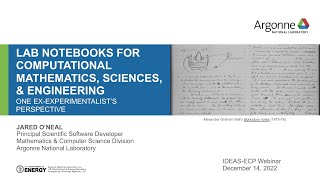
Lab Notebooks for Computational Mathematics, Sciences and Engineering
Explore lab notebooks' adaptation to computational research, with examples addressing challenges in transitioning from experimental to computational sciences.
Diffusion Models for Solving Forward and Inverse Problems in PDEs - Tutorial 3
Explore diffusion models for solving forward and inverse problems in partial differential equations with expert Tony Zhuang.
Foundation Models for Science
Explore foundation models' potential in scientific research, focusing on their applications and impact on various scientific disciplines.
Modern Fortran - A Contradiction or Future-Proof Language?
Explore modern Fortran's evolution, focusing on program design, parallelism, and interoperability. Discover how this 65-year-old language remains relevant for scientific simulations.
C++ Performance Portability - A Decade of Lessons Learned - Lecture
Explore a decade of C++ performance portability challenges and solutions, focusing on Kokkos ecosystem development for efficient cross-platform scientific computing.
Democratizing Deep Learning with DeepHyper
Explore DeepHyper: Automate DNN design for scientific data using scalable neural architecture and hyperparameter search. Learn to generate DNN ensembles for uncertainty estimation in various applications.
ML for High-Performance Climate: Data Post Processing, Compression, and Earth Virtualization Engines
Explore advanced ML techniques for climate data processing, compression, and Earth virtualization, enhancing high-performance computing in climate science.

Nextflow and Julia for Scalable Computation
Discover powerful computational tools for scalable data processing, combining Nextflow's workflow management capabilities with Julia's high-performance computing features.
Performance Aware Program Synthesis for Scientific Computing - Enabling Effective Lazy Programmers
Explore performance-aware program synthesis techniques for scientific computing, focusing on efficient code generation and optimization strategies for computational research.
Towards Persistent Computing - Next Generation of Computational Science
Explore the future of computational science and persistent computing with insights from aerospace engineering expert Venkat Raman's innovative research and perspectives.
NotePlayer - Engaging Jupyter Notebooks for Dynamic Presentation of Analytical Processes
Discover how to create dynamic presentations of analytical processes using Jupyter Notebooks with NotePlayer, enhancing data visualization and storytelling capabilities.

O1 Models for Breakthrough Reasoning and Problem Solving on Azure
Discover how OpenAI's o1 models on Azure revolutionize complex problem-solving with advanced capabilities in algorithm generation, scientific analysis, and reasoning tasks, while maintaining robust security measures.
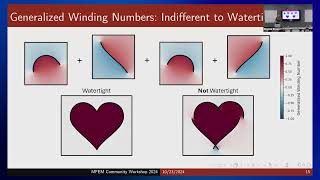
Robust Containment Queries over Collections of Parametric Curves via Generalized Winding Numbers
Discover advanced geometric containment query techniques for 2D regions using rational Bezier curves and generalized winding numbers, enabling efficient multiphysics simulations without expensive refinement processes.
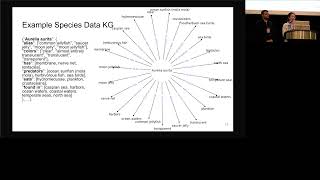
FathomGPT - A Natural Language Interface for Interactively Exploring Ocean Science Data
Explore an innovative natural language interface that revolutionizes ocean science data exploration and analysis through interactive visualization and AI-powered insights.

3D Sholl Analysis Using Python for Neuron Branch Mapping
Learn to perform 3D Sholl analysis in Python by creating concentric spherical shells around soma centers and calculating neuron branch intersections for detailed morphological analysis.