Decreasing the Economic Toll of Disasters - Science Policy Conference 2012
Experts discuss strategies to mitigate the rising economic impact of natural disasters, emphasizing risk understanding, data analysis, and protective measures for people and property.
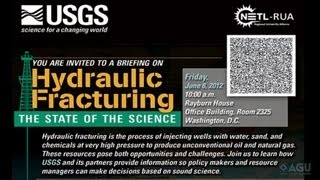
Hydraulic Fracturing - The State of the Science
Explore the science, opportunities, and challenges of hydraulic fracturing with experts from USGS and partners. Learn about unconventional oil and gas resources and their impact on policy and resource management.
From the Mississippi to the Gulf - Water Quality and Security
Experts discuss water quality issues from the Mississippi River to the Gulf of Mexico, including the aftermath of the Deepwater Horizon oil spill and strategies for monitoring and protecting vital waterways.
Faults in the East: Understanding Risks from New Madrid Fault Zone and Virginia Earthquake
Explore seismic risks in Eastern US, focusing on New Madrid and Virginia zones. Learn about historical events, recent findings, and efforts to understand and mitigate earthquake hazards in the region.
AGU 2011 Honors Ceremony
Ceremony honoring outstanding achievements in geophysical sciences, featuring awards for journalism, education, research, and leadership. Recognizes contributions across diverse fields and career stages.
Using Technology to Mitigate the Dangers of Airborne Volcanic Ash
Explore volcanic ash hazards and mitigation strategies using Earth science data and technology. Learn about volcano types, eruption indicators, and advanced modeling techniques for ash cloud prediction.
The Importance of Studying Clouds - NASA Cloud Science and Classroom Inquiry
Explore cloud science with NASA experts, covering topics like the water cycle, phase changes, and radiant energy. Engage in hands-on activities and learn to use NASA data for classroom projects.
The Climate Canary: Measuring Change on Antarctica's Pine Island Glacier
Explore Antarctica's Pine Island Glacier, its role as a climate indicator, and methods for measuring glacial change. Learn about ice dynamics, mass balance, and global implications through expert insights and hands-on activities.
Using Scientific Field Campaigns to Learn About Climate Science
Explore climate science through scientific field campaigns. Analyze atmospheric data, understand climate models, and engage in hands-on activities to enhance understanding of Earth's climate system.
Weather's Influence on Earthquakes - Press Conference
Explore the intriguing connection between weather patterns and seismic activity, featuring insights from experts on monsoons, icecap retreat, and their potential impact on earthquake occurrence.
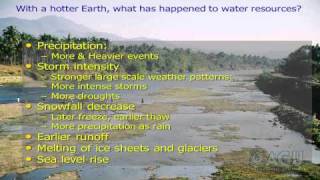
Climate Change: What's Going On and How Will It Affect Us
Explore the science behind climate change, its impacts on Earth systems, and potential future scenarios. Learn about evidence, models, and strategies for addressing this global challenge.
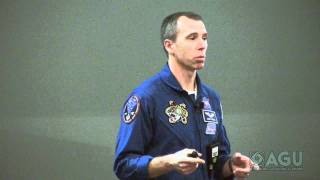
Adventures of a Geoscientist Astronaut - Nuts, Bolts, and Repairs in Earth Orbit
Geophysicist astronaut shares experiences from two space missions, including Hubble telescope repair and International Space Station assembly, offering unique insights into space exploration.
Recent Advances in Lunar Science - Results from NASA's Lunar Orbiter and India's Chandrayaan-1
Explore latest lunar discoveries from NASA and India's Chandrayaan-1 mission, presented by NASA scientist Noah Petro, offering insights into recent Moon studies and space exploration advancements.
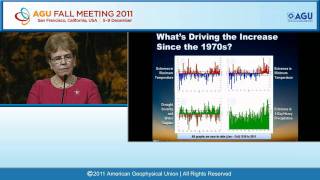
Predicting and Managing Extreme Weather and Climate Events - Fall 2011
Explore extreme weather prediction and management with NOAA's Jane Lubchenco. Learn about challenges in forecasting, monitoring, and mitigating impacts of various environmental events to enhance community resilience.
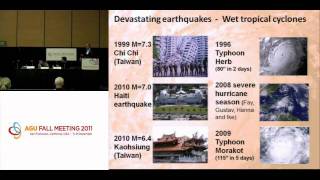
Weather's Influence on Earthquakes and Volcanoes
Exploring connections between weather patterns and seismic/volcanic activity, revealing how surface phenomena can influence underground events and potentially impact eruption timing.
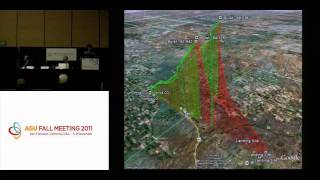
Innovations for Understanding Weather and Climate
New tools for weather and climate monitoring: mobile alerts for severe weather, advanced cloud radar systems, and high-altitude atmospheric gas sampling techniques to enhance forecasting and climate research.
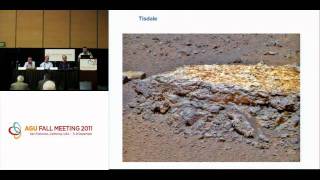
Opportunity's Latest Findings from Martian Crater Rim - 2011
NASA's Opportunity rover explores Endeavour Crater rim, revealing new insights into Mars' watery past. Scientists discuss findings, prepare for Martian winter, and reflect on mission's longevity as 8th anniversary approaches.
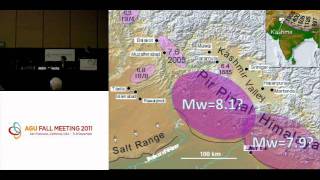
Is a Megaquake Brewing in the High Himalaya? - AGU Fall Meeting 2011 Press Conference
Researchers discuss potential for magnitude 9 earthquake in Kashmir Valley, using GPS monitoring and historical evidence to assess seismic risk in the densely populated Himalayan region.
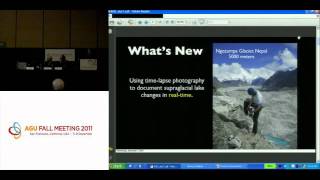
Mountain Glaciers - Dramatic Changes Caught on Film
Time-lapse photography reveals rapid changes in Nepalese glacier lakes, while studies show peak water reached for Western Hemisphere glaciers and concerning predictions for Canadian glaciers.
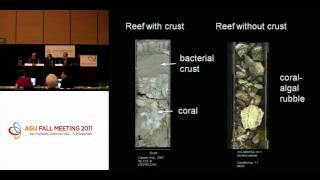
Ocean Acidification Impact on Coral Reefs - Press Conference
Experts discuss ocean acidification's impact on coral reefs, examining natural occurrences, lab simulations, and historical data to understand mechanisms and ecosystem vulnerability.

The Great Mississippi Flood of 2011 - Scientific Findings and Impacts
Explore the impacts of the 2011 Mississippi River flood on sediment distribution and ecosystem restoration efforts, with insights from researchers tracking nutrient movements and assessing restoration strategies.