Ecological Impacts of the Deepwater Horizon Oil Spill - 2011 AGU Fall Meeting
Researchers discuss long-term effects of Deepwater Horizon oil spill on Gulf ecosystems, including heavy metal contamination in oysters, impacts on coastal marshes, and changes in bacterial populations.
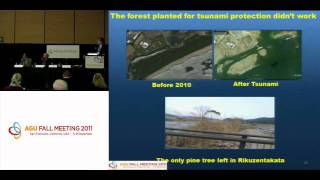
The 11 March 2011 Japan Tsunami - New Insights and Impacts - Press Conference
Insights from the 2011 Japan tsunami: wave behavior, coastal impacts, and global effects. Scientists discuss new findings on tsunami dynamics, damage patterns, and ecological consequences.
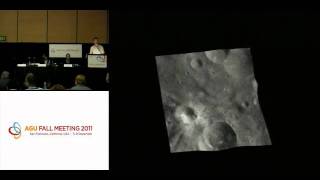
Dawn's New View of Asteroid Vesta - Geologic Maps and Surface Features
NASA's Dawn mission unveils groundbreaking geologic maps of asteroid Vesta, revealing diverse surface features, north-south dichotomy, and insights into its composition, history, and relationship to meteorites.
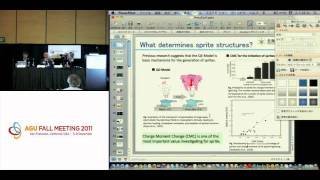
Sprites and Elves: 3D Observations of Upper Atmospheric Lightning Phenomena
Groundbreaking 3D observations of sprites and elves, mysterious luminous events in the upper atmosphere, reveal new insights into their formation and characteristics.
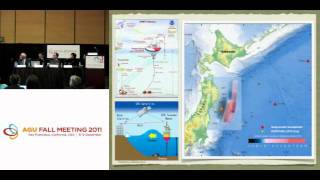
The 11 March 2011 Japan Tsunami - Scientific Assessments and Implications - Press Conference 1
Scientists discuss tsunami forecasting, eyewitness video analysis, and risk awareness implications following the 2011 Japan tsunami. Experts explore lessons for future preparedness and Pacific Northwest seismic risks.
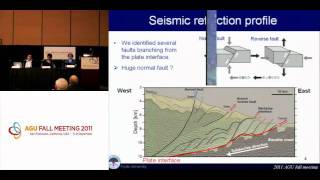
New Views of Japan's 11 March 2011 Tohoku Megaquake
Researchers reveal significant sea-floor changes and unique aspects of the 2011 Tohoku megaquake through submersible dives and seismic imaging, offering new insights into its dual nature and underlying geological factors.
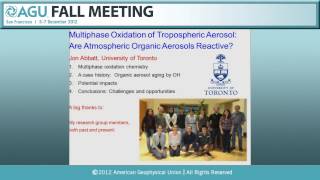
New Atmospheric Sciences Fellows Presentations - Fall Meeting 2012
Presentations by new Atmospheric Sciences Fellows covering topics like cumulus convection modeling, organic nitrates, aerosol oxidation, and extreme convective storms using satellite data.
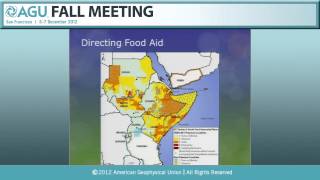
Advancing Drought Monitoring and Prediction - 2012 AGU Fall Meeting
Explore cutting-edge research on drought monitoring and prediction, including remote sensing, soil moisture analysis, and early warning systems for improved decision-making and humanitarian response.
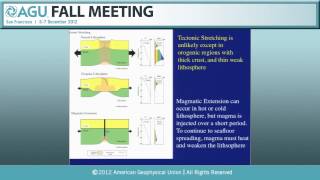
The Geodynamics of Plate Tectonics II - 2012
Explore cutting-edge geodynamics research on plate tectonics, including continental collisions, mantle plumes, subduction zones, and their effects on Earth's topography and magmatism.
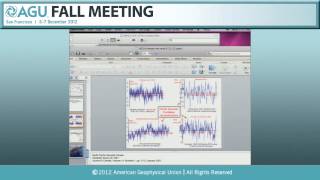
Nonlinear and Scaling Processes in the Atmosphere and Ocean at All Scales
Explore cutting-edge research on nonlinear and scaling processes in atmospheric and oceanic systems, covering climate reconstructions, sensitivity, long-range memory, megadroughts, turbulence, and micro-scale phenomena.
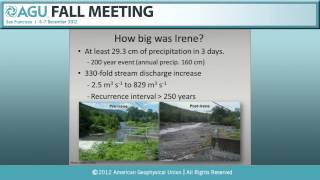
Impacts of Extreme Climate Events and Disturbances on Carbon Dynamics - Part 2
Explore how extreme climate events and disturbances affect carbon dynamics in ecosystems. Analyze impacts of droughts, fires, and other environmental factors on carbon fluxes and forest health across various regions.
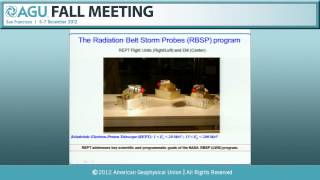
Magnetospheric Exploration: Basic Research with High Public Purpose
Exploration of Earth's magnetosphere and other planets' magnetic fields, highlighting scientific discoveries and their relevance to space weather and technological applications.
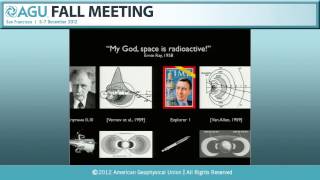
Dynamic Regimes of Space Plasmas - Deterministic or Stochastic? - Lecture 1
Explore statistical and physical aspects of self-organized criticality in solar flares and astrophysical phenomena, and the complexity of radiation belt electron transport at Earth.
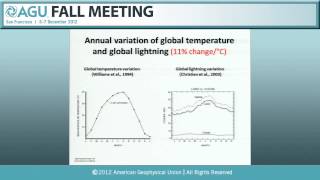
Lightning and Climate - Franklin Lecture 2012
Exploring lightning's role in climate change, its correlation with temperature and water vapor, and its potential as a climate indicator. Discusses challenges in long-term monitoring and the impact of aerosols on lightning activity.
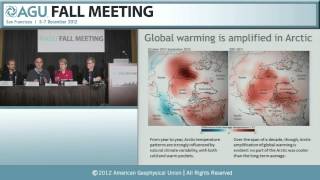
What's Going On in the Arctic - Fall 2012 Arctic Report Card Update
Experts discuss alarming Arctic changes: record sea ice loss, declining snow extent, rising permafrost temperatures, and extensive Greenland ice sheet melting, despite unremarkable air temperatures.
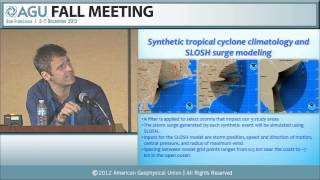
Living on the Edge: Societies on the Front Line of Coastal Change - 2012
Explore coastal resilience strategies, storm surge simulations, and socioeconomic impacts of sea-level rise. Experts discuss innovative approaches to address challenges facing coastal communities worldwide.
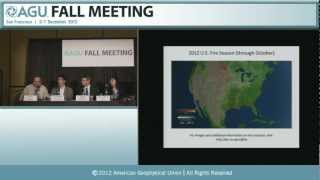
Fire in a Changing Climate and What We Can Do About It
Experts discuss recent trends in U.S. fire activity, climate projections, and potential changes in fire seasons across regions, offering insights into the relationship between climate change and wildfires.
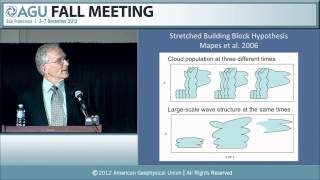
Tropical Convection: A Half Century Quest for Understanding
Exploring tropical convection's role in global climate, from field expeditions to satellite observations, revealing advances in understanding cloud-circulation interactions and their impact on weather patterns.
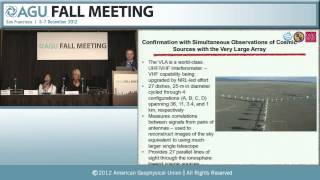
An Unlikely New Tool for Spotting Clandestine Nuclear Tests
Innovative use of GPS technology for detecting clandestine nuclear tests, exploring ionospheric disturbances and acoustic waves as potential indicators of underground explosions.
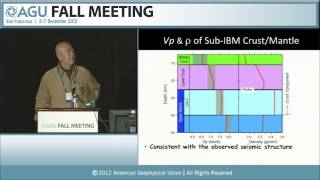
The Andesite Problem: Why is This Planet to be the Earth? - Bowen Lecture
Explore the Earth's unique geological features, focusing on continental crust formation, plate tectonics, and the role of water in shaping our planet's surface and internal dynamics.
Magnetotelluric Studies in East Africa: Imaging Subsurface Melt and Magma
Explore magnetotelluric studies in East Africa, focusing on imaging subsurface melt and magma. Learn about data collection, processing, and interpretation in interdisciplinary rift zone research.