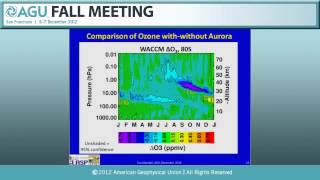
New Atmospheric Sciences Fellows Presentations - Session II
Presentations by new Atmospheric Sciences Fellows on climate change, Earth system models, particle precipitation, stratospheric aerosols, and precipitation processes in climate models.
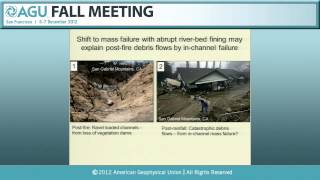
Bedrock Hillslopes to Deltas: New Insights into Landscape Mechanics - Sharp Lecture
Exploring landscape mechanics from bedrock hillslopes to deltas, examining sediment transport processes, erosion rates, and morphodynamics through field observations, experiments, and theoretical models.
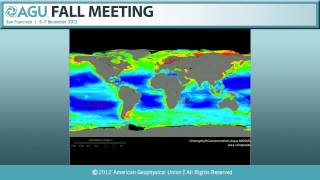
The Race to Understand a Changing Planet - Sagan Lecture 2012
Exploring Earth's rapidly changing climate, the lecture discusses advancements in climate modeling, satellite observations, and field experiments to improve future climate projections for informed decision-making.
Advancing Drought Monitoring and Prediction - Part II
Explore cutting-edge drought monitoring and prediction techniques, including global information systems, seasonal forecasting, and climate change impacts, with applications for decision-making in water resource management.
Disturbance Impacts and Responses in Ecosystems - Part 2
Explore ecological disturbances' impacts on biodiversity, climate, and ecosystems. Topics include invasive species, land-use changes, wildfires, and tree harvests across various biomes and their long-term consequences.
Space, Time, and Transport in Petrology and Geochemistry - Lecture 1
Explore cutting-edge research on diffusion, isotope exchange, and crystal growth in petrology and geochemistry. Gain insights into magma dynamics, metamorphism, and crust formation from leading experts.
Climate Change and Its Impact on Ancient Civilizations
Explore how climate change influenced ancient civilizations in the Middle East and Indian subcontinent, examining archaeological evidence and climate records to understand societal shifts.
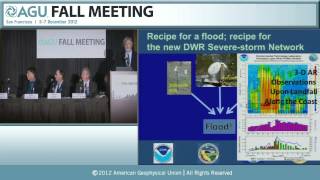
Improving Forecasts of Pineapple Express Storms - Fall Meeting 2012
Scientists discuss installation of atmospheric river observatories in California to enhance monitoring and prediction of powerful winter storms, aiding forecasters and resource managers in decision-making.
Voyager Mission Update: Latest Findings from the Edge of the Solar System
NASA scientists discuss Voyager mission's latest findings at the edge of our solar system, including cosmic rays, comets, and future communication prospects with the spacecraft.
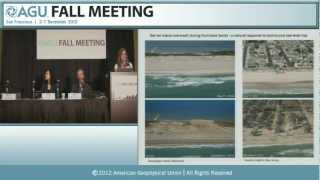
Superstorm Sandy, Black Swan Cyclones and Economic Impact - AGU Fall Meeting 2012
Experts discuss Superstorm Sandy's impact, future storm risks, and economic consequences. New data on coastal effects, forecasts, and the possibility of unprecedented cyclones in atypical regions are presented.
The North American Regional Climate Change Assessment Program - Overview and Results
Comprehensive overview of North American climate change research, covering regional simulations, impact assessments, and future projections across various environmental domains.
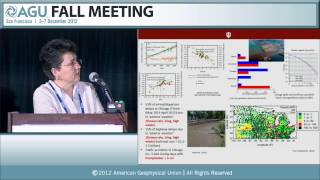
The National Climate Assessment - Key Findings and Regional Impacts
Comprehensive overview of the U.S. National Climate Assessment, covering engagement strategies, scientific findings, regional trends, and sector-specific impacts across the country.
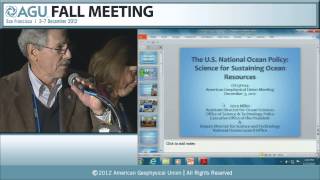
Sustainable Oceans - Fall Meeting 2012
Explore sustainable ocean management strategies addressing climate impacts, human health, pollution, and resource use. Gain insights on coastal ecosystem resilience and policy approaches for a changing Arctic environment.
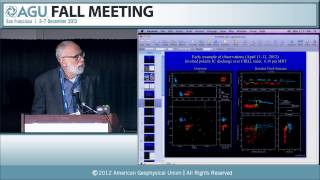
Lightning and Atmospheric Electricity in Thunderstorms - 2012
Explore cutting-edge research on lightning and atmospheric electricity in thunderstorms, covering topics like chemistry interactions, fractal analysis, forest fire impacts, and storm microphysics.
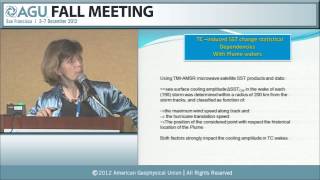
Science Results From Aquarius and SMOS Ocean Salinity Missions - 2012
Explore cutting-edge ocean salinity research from Aquarius and SMOS missions. Gain insights on tropical cyclones, ENSO, and innovative measurement techniques for understanding ocean dynamics.
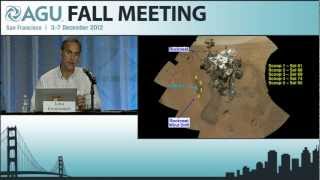
Mars Rover Curiosity's Investigations in Gale Crater
Discover the latest findings from NASA's Curiosity rover mission on Mars, including composition analysis and environmental observations in Gale Crater, presented by leading scientists.
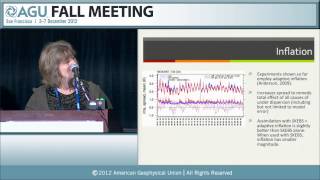
Data Assimilation in Geosciences - Fall Meeting 2012
Explore cutting-edge data assimilation techniques in geosciences, covering hybrid methods, land surface modeling, ensemble forecasting, and applications in meteorology and wind industry.
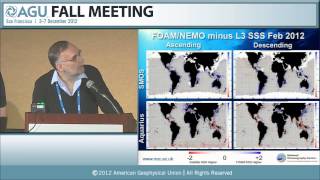
Science Results From the Aquarius and SMOS Ocean Salinity Missions - Fall 2012
Explore cutting-edge findings from Aquarius and SMOS ocean salinity missions. Gain insights into measurement techniques, algorithm improvements, and impacts on ocean systems understanding.
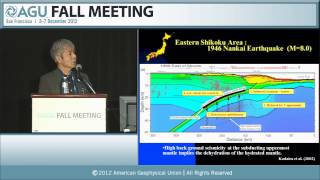
Cities on Subduction Thrusts - Seismic Risks and Structural Characteristics
Explore seismic risks and structural characteristics of subduction zones affecting major cities, including Seattle, Tokyo, and Wellington. Gain insights into earthquake hazards and geological features.
Ocean Acidification - Impacts, Challenges, and Policy Responses
Experts discuss ocean acidification's impacts on ecosystems, economy, and society, exploring mitigation strategies and policy implications for addressing this critical environmental challenge.
Water Management Strategies for Sustainable Resources - Science Policy Conference 2012
Experts discuss strategies for managing water resources, addressing challenges in infrastructure, and balancing water needs for agriculture, industry, and human consumption.