James Webb Space Telescope and the Search for Earth-Like Exoplanets
Panel discussion exploring JWST's potential to revolutionize exoplanet research, featuring astrophysicists discussing the telescope's capabilities to discover Earth-like planets and search for signs of life beyond our solar system.
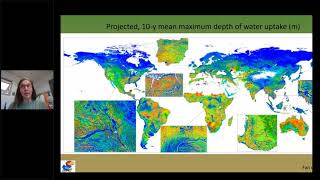
Soil Carbon Sequestration: Increasing Carbon Stocks in Deep Soil - Part 6
Explore strategies for increasing deep soil carbon stocks through historic rooting depth changes and crop breeding, featuring insights from experts on soil development and root characteristics.
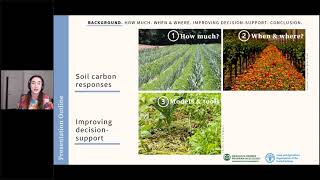
Soil Carbon Sequestration: When is Cover Cropping an Effective Practice?
Explore cover cropping's impact on soil carbon stocks and farm profitability through meta-analysis and economic research, featuring insights from UN FAO and Iowa State University experts.
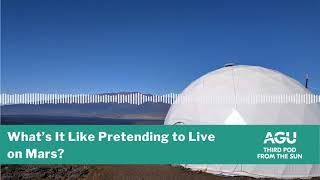
What's It Like Pretending to Live on Mars? - Simulating Long-Term Space Travel
Explore the psychological challenges of long-haul space travel through a writer's experience in a Mars simulation mission, focusing on food, team dynamics, and personal growth.
A Modern Way to Look for Aliens
Exploring innovative approaches to detect extraterrestrial intelligence, including indirect clues of technological development. Discusses efforts to establish SETI as a legitimate scientific discipline with academic infrastructure.
GeoHealth Career Development and Opportunities in Climate Change and Environmental Justice
Dr. White-Newsome discusses transforming communities through people-centered solutions, addressing climate change, public health, environmental justice, and racial equity, with a focus on career development.
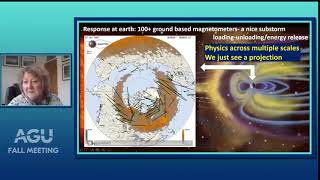
Multiscale Nonlinear Space Physics: From Fundamental Physics to Quantifying Risk - Ed Lorenz Lecture
Introduction to nonlinearity, complexity, and scaling in earth science processes, focusing on solar system plasmas. Explores challenges and progress in applying nonlinear physics concepts to space weather and magnetospheric dynamics.
Walking the Seismogenic Zone: A Field Geology Perspective on Earthquakes - Francis Birch Lecture
Explores earthquake cycles through field geology, examining ancient fault rocks to understand seismic behavior, transient conditions, and persistent changes that control fault deformation and slip patterns.
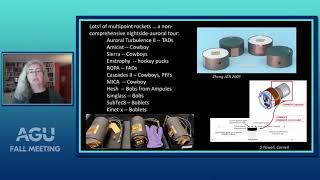
Exploring Near Earth Space with Sounding Rockets - Marcel Nicolet Lecture
Exploring near-Earth space using sounding rockets: innovative techniques, multi-payload campaigns, and groundbreaking discoveries in auroral ionospheric research, fostering new perspectives on Earth's environment.
Cassini's Chronicle of Carbon in the Saturn System - Eugene Shoemaker Lecture
Explore Saturn's carbon cycle through Cassini mission findings, revealing insights into the planet's atmosphere, rings, and moons in this AGU lecture honoring planetary scientist Eugene Shoemaker.
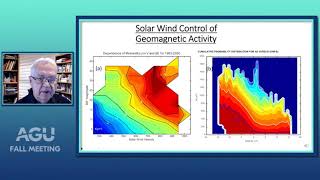
Solar Wind Coupling and Magnetospheric Substorms - James Van Allen Lecture
Explore solar wind coupling and magnetospheric substorms in this prestigious space science lecture, honoring James A. Van Allen's pioneering contributions to magnetospheric research.
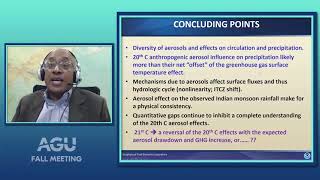
Aerosols and Their Gaming of the Climate System: Microscale Presence to Macroscopic Impacts
Exploring aerosols' impact on climate: from microscopic presence to macroscopic effects. Delves into how these tiny particles influence global climate systems and atmospheric dynamics.
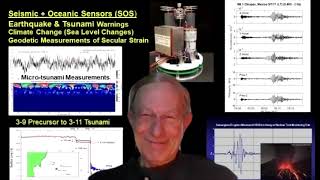
Beno Gutenberg Lecture - Seismology and Earth's Structure
Explore seismology's frontiers in this annual AGU lecture honoring Beno Gutenberg, featuring cutting-edge research and insights from leading experts in the field.
COVID-19 and the Earth System
Explore the impacts of COVID-19 mitigation strategies on emissions, the Earth System, and virus dynamics. Learn about research efforts examining these complex interactions.
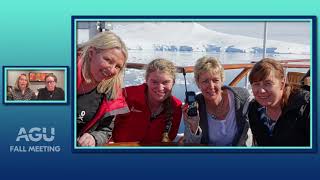
Hearts in the Ice - Climate Change Engagement Project in Spitzbergen
Explore the Hearts in the Ice project, connecting global efforts to address climate change through on-site research in Spitzbergen and engaging diverse stakeholders in Earth science communication.
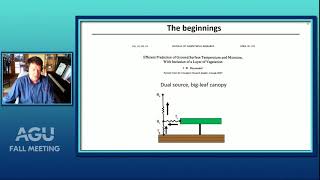
Seeing the Forest for the Trees: Forests, Climate Change, and Our Future
Explores the complex relationship between forests and climate change, tracing historical perspectives and advocating for an interdisciplinary approach to understand and address forest-climate interactions.
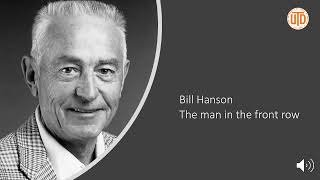
William B. Hanson and SPA Award Lectures 2020
Innovative space science lectures covering ionospheric dynamics, plasma turbulence, and shock waves. Highlights research contributions from early-career scientists and public outreach efforts in space physics.
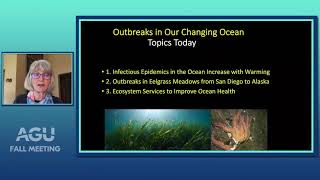
Oceanic Pandemics from Foundation to Keystone Species
Explore oceanic disease outbreaks affecting marine ecosystems, their impact on keystone species, and innovative monitoring techniques. Learn about nature-based solutions for pathogen reduction.
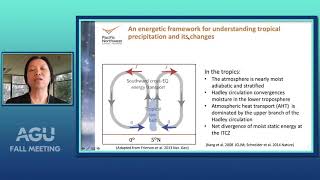
A Quest to Understand and Model Regional Precipitation and Their Future Changes
Explores precipitation from weather and climate perspectives, examining energetic frameworks, aerosol impacts, and extreme events to advance understanding and modeling of regional rainfall patterns and future changes.
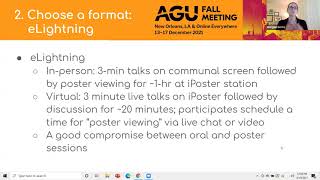
Proposing and Convening a Session at AGU - Early Career Webinar
Learn how to propose and convene a session at AGU Fall Meeting. Gain insights from experienced scientists on the process, timeline, and best practices for early career researchers to organize successful conference sessions.
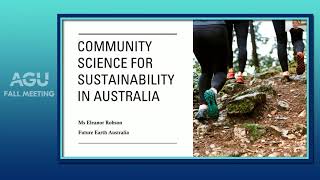
Adapting Community Science for International Operations
Explore how Thriving Earth Exchange's community science approach is adapted globally, featuring insights from Australia, Mongolia, and Senegal on motivations, projects, and expected impacts.