Knot Polynomials from Chern-Simons Field Theory and Their String Theoretic Implications by P. Ramadevi
Explore knot polynomials, Chern-Simons theory, and string theory connections. Learn about knot classification, invariants, homology, and gauge-string duality in topological strings. Discover M-theory descriptions and brane constructions.
Topological Strings, Knots, and Quivers - Lecture 1
Explore topological strings, knots, and quivers in this lecture covering knot invariants, Chern-Simons theory, A-polynomials, volume conjectures, and knot homology, with exercises and examples.
The Geometric Langlands Conjecture and Non-Abelian Hodge Theory - Lecture 1
Explore the Geometric Langlands conjecture and non-abelian Hodge theory, examining connections between quantum fields, geometry, and representation theory in modern mathematics and theoretical physics.
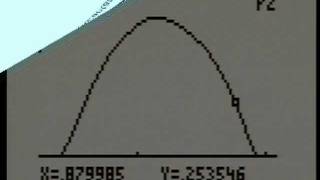
Measuring Speed - Average and Instantaneous Velocity - Part 1
Explore average and instantaneous velocity concepts through practical examples and data analysis techniques in this engaging calculus lesson.
Approximate Matrix Eigenvalues, Subspace Iteration With Repeated Random Sparsification
Explore efficient matrix eigenvalue approximation using subspace iteration and random sparsification, with applications in quantum chemistry and high-dimensional problems.
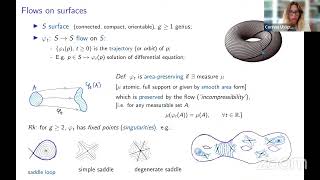
Corinna Ulcigrai - Dynamics and Arithmetics of Higher Genus Surface Flows
Explore dynamics of higher genus surface flows, examining discrete systems, arithmetic conditions, and ergodic integrals. Gain insights into mixing, shearing, and local linearization techniques.
The Positive Grassmannian, the Amplituhedron, and Cluster Algebras
Explore the positive Grassmannian and amplituhedron, delving into their combinatorial structures and connections to physics, integrable systems, and scattering amplitudes using oriented matroids, tropical geometry, and cluster algebras.
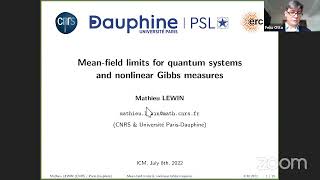
Mean-Field Limits for Quantum Systems and Nonlinear Gibbs Measures
Explore quantum systems, Bose-Einstein condensation, and nonlinear Gibbs measures in this advanced mathematics lecture on mean-field limits and symmetry-induced independence.
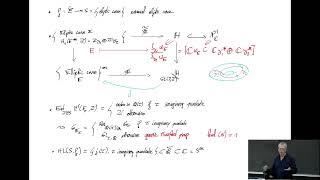
Hodge Theory, Between Algebraicity and Transcendence
Explore recent advances in Hodge theory, comparing algebraic structures and bounding transcendence using o-minimal geometry. Gain insights into complex algebraic varieties and their applications.
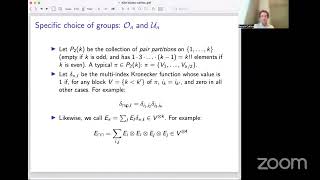
Weingarten Calculus and Its Applications
Explore Weingarten calculus and its applications in compact groups, quantum probability, and random matrix theory, with insights on theoretical properties and recent developments.
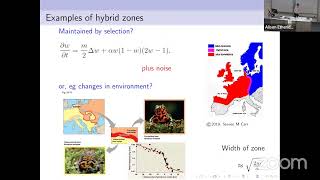
The Motion of Hybrid Zones - And How to Stop Them
Explore mathematical models of hybrid zones in population genetics, including deterministic approximations, curvature flow, and probabilistic proofs, with applications to invasions and blocking.
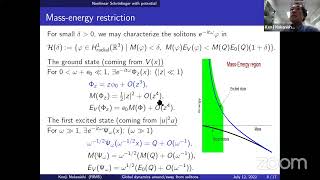
Kenji Nakanishi - Global Dynamics Around and Away From Solitons
Explore global dynamics of nonlinear dispersive PDEs, focusing on solitons in Klein-Gordon and Schrödinger equations. Analyze stability, multi-soliton interactions, and open questions in soliton behavior.
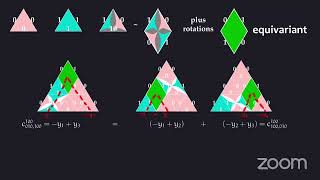
Allen Knutson- Schubert Calculus and Quiver Varieties
Explore Schubert calculus, quiver varieties, and their connections through puzzle rules, Yang-Baxter equations, and representation theory in this advanced mathematics lecture.
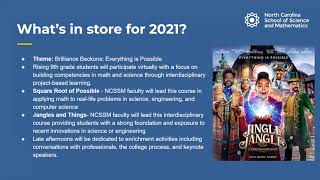
Step Up to STEM Summer Program Information Session 2021
Free summer program for underrepresented 9th graders in North Carolina, offering STEM and communication skills through real-world challenges. Includes campus living and enrichment activities in the Triangle area.

Convex Sunflower Theorems and Neural Codes
Explore convex sunflower theorems and neural codes, connecting neuroscience with discrete geometry to understand place cell encoding and cognitive mapping in rat hippocampus.
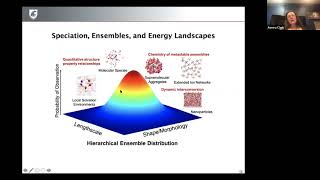
Topology in Chemistry Applications
Explore topological data analysis in chemistry, focusing on molecular relationships, graph theory, and network analysis to extract new insights from chemical data.
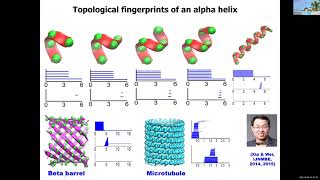
How Math and AI Are Revolutionizing Biosciences
Exploring how mathematics and AI revolutionize biosciences, focusing on tackling challenges in biological data complexity, dimensionality, and nonlinearity to enhance AI's capabilities in drug design and viral mutation prediction.
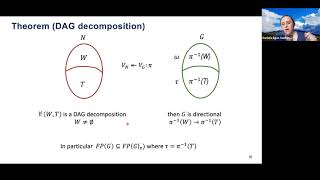
Nerve Theorems for Fixed Points of Neural Networks
Explore how network connectivity shapes neural activity using combinatorial threshold-linear networks. Learn about nerve theorems and their application in understanding fixed points of large neural networks.
Using Algebraic Geometry to Detect Robustness in Reaction Networks
Explore algebraic geometry techniques to detect robustness in reaction networks, focusing on absolute concentration robustness and its implications for biological systems.
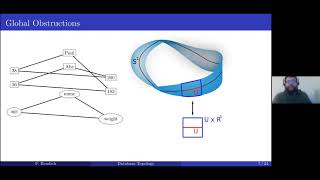
Data Complexes, Obstructions, Persistent Data Merging
Explore data complexes, topological obstructions in database JOIN operations, and persistence levels in data alignment. Learn about measure theory, homotopy, and homology in the context of data integration.
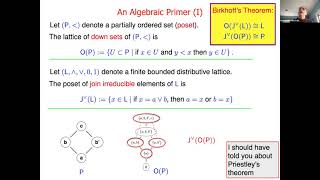
Nonlinear Dynamics in an Age of Heuristic Science
Explore nonlinear dynamics through combinatorial topology, offering efficient computational methods and new perspectives for multiscale systems and data-driven science in biology and engineering.