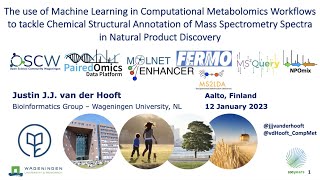
The Use of Machine Learning in Computational Metabolomics Workflows
Explore machine learning applications in computational metabolomics for metabolite structure analysis. Learn about tools like MS2LDA, MotifDB, Spec2Vec, and MS2DeepScore for improved metabolite discovery and characterization.
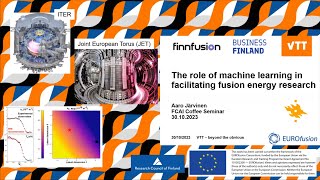
The Role of Machine Learning in Facilitating Fusion Energy Research
Explore machine learning applications in fusion energy research, including turbulence simulation speed-ups and predicting rare events. Gain insights into ML's potential to accelerate progress towards clean, abundant fusion energy.
Productive Performance Engineering for Weather and Climate Modeling with Python
Optimize weather and climate models using Python-embedded DSL and data-centric techniques. Improve productivity and performance through abstraction, semi-automated workflows, and transfer tuning for efficient scaling on supercomputers.
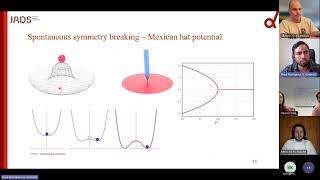
Spontaneous Symmetry Breaking in Generative Diffusion Models
Explore symmetry breaking in generative diffusion models, uncovering insights into their behavior and potential applications in AI and machine learning.
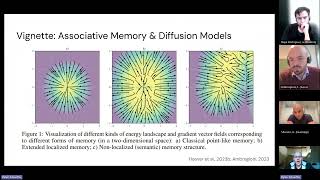
Bridging Associative Memory and Probabilistic Modeling
Explore the connection between associative memory and probabilistic modeling in this insightful presentation by Rylan Schaeffer.

Statistical Rule Learning for Materials Science
Explore statistical rule learning for materials science, focusing on interpretable modeling and data-driven knowledge discovery to improve machine learning models and drive hypothesis formulation.

Physics-Informed Neural Networks in Medicine
Explore physics-informed neural networks' applications in medicine, focusing on innovative technologies combining data assimilation and machine learning.
Probabilistic Machine Learning in Bioinformatics
Explore probabilistic machine learning applications in bioinformatics, focusing on cutting-edge techniques and their impact on biological data analysis.
Computational Physics in the Classroom
Explore three approaches to integrating computational physics in education, using modeling techniques to illustrate key principles and functions.
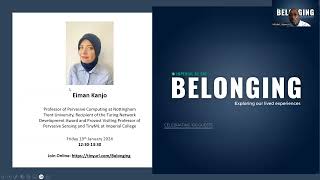
Beyond Limits: Making the Connection - Perspective, Resilience, and Personal Renewal
Explore personal growth, resilience, and overcoming challenges through Professor Kanjo's journey of self-discovery and professional development in engineering and computing.
Abdus Salam and the Fundamental Forces of Nature
Explore the legacy of Abdus Salam and his contributions to understanding fundamental forces, featuring insights from renowned physicists Prof. Dabholkar and Prof. Cox.
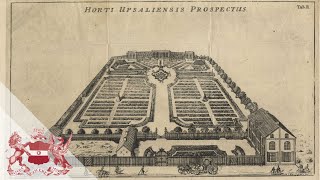
The Linnaeus Household - Identity and Materiality
Explore the Linnaeus household's role in shaping Carl Linnaeus's fame, examining social practices, academic life, and identity formation in 18th-century Uppsala.
Natural Artificial Intelligence - Keynote JuliaCon 2024
Exploring brain-inspired AI: Free Energy Principle, unsupervised learning, and real-time skill acquisition. Insights into brain computations and their application to AI engineering tools using Julia.
EventStorming - Collaborative Learning for Complex Domains
Explore EventStorming, a collaborative modeling technique for complex business problems. Learn how to quickly generate shared understanding and insights for effective software development.
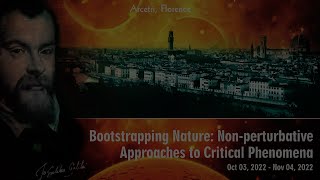
Measurement-Prepared Quantum Phases and Phase Transitions - From Ising Model to Gauge Theory
Explore measurement-prepared quantum phases, from Ising models to gauge theories. Discover symmetry breaking, long-range entanglement, and critical states in 2D and 3D systems.
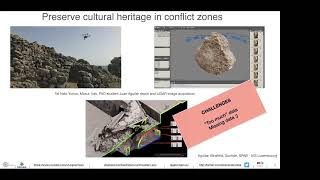
Digital Twins in Mechanics and Medicine - Data-Centric Engineering Webinar
Professor Stéphane Bordas explores digital twins in mechanics and medicine, highlighting data science applications for improving engineered systems' reliability, safety, and efficiency.
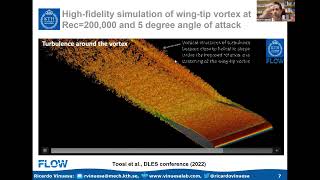
Modelling and Controlling Turbulent Flows through Deep Learning
Explore deep learning applications in modeling and controlling turbulent flows, from flow reconstruction to reinforcement learning for flow control, with insights on CNN architectures and transfer learning.
The 1972 Meadows Report: A Wake-up Call for Plant Science
Explore the impact of the 1972 Meadows report on plant science, examining paradigm shifts and new responsibilities in an increasingly turbulent world.
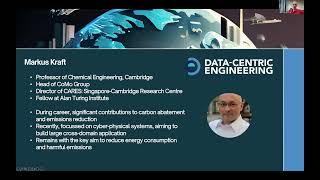
Augmenting Reality with The World Avatar - Dynamic Knowledge Graphs for Data-Centric Engineering
Explore "The World Avatar," a dynamic knowledge graph for digital replication, enabling data-centric engineering across scales to enhance efficiency, reduce costs, and improve sustainability.
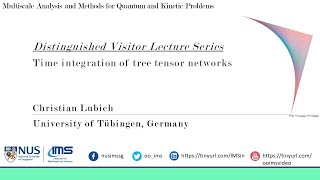
Time Integration of Tree Tensor Networks
Explore numerical methods for time-dependent quantum dynamics using tree tensor networks, focusing on efficient algorithms and error analysis for high-dimensional problems.
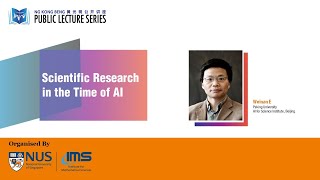
Scientific Research in the Time of AI
Explore AI's impact on scientific progress, from leveraging fundamental principles to utilizing data. Discover ongoing projects shaping new research infrastructure.