Uniting Sustainability and Edge Computing: Kepler and Open Horizon on RISC-V and Heterogeneous Systems
Explore integrating Kepler and Open Horizon for energy-efficient cloud-edge computing across diverse hardware, including RISC-V. Demonstration of use case optimizing distributed systems for sustainability.
Understanding the Buzz Around Cilium: Introduction and Production Use at Alibaba
Explore Cilium's evolution from a networking CNI to a comprehensive solution for observability and security, with insights on its implementation at Alibaba Cloud and future directions.
Tools for Agent-Based Modelling in Developmental Biology
Explore tools for agent-based modeling in developmental biology using Julia, including SpatialHashTables.jl, BoundedDegreeGraphs.jl, and AgentTools.jl. Learn about Position-Based Dynamics for particle simulations.
What's New with Turing.jl and Its Ecosystem
Explore updates to Turing.jl, a probabilistic programming framework in Julia for Bayesian inference, and its expanding ecosystem of modular packages for enhanced usability and extensibility.
Using Python to Assess Landslide Risk: A Matter of Life and Death
Exploring Python's role in analyzing landslide risk in Southeast Alaska, showcasing how data analysis can create a community-driven early warning system for potential disasters.
Open Source Industrial Control: Turning 2,800 Tons of Metal with Python and Flask
Discover how Python and Flask revolutionize hydropower generator maintenance, enhancing safety and efficiency in turning massive rotors with precision for the Bureau of Reclamation's operations.
The Design of Everyday APIs - Principles of Good API Design
Explore principles of good API design: simplicity, consistency, and flexibility. Learn to create ergonomic APIs through real-world examples and iterative improvements for delightful user experiences.
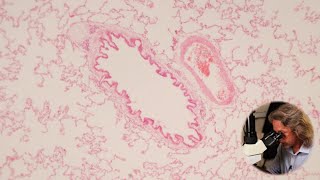
Histology of the Airway and Lungs - A Visual Exploration
Explore the intricate cellular structure of airways and lungs through microscopic examination, understanding their functions and clinical relevance in respiratory health.
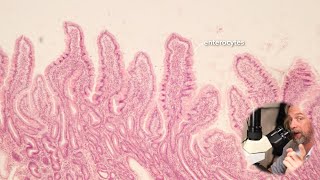
Histology of the Small Intestine: Duodenum, Jejunum, and Ileum Comparison
Explore cellular anatomy of the small intestine, examining epithelium, villi, crypts, and more. Compare duodenum, jejunum, and ileum structures, relating to diseases like celiac.
Using a Photoresistor in Arduino Projects - Lesson 33
Learn to incorporate a light sensor into Arduino projects using a photoresistor. Explore the physics behind photoresistors and build practical circuits for light-sensitive applications.
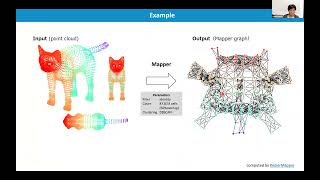
Single-cell Trajectory Analysis with V-Mapper
Explore V-Mapper, an innovative method for analyzing single-cell gene expression data. Learn how it extracts topology and flow of cell differentiation, enhancing trajectory inference in high-dimensional spaces.

Computing Generalized Ranks of Persistence Modules via Unfolding to Zigzag Modules
Efficient algorithm for computing generalized ranks of persistence modules using unfolding to zigzag modules, with applications in algebraic topology and data analysis.
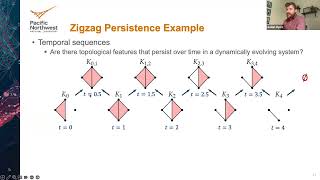
Understanding Temporal Hypergraph Dynamics with Zigzag Persistence
Explore temporal hypergraphs and zigzag persistence to analyze complex systems' topological evolution, applied to cybersecurity and social networks for understanding underlying dynamics.
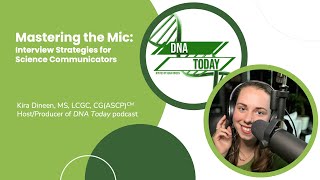
Mastering the Mic: Interview Strategies for Science Communicators
Discover interview strategies for science communication with podcast host Kira Dineen. Learn podcast basics, networking tips, and effective interviewing techniques to enhance your skills as a host or guest.

Comparing Top Large Language Models for Python Code Generation - 340
Experiment comparing top LLMs for Python code generation in scientific image analysis. Tests models' ability to segment nuclei, measure intensities, and calculate ratios in microscopy images.
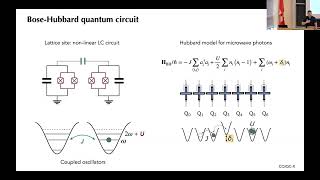
Assembling and Controlling Photonic Quantum Matter - Solids, Fluids and Cats
Explore cutting-edge research on photonic quantum matter, including solids, fluids, and cat states, with insights into assembly and control techniques.
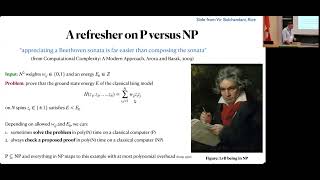
Complex Quantum Matter and the Boundaries Between Classical and Quantum Computers
Explore quantum matter complexities and the evolving interface between classical and quantum computing paradigms in this cutting-edge Fields Institute presentation.
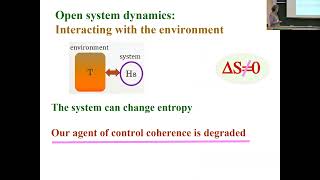
Quantum Control of Open Systems - Entropy Changing and Entropy Preserving Maps
Explore entropy-changing and entropy-preserving maps in quantum control of open systems, advancing understanding of quantum information and control techniques.
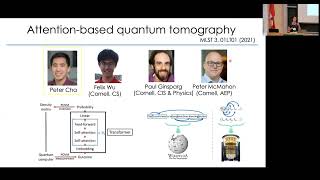
Attention to Quantum Complexity
Explore quantum complexity through advanced concepts and cutting-edge research, presented by Cornell University expert Eun-Ah Kim at a prestigious international conference.
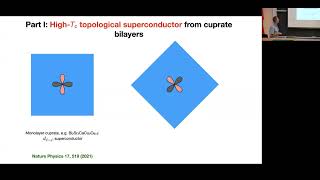
D-mon: An Improved Transmon Qubit Based on a Cuprate Josephson Junction
Explore advancements in quantum computing with the d-mon, an enhanced transmon qubit utilizing cuprate Josephson junctions, presented by Marcel Franz from UBC.
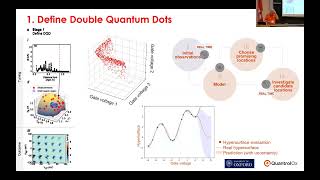
Accelerating Quantum Progress Through Machine Learning
Explore how machine learning can accelerate advancements in quantum technology, enhancing quantum information and control capabilities.