Free Energy Minimisation for Perception as Inference
Explores predictive processing theory and free energy principle in perception, comparing Helmholtz machine and message passing approaches to neural inference and consciousness.
Informational Models of the Phenomenon of Consciousness and the Mechanistic Project
Exploring informational models of consciousness, their methodological contributions, and limitations in guiding mechanistic research. Critiques panpsychist interpretations and discusses quantitative recharacterizations.
Information Structures and Consciousness
Exploring brain dynamics through evolving informational structures, linking to consciousness theories and providing insights into disorders of consciousness with high-precision classification.
Insights from the Conscious Turing Machine - A Machine Model for Consciousness
Explore a substrate-independent model of consciousness inspired by Turing's computation model and Baars' Global Workspace theory, offering insights into conscious experiences across animals and machines.
Consciousness Meets AI for a New Paradigm
Exploring connections between consciousness and AI, combining theories like Global Workspace Theory with deep learning to develop a new paradigm for general-purpose intelligence and brain-to-brain communication.
Conscious Dynamic Polytopes and Physical Interfaces
Exploring conscious agent theory, polytope dynamics, and their connection to particle physics, offering insights into the mind-body problem and emergence of spacetime.
Fusing Agents and Qualia - A Formal Solution to the Combination Problem
Explores a formal theory of consciousness, proposing that agent interactions create complex structures and fuse subjects and qualia, with spacetime as an interface for these interactions.
On the Degrees of Freedom Worth Having - Psychedelics and Free Will
Explore the intersection of psychedelics, free will, and consciousness. Discover how serotonergic pathways may influence volitional capacities and adaptive flexibility in human cognition and behavior.
Consciousness - Coherence of Modalities
Explores a coherence-based theory of consciousness, proposing structured nets and dynamic mappings as key elements. Discusses data structures, neural codes, and links to mathematical concepts.
Can IIT Resolve the Problem of Wigner's Friend?
Exploring superpositions of conscious states through IIT and quantum mechanics, addressing Wigner's thought experiment and its implications for understanding consciousness.
A Theoretical Computer Science Approach to Consciousness and AGI
Explore a theoretical computer science approach to consciousness and AGI through the Conscious Turing Machine model, offering insights into processor utilization and problem-solving.
Holographic Quantum Theory of Consciousness
Explore the quantum nature of consciousness, its connection to brainwaves and Schumann Resonances, and how quantum information theory can illuminate neuroscience and human experience.
Consciousness as a Coordination Mechanism
Exploring the hypothesis that consciousness arises from brain signal coordination, drawing parallels between neural traffic and road networks to understand global optimization patterns in brain activity.
Thresholds, Noise and Response Bias - Insights from Blindsight
Explores perceptual decision-making, thresholds, and blindsight, challenging assumptions about visual awareness and highlighting the role of response criteria in conscious behavior.
Quantum Instrument Models in Cognitive Science
Explores quantum instrument models in cognitive science, explaining non-Bayesian belief updates in the "question order effect" while maintaining response replicability, challenging previous quantum approaches.
Model Templates for Minimal Models of Consciousness
Exploring model templates as a tool for analyzing consciousness theories, focusing on the free energy principle and its application across disciplines.
Consciousness and Free Will - A Physical Hypothesis for Distinguishing Humans from AI
Exploring a physical hypothesis for free will and consciousness based on quantum processes in the brain, distinguishing human cognition from AI through perception of parallel worlds.
Discovery of a Peri-Somatic Physical Effect Related to Consciousness
Groundbreaking research on a quantum physical effect potentially linked to consciousness, using a novel photoelectronic device to measure light wave interference near the body during different states.
Local Friendliness Violations - Experimental Metaphysics and the Nature of the Observer
Exploring quantum mechanics' challenge to local agency and objectivity through experimental metaphysics, with implications for understanding consciousness and the nature of observers.

Toward a Carbon Aware Cloud
Explore strategies for reducing carbon emissions in cloud computing, focusing on energy-efficient practices and sustainable infrastructure design.
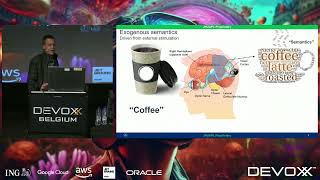
Explainable AI Analysis Visualization - Applications from Brain Computer Interfaces to ChatGPT
Explore cutting-edge applications of explainable AI, from brain-computer interfaces to ChatGPT, with a focus on analysis and visualization techniques.