Learning Shallow Quantum Circuits and Quantum States in Polynomial Time
Efficient algorithms for learning shallow quantum circuits and states, extending to polylog depth. Key techniques involve reconstructing low-complexity quantum systems from local observables.
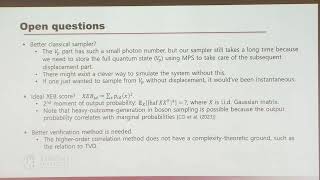
Classical Algorithm for Simulating Experimental Gaussian Boson Sampling
Explore a classical algorithm for simulating Gaussian boson sampling, challenging claims of quantum advantage in current experiments with high photon loss rates.
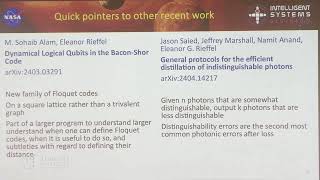
A NASA Perspective on Quantum Computing - Recent Results in Distributed Computing
Explore NASA's quantum computing research, focusing on distributed computing advancements in the quantum CONGEST-CLIQUE Model for optimization problems relevant to space missions.
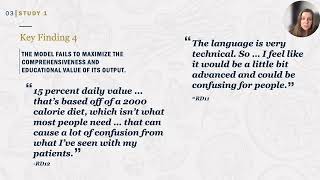
Integrating Expertise in LLMs: Crafting a Customized Nutrition Assistant - CHI 2024
Explore the development of a GPT-based nutrition assistant, integrating dietitian expertise to enhance food product explanations and personalized nutrition information generation.
Understanding Lower-Level Intelligence from AI, Psychology, and Neuroscience Perspectives
Explore lower-level intelligence through AI, psychology, and neuroscience perspectives with insights from three experts in a concise, multi-disciplinary discussion.
Principles of Learning in Distributed Neural Networks
Explore how depth shapes learning dynamics in the brain, analyzing deep network models and their implications for neural representations and behavior in rodent studies.
Relational Predictive Reasoning in Brains and Machines
Exploring predictive models in deep learning, comparing AI and brain representations, and discussing Graph Neural Networks for simulating complex dynamical systems.
Physical Problem-Solving in Minds and Machines
Explore cognitive and machine models for flexible physical problem-solving, focusing on object factorization, relations, and physics to enhance efficiency and generalization in AI and natural intelligence.
A Multimodal Automated Interpretability Agent - Understanding Lower-Level Intelligence
Explore a multimodal AI agent for automated interpretability, bridging AI, psychology, and neuroscience to understand lower-level intelligence.
Understanding Lower-Level Intelligence - AI, Psychology, and Neuroscience Perspectives
Exploring the impact of AI on scientific problem-solving and the evolving role of human insight in an era of rapid technological advancement.
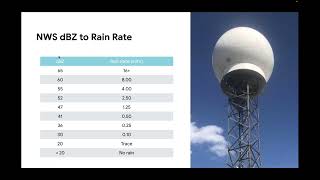
Interactive Explainable AI - Enhancing Trust and Decision-Making
Explore interactive Explainable AI techniques, human factors in AI decision-making, and practical strategies for enhancing XAI services. Learn to understand and trust AI predictions for effective decision-making.
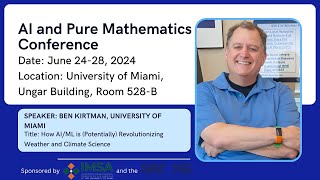
How AI/ML is Revolutionizing Weather and Climate Science
Explore how AI and machine learning are transforming weather and climate science, revolutionizing predictions and enhancing our understanding of complex atmospheric systems.
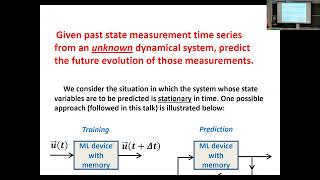
Machine Learning for Prediction of Earth Climate and Weather
Explore cutting-edge applications of machine learning in predicting Earth's climate and weather patterns, enhancing our understanding of complex atmospheric dynamics.
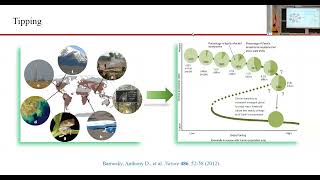
Predicting Tipping Points with Reservoir Computing
Explore reservoir computing techniques for predicting critical transitions in complex systems, with applications in climate science and ecology.
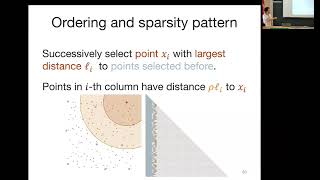
Ensemble Forecasts in Reproducing Kernel Hilbert Space Family
Explore advanced techniques for ensemble forecasting using reproducing kernel Hilbert spaces, enhancing predictive accuracy in dynamical systems and machine learning applications.
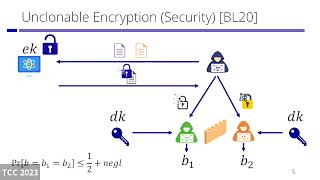
Quantum Cryptography - Theoretical Foundations and Applications
Explore quantum cryptography's foundations, challenges, and future prospects in this comprehensive session on cutting-edge security technologies.
Breaking Down Barriers to High-Performance Computing
Exploring initiatives to enhance Ubuntu for scientific computing and HPC, discussing open-source projects, promoting wider adoption, and addressing challenges in the HPC ecosystem.
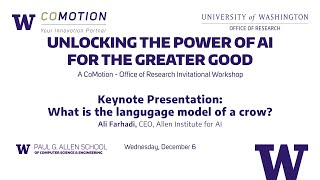
Unlocking the Power of AI for the Greater Good
Explore AI's potential for societal benefit through innovative research, ethical considerations, and real-world applications in this thought-provoking keynote by Ali Farhadi.
Artificial Intelligence and Quantum Computing - TEDxUWMadison 2023
Explore quantum computing's potential with Martin Lichtman as he delves into its workings and applications, bridging atomic physics and information science to unlock nature's complexity for solving big problems.
Quantum Error Correction - Lecture 2
Explore quantum error correction techniques to protect quantum information from decoherence and noise, enhancing the reliability of quantum computations and communication systems.
Noise-Adapted Quantum Error Correction and Fault Tolerance
Explores noise-adapted quantum error correction and fault tolerance techniques, focusing on strategies to mitigate errors in quantum systems for improved computational reliability.