Spacetime Topological Defect Networks and Floquet Codes - Dominic Williamson
Explores topological defect networks and Floquet codes in quantum systems, covering anyons, toric code, TQFT dynamics, and spacetime defects. Provides insights for researchers in integrable models and quantum physics.
To Learn and Cancel Quantum Noise - Zlatko Minev (IBM)
Explore quantum noise cancellation using probabilistic error correction and sparse Pauli-Lindblad models on noisy quantum processors, with insights on implementing and generalizing this approach.
Black Holes and Quantum Information - Thomas Hartman
Explores connections between black holes and quantum information, discussing Hawking radiation, island effect, and replica wormholes. Addresses key questions in quantum gravity and implications for cosmology.

Classical and Quantum Simulations of Nuclear Dynamics - Sofia Quaglioni
Explore nuclear dynamics through classical and quantum simulations, combining chiral effective field theory with ab initio methods for accurate S-factor evaluations and quantum computing applications in scattering theory.
Kubernetes as a Substrate for ATLAS Compute
Exploring Kubernetes' potential for ATLAS experiment computing, including batch processing, GPU resource management, and interactive analysis clusters for high-energy physics research.
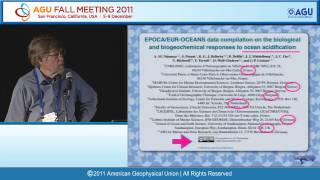
Data and Information Quality in Predictive and Contentious Science - Fall Meeting 2011
Explore the critical importance of data and information quality in predictive science, focusing on its impact on contentious scientific debates and decision-making processes.
OpenTelemetry vs eBPF - Comparing Observability Approaches
Explore OpenTelemetry and eBPF for observability, comparing strengths and weaknesses. Learn how they complement each other, focusing on request tracing and future developments in cloud-native monitoring.
Kubernetes on the Edge with K3s for Smart Metering - Use Case and Implementation
Explore K3s for edge computing in smart metering, leveraging CNCF projects like Prometheus and Helm to aggregate IoT data on-site before cloud transmission in industrial settings.
Network Policies - The Not-So-Hard Way
Practical workshop on implementing Cilium Network Policies in Kubernetes. Learn fundamentals, approaches, and tools for securing application traffic and creating effective network policies.
Introduction to Volcano: Cloud Native Batch System
Explore Volcano, a cloud-native batch system for high-performance workloads on Kubernetes. Learn about its architecture, features, use cases, and recent developments in this comprehensive introduction.
Longhorn: Introduction, Deep Dive, and Q&A - Cloud-Native Distributed Block Storage
Explore Longhorn, a cloud-native distributed block storage solution for Kubernetes. Learn its features, architecture, and recent developments through an introduction, deep dive, and interactive Q&A session.
Be the Change Our Planet Seeks: How You Can Contribute to Running Environment-Friendly Workloads on Kubernetes
Discover sustainable software engineering principles for Kubernetes workloads and learn actionable steps to reduce carbon footprint in your projects, contributing to a greener tech industry.
Effortless Open Source Observability with Cilium, Prometheus and Grafana
Discover how Cilium leverages eBPF to provide seamless observability for applications using Prometheus metrics, without code modifications. Learn to monitor service connectivity and collect tracing data with open-source tools.
Kubernetes from Scratch for Neuroscientific Research
Explore how the Blue Brain Project implemented Kubernetes for neuroscientific research, detailing their journey, challenges, and solutions in building a tailored cluster setup for scientific organizations.
Cloud Native Edge Computing with KubeEdge - Updates and Future
Explore KubeEdge's latest updates, new user adoptions, and future developments in cloud-native edge computing. Learn about recent features and applications in satellites, vehicles, and offshore oil fields.
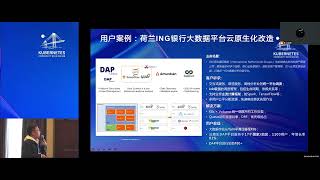
Volcano for FinTech Big Data on Kubernetes
Explore how Volcano enhances FinTech BigData operations on Kubernetes, optimizing resource management and workflow efficiency for financial technology applications.
Efficient Scheduling of High Performance Batch Computing for Analytics Workloads with Volcano
Explore how ING uses Volcano scheduler for efficient, multi-tenant large-scale processing in advanced analytics, enabling dynamic allocation and resource fairness for over 300 internal projects.
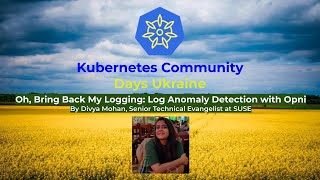
Log Anomaly Detection with Opni - AI-Powered Insights from Kubernetes Logs
Explore AI-powered log anomaly detection with Opni for Kubernetes, Rancher, and Longhorn. Learn setup, use cases, and future plans for extracting valuable insights from infrastructure logs.
Adopting Network Policies in Highly Secure Environments
Learn to secure Kubernetes networks using Cilium Network Policies, focusing on application-aware and identity-based security. Explore strategies for different exposure types and leverage observability tools for effective policy management.
Evaluating the Energy Footprint of GitOps Architectures - A Benchmark Analysis
Explore the energy consumption and CO2 emissions of GitOps architectures through benchmark analysis, providing insights for eco-friendly decision-making in cloud-native environments.
GitOps Sustainability with Flux and ARM64
Explore GitOps sustainability using Flux and arm64, covering performance benefits, cost savings, and environmental impact. Learn steps to recompile workloads and implement best practices for efficient cloud-native operations.