Alan Turing and the Other Theory of Computing and Can a Machine Be Conscious?
Explore neuroscience advances in understanding consciousness, including the Global Workspace Model and its computational implications, with insights on free will and determinism.
Solving for Climate: Chasing Hurricanes Through Computational Modeling
Computational modeling of hurricanes and natural hazards, exploring their response to atmospheric dynamics and climate change impacts on economic and social outcomes.
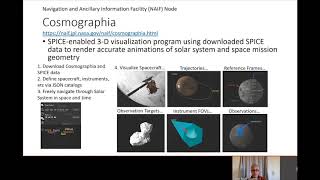
Recent Advancements in Planetary Data Archiving
Explore cutting-edge tools and services for planetary data archives, focusing on delivery, discovery, and analysis. Learn about innovations from NASA's PDS and ESA's PSA within the IPDA partnership.
Explainable AI for the Geosciences
Explore machine learning interpretation techniques in geoscience, focusing on climate science applications and their potential for scientific discovery and increased trust in AI outputs.
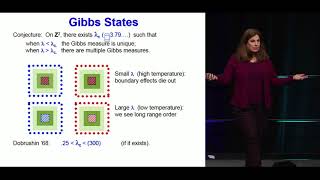
Emergent Phenomena in Random Structures and Algorithms
Explore emergent phenomena in random structures and algorithms, focusing on mathematical insights and applications in complex systems and computational methods.
Modeling Flow and Transport in Fractured Rock Using Machine Learning
Integrating computational physics, machine learning, and graph theory to model flow and transport in fractured rock systems, offering a paradigm shift from high-fidelity models to efficient coarse-scale graphs.
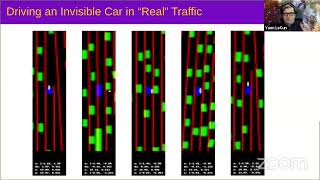
The Deep Learning - Applied Math Connection
Explore the intersection of deep learning and applied mathematics, focusing on advancements in signal processing, optimization, and self-supervised learning for predictive modeling.
Safety and Open Source Software: Evolution and Future Directions
Explore the evolution and future of safety in open source software, focusing on challenges, best practices, and the ELISA Project for safety-critical systems.
Exploring Runtime Security and Forensics Using eBPF
Discover how eBPF enhances runtime security and forensic analysis, offering advanced threat detection and system monitoring capabilities for improved cybersecurity.
Blockchain in Action: Fighting Climate Change Through Traceability and Transparency
Exploring blockchain's impact on climate change through real-world applications in traceability, sustainability, and cross-industry collaboration for a greener future.
Monitoring Energy Consumption and Building Energy Efficient Systems the Cloud Native Way
Explore Kubernetes-based Efficient Power Level Exporter (Kepler) for container-level energy consumption metrics, enabling energy-efficient cloud systems through observability and sustainable cluster management.
Linux for Space - Mission Begins
Explore Linux4Space: an open-source initiative to create a standardized Linux distribution for space applications, based on industry requirements and stakeholder collaboration.
Open Source for Energy Transition via Data Management
Explore how open-source data management drives energy transition, focusing on RTDIP's role in standardization, digitalization, and efficiency gains for global decarbonization efforts.
Bluetooth in Cockpit Systems
Explore Bluetooth integration in modern cockpit systems, focusing on connectivity, security, and user experience enhancements for automotive applications.
Quantum Information Science
Explore quantum information science with a distinguished professor, covering key concepts and recent advancements in this cutting-edge field of physics.
Machine Learning in Biology - Teaching a Glider to Soar Like a Bird
Explore machine learning's role in enhancing autonomous glider performance, inspired by bird soaring techniques and atmospheric dynamics.
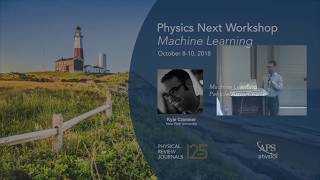
Machine Learning Applications in Particle Physics, Astronomy, and Cosmology
Explore machine learning applications in cosmology and astronomy with NYU's Kyle Cranmer, featuring insights from the 2018 Machine Learning Physics Next workshop.
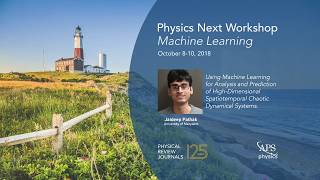
Machine Learning for Analysis of High-Dimensional Spatiotemporal Chaotic Dynamical Systems
Discover how machine learning techniques can analyze and predict complex chaotic systems, with insights from cutting-edge research in physics and data science.
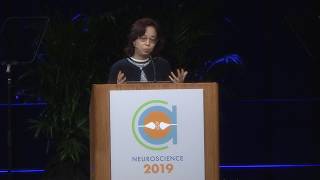
Dialogues Between Neuroscience and Society - AI and Machine Learning's Impact on Human Experience
Pioneering AI expert discusses transformative potential of machine learning, emphasizing ethical stewardship to augment human experience and serve diverse global populations.
Reproducible Multi Element System Composition with Linux, Xen and Zephyr
Explore system architectures for safety-critical systems using Linux, Xen, and Zephyr. Learn about reproducible prototyping, documentation, and collaboration in open-source projects for complex systems.
Overview of CAN Subsystem in Zephyr
Explore the Controller Area Network protocol, its features, and implementation in Zephyr. Learn about CAN bit timing, message frames, driver development, and application testing using can-utils.