
Radio Wave Fundamentals for Wireless LANs - Part 1
Explore radio wave fundamentals, electromagnetic principles, and wireless network types in this comprehensive introduction to WLAN technology and standards.
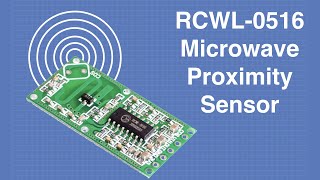
Microwave Proximity Sensor - With and Without Arduino
Explore microwave proximity sensing with RCWL-0516. Learn standalone and Arduino-integrated setups, including latching and remote sensing applications. Gain practical skills in Doppler effect-based detection.
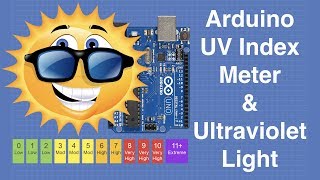
Arduino UV Index Meter - Working With Ultraviolet Light
Learn to build an Arduino-based UV Index meter, explore UV light properties, and create two versions: a basic model and an advanced design with temperature and humidity sensors.

Understanding How Light Emitting Diodes -LEDs- Work
Explore the physics behind LEDs, from semiconductor basics to color generation. Gain insights into voltage-current relationships and diode connections for a deeper understanding of LED operation.
Measuring Speed of Sound With HC-SR04 Sensor
Learn to measure the speed of sound using an Arduino and HC-SR04 sensor. Practice dimensional analysis, unit conversion, and apply math skills in a practical, hands-on project.

Understanding Photoresistors and Photo Detectors
Learn to use photoresistors with Arduino, exploring their physics and creating a light-sensitive LED project. Gain practical skills in circuit building and programming for real-world applications.
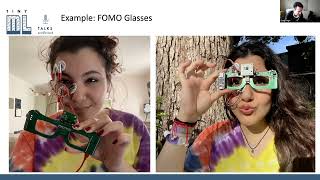
TinyML4STEM - Using TinyML for Neuroscience in K12
Explore how tinyML and neuroscience combine to create engaging STEM education experiences for K-12 students, featuring insights from a successful pilot collaboration with Backyard Brains.
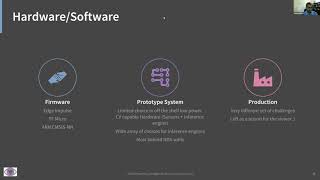
Low Power CV Meets the Real World
Explore practical considerations for implementing computer vision in low-power IoT devices, covering hardware accelerators, algorithms, optics, and real-world challenges.

Sending Data with Sound Using Wave-share
Explore data transmission using sound waves with Wave-share, an out-of-band technique utilizing built-in microphones and speakers in smartphones and computers.
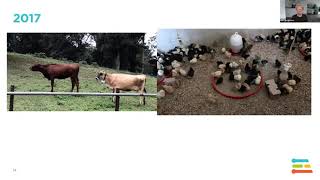
Chasing Cows - Making Africa Smarter With Embedded ML
Explore embedded ML applications in African agriculture and conservation, from cow health monitoring to elephant tracking, addressing unique challenges and local solutions.
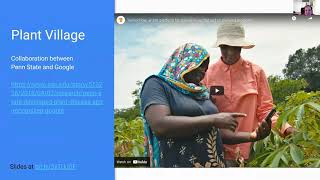
TinyML Talks Kenya - TinyML and the Developing World
Explore TinyML's potential in developing countries for medicine, agriculture, and conservation. Learn about low-cost, battery-powered machine learning applications adaptable to local needs.
Machine Learning and Earth System Modeling - From Parameter Calibration to Feature Detection
Explore machine learning applications in Earth system modeling, from parameter calibration to feature detection, enhancing climate predictions and understanding of complex environmental processes.
Lessons and Outlook for ML Parameterization of Sub Grid Atmospheric Physics From the Vantage of Emulating Cloud Superparameterization - Mike Pritchard
Exploring machine learning for atmospheric physics parameterization, focusing on cloud superparameterization emulation. Discusses challenges, strategies, and lessons learned in applying ML to climate modeling.
Benefits of Saying I Don't Know When Analyzing and Modeling the Climate System With ML - Elizabeth Barnes
Explore the benefits of acknowledging uncertainty in climate system analysis using machine learning. Learn about state-dependent predictability and controlled abstention networks for improved modeling accuracy.
Interpretable and Generalizable Machine Learning for Fluid Dynamics - Steven Brunton
Explore interpretable and generalizable machine learning techniques for fluid dynamics, focusing on sparse identification of nonlinear dynamics and incorporating physical constraints for improved accuracy.
Physics-Guided Deep Learning for Fluid Dynamics - Rose Yu
Explores physics-guided deep learning for fluid dynamics, focusing on accelerating turbulence simulations and incorporating symmetry for generalization in ocean current forecasting.
Non-Unitary Dynamics - Dissipative to Monitored - Vedika Khemani
Explore non-unitary dynamics in quantum systems, from dissipative to monitored, covering analytical approaches, entanglement scaling, and spacetime duality in quantum circuits and many-body physics.
Measurement Induced Entanglement Transitions in Quantum Circuits with Decoherence - Ehud Altman
Explores measurement-induced entanglement transitions in quantum circuits, focusing on characterization methods, dynamical symmetry, and connections to classical models. Discusses implications for non-equilibrium many-body physics.
Axioms of Quantum Computing - Lecture 9b of CS Theory Toolkit
Explore fundamental axioms of quantum mechanics for quantum computing, covering unitary matrices, qubit gates, and quantum circuits in this graduate-level lecture from Carnegie Mellon University.
Understanding and Measuring One Qubit - Lecture 3 of Quantum Computation and Information at CMU
Explore quantum mechanics fundamentals, focusing on understanding and measuring one qubit. Learn about measuring devices, inner products, and quantum notation.
Suppressing Quantum Errors by Scaling a Surface Code Logical Qubit - Kevin Satzinger - Google
Explore quantum error correction through surface code logical qubits, focusing on scaling strategies and performance improvements for practical applications in quantum computing.