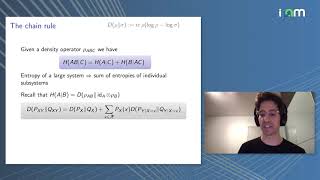
A Chain Rule for the Quantum Relative Entropy
Explores a chain rule for quantum relative entropy, its implications for quantum statistics, and the comparison of adaptive vs non-adaptive strategies in quantum channel discrimination.
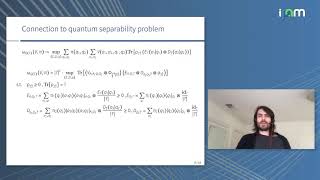
Characterising Quantum Correlations of Fixed Dimension
Explores semidefinite programming for quantum correlations, improving approximation algorithms for two-player free games with quantum assistance using entropy inequalities and de Finetti theorems.
Testing Physics with Small Quantum Computers
Explore cutting-edge applications of small quantum computers in physics testing, focusing on challenges and potential breakthroughs in quantum computation.
Asymptotic and Null Controllability of an Advection-Diffusion Equation
Explore asymptotic analysis and null controllability of advection-diffusion equations, focusing on boundary and internal layer interactions as diffusion parameter approaches zero.
Regularity of Minimizers for a Model of Charged Droplets
Explore the shape and properties of charged liquid droplets through a mathematical model, examining surface tension, repulsive forces, and the development of singularities in droplet formation.
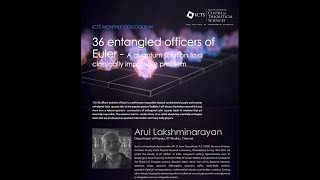
Entangled Officers of Euler: A Quantum Solution to a Classically Impossible Problem
Explore quantum solutions to Euler's 36 officers problem, a classically impossible combinatorial puzzle. Discover connections to orthogonal Latin squares, entanglement, and quantum information theory.
Deep Learning Approaches in Inverse Problems by Deep Ray
Explore deep learning techniques for solving inverse problems in various fields, focusing on applications, challenges, and recent advancements in this cutting-edge area of research.
Standard and Less Standard Asymptotic Methods - Lecture 4
Explore advanced techniques for evaluating infinite sums and recognizing asymptotic patterns in numerical sequences, with practical examples and applications in various mathematical fields.
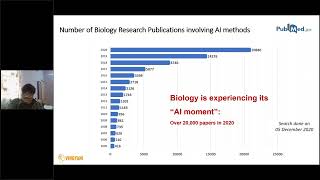
Coronavirus - Through The Lens Of AI
Explore AI applications in COVID-19 research: CT scan analysis, NLP for literature insights, and deep learning for drug candidate design. Learn how technology aids pandemic response.
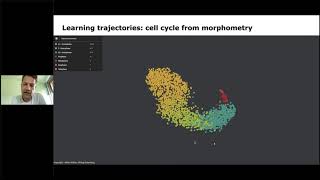
Interpretable Machine Learning to Model Drug Perturbations in Single Cell Genomics
Explore interpretable machine learning for modeling drug effects on single-cell genomics. Learn about deep autoencoders, manifold identification, and predicting novel perturbations in cellular states.

What Are CycleGANs? - A Novel Deep Learning Tool in Pathology
Explore CycleGANs for unpaired image conversion, including applications in pathology and microscopy. Learn model architecture, training, and inference through code demos and real-world examples.
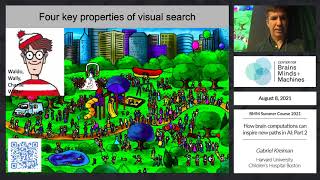
How Brain Computations Can Inspire New Paths in AI - Part 2
Explore brain-inspired AI advancements, focusing on object recognition, contextual reasoning, and model performance. Gain insights into cutting-edge computational approaches and their applications.
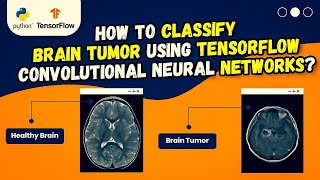
Cancer Detection in Brain Using Deep Learning
Learn to detect brain tumors using deep learning, CNN, and TensorFlow. Build, train, and test a model for classifying brain images with hands-on coding and practical implementation.

The Deep Learning Revolution
Explore the evolution of deep learning, from its origins to modern applications, covering key milestones, breakthroughs, and future prospects in AI and neuroscience.
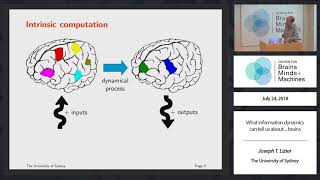
What Information Dynamics Can Tell Us About Brains
Explore information dynamics in complex systems, focusing on intrinsic computation, information transfer, and applications in neuroscience and network analysis.
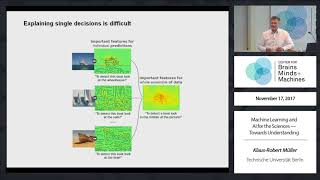
Machine Learning and AI for the Sciences - Towards Understanding
Explore ML and AI applications in sciences, focusing on neuroscience, medicine, and physics. Learn about extracting insights from ML models to enhance understanding in fields like quantum chemistry.
How Will Quantum Computing Change the Technology Landscape? - Bruce Davie, Systems Approach, LLC
Explore quantum computing's potential impact on technology, from achieving quantum supremacy to revolutionizing cryptography, optimization, and machine learning, while addressing challenges and separating hype from reality.
Bandits - Kevin Jamieson - University of Washington
Explore bandit algorithms and their applications in machine learning, from drug development to content recommendation, with a focus on regret minimization and stochastic models.
Intro to Quantum Computing - Hardware
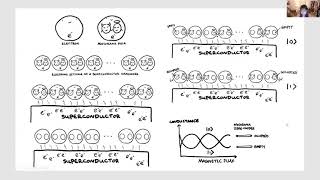
Explore quantum computing hardware, including electron traps, superconductivity, and qubits. Learn about cooling techniques and open-source developments in this advanced technology field.
Introduction to Security and Network Forensics - Encryption Methods
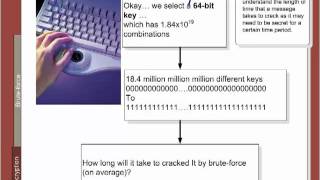
Explore encryption methods, codes, and key-based systems. Learn about cracking techniques, public/private key encryption, hashing, and PGP in this comprehensive security overview.
Introduction to Wireless Telecommunications
Explore wireless networks: types, integration, radio waves, multiplexing, and IEEE 802.11 standards. Learn about RF bands, spread spectrum, and Cisco Aironet 1200.