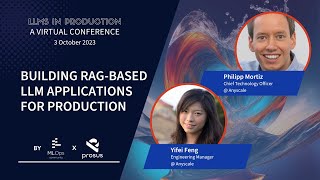
Building RAG-based LLM Applications for Production - LLMs III Talk
Develop and deploy scalable RAG-based LLM applications. Learn to handle data loading, preprocessing, embedding, and serving on clusters. Explore Anyscale Endpoints for cost-effective open-source model serving.
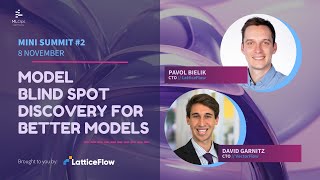
Model Blind Spot Discovery for Better Models and Ingesting Chaos - Mini Summit #2
Discover techniques for model blind spot detection and handling unstructured data at scale. Learn to build resilient AI models through data diagnosis, enhancement, and automated evaluation systems.
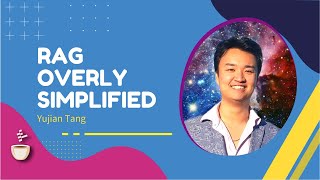
RAG Has Been Oversimplified - Exploring Complexities in Retrieval Augmented Generation
Explore the complexities of Retrieval Augmented Generation (RAG) beyond its oversimplified portrayal. Gain insights into practical challenges and nuanced considerations for developers working with RAG systems.
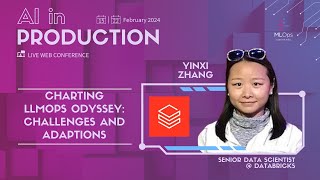
Charting LLMOps Odyssey - Navigating Large Language Model Operations
Navigate the iterative development of LLM applications, addressing unique challenges in LLMOps design. Learn strategies for overcoming obstacles and adapting to the evolving landscape of large language model operations.
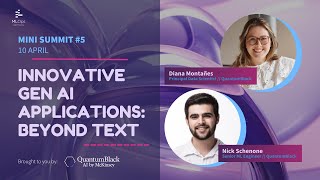
Innovative Gen AI Applications: Beyond Text - MLOps Mini Summit 5
Explore innovative Gen AI applications beyond text, focusing on molecule discovery and call center optimization. Learn about chemical language models, RAG use cases, and efficient pipeline architectures.
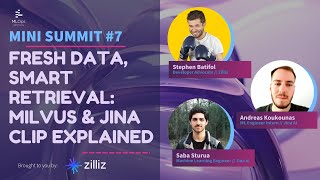
Fresh Data and Smart Retrieval: Milvus and Jina CLIP Explained - MLOps Mini Summit 7
Explore vector database updates, Milvus mechanics, and Jina CLIP's novel multi-task contrastive training for enhanced multimodal and text-based retrieval systems. Master data freshness in high-throughput, low-latency scenarios.
Exploring Long Context Language Models - MLOps Reading Group August 2024
Explore the potential of Long-Context Language Models to replace traditional methods like retrieval, RAG, and SQL. Dive into recent research and engage in critical discussions about LCLMs' capabilities and limitations.
Ax: A New Way to Build Complex Workflows with LLMs - MLOps Podcast
Explore Ax, a TypeScript library for building complex LLM workflows. Learn about prompt signatures, tuning, and composable prompts for RAG and agent-powered applications in production environments.
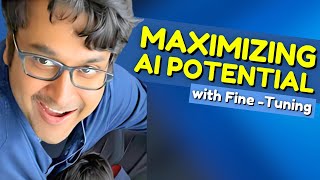
Alignment is Real - Fine-Tuning vs. Prompting in Domain-Specific Tasks
Explore fine-tuning techniques for domain-specific LLMs, discussing strategies for feedback integration, RAG implementation, and AI infrastructure decisions to achieve significant performance improvements.

Why I'm Staying Away from Crew AI - A Critical Analysis
Explore limitations of Crew AI for production, understand multi-hop questions, and learn alternative approaches for building AI applications. Gain insights on future multi-agent frameworks.

Building Custom AI Agents: Beyond CrewAI and AutoGen
Develop a custom web search AI agent in Python. Learn why building your own agents can be more effective than using existing frameworks for AI and multi-agent workflows.

Build Your Own Local "Perplexity" with Ollama - Deep Dive
Develop a custom web search agent running locally using Ollama and Llama 3. Learn to build, test, and compare with different models in this comprehensive technical deep dive.

Comparing Ollama Local WebSearch Agent with Llama 3 8B to Perplexity AI
Benchmark Llama 3 8b local web search agent against Perplexity AI. Compare performance, explore capabilities, and analyze results across diverse test questions.

LangGraph AI Agent Upgrade: Integrating Groq, Gemini, and Chainlit Front End
Upgrade a LangGraph AI agent with Groq, Gemini, and Claude integrations, fix bugs, and create a stylish Chainlit front-end for web searching capabilities similar to Perplexity.

Neo4j Knowledge Graphs for Smarter AI-Agent Search
Explore how Neo4j knowledge graphs enhance AI agent search, improving response quality through advanced AI engineering techniques like meta-prompting and RAG.
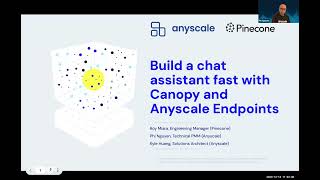
Building a Chat Assistant with Canopy and Anyscale Endpoints
Explore building RAG-based chat assistants using Canopy and Anyscale Endpoints. Learn architecture, see live examples, and get started with your own project using flexible frameworks and serverless LLM APIs.
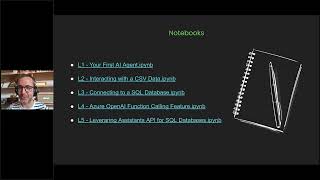
Advanced RAG Scenarios: Building Your Own Database Agents - Developing AI Agents for Natural Language Database Interaction
Develop AI agents for natural language database interactions, enabling efficient data querying and analysis without advanced SQL knowledge.
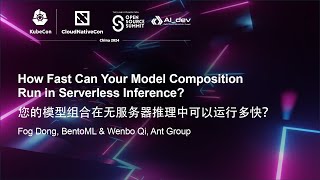
How Fast Can Your Model Composition Run in Serverless Inference?
Explore efficient multi-model composition in serverless Kubernetes using BentoML and Dragonfly. Learn to optimize deployment times and scalability for complex AI applications with innovative open-source technologies.
End-to-End Multi AI Agents RAG with LangGraph, AstraDB, and Llama 3.1
Explore multi-agent AI systems using LangGraph, AstraDB, and Llama 3.1. Learn to build advanced RAG applications with vector databases and open-source models.
Make Your RAGs Work at Scale - Insights on Retrieval Augmented Generation
Insightful podcast on scaling RAG systems, covering AI evolution, search optimization, and practical implementation strategies for production-ready solutions.

Local RAG with Llama 3.1 for PDFs - Private Chat with Documents using LangChain and Streamlit
Build a local RAG system for PDFs using LLMs, LangChain & Streamlit. Extract text, create vector stores, implement advanced retrieval, and integrate local/remote LLMs for efficient document processing.