
LangGraph Deep Dive: Building AI Research Agents with Graphs
Build an AI research agent using LangGraph, exploring its graph-based approach for flexible execution. Learn to integrate tools like GPT-4, Pinecone, arXiv, and Google for in-depth report generation on chosen topics.
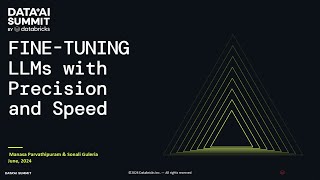
From Generic to Genius - Fine-Tuning LLMs with Precision and Speed
Discover how to fine-tune LLMs for your business needs, leveraging Databricks' Mosaic AI capabilities to create personalized models with improved speed, cost-efficiency, and data privacy.
Aligning LLM Judges for Better Evaluations in RAG Pipelines
Explore strategies for aligning LLM judges in evaluations, focusing on RAG pipelines. Learn to build effective systems using LlamaIndex and W&B Weave for systematic assessment and annotation.
Flexible RAG: Development and Evaluation Strategies for Complex User Requests
Explore advanced RAG techniques for complex queries, diverse data sources, and evaluation methods to enhance system flexibility and performance in handling sophisticated user requests.

Building Production RAG Over Complex Documents
Explore advanced techniques for implementing Retrieval-Augmented Generation on complex documents, including parsing strategies, indexing methods, and retrieval algorithms for handling unstructured and tabular data.
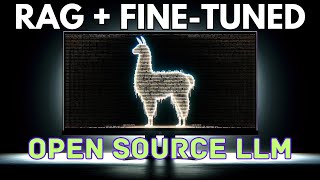
Custom RAG Pipelines and LLM Fine-Tuning - A Gradient Tutorial
Explore custom RAG pipelines and LLM fine-tuning using Gradient. Learn to deploy fine-tuned models, mimic Yoda's speech style, and efficiently fine-tune 13B parameter open-source models for unique applications.

Scaling Vector Database Usage Without Breaking the Bank - Quantization and Adaptive Retrieval
Discover efficient vector search optimization through quantization and adaptive retrieval techniques, reducing memory costs by 32x while maintaining high accuracy for large-scale deployments.
Building Generative AI Applications with RAG - A Quick Start Guide
Discover how to rapidly build and evaluate Retrieval Augmented Generation (RAG) applications using Python, from essential concepts to testing strategies and performance optimization.
Lightning Talks on Search Relevance and AI - Haystack US 2024
Explore cutting-edge search and AI topics through lightning talks from Haystack US 2024. Gain insights on information retrieval, LLMs, vector search, semantic search, and more from industry experts.
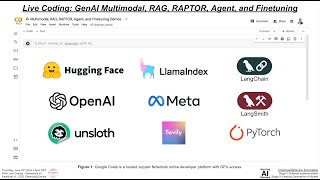
GenAI Multimodal, RAG, RAPTOR, Agent, and Finetuning - Live Coding Demonstration
Explore cutting-edge GenAI techniques through live demos of RAG, RAPTOR, Agent, and Finetuning. Witness multimodal capabilities and gain hands-on experience with advanced AI models and tools.
Managing Small Knowledge Graphs for Multi-agent Systems - MLOps Podcast #236
Explore knowledge graph management for multi-agent systems, focusing on structural grounding, selective improvement, and end-to-end reliability. Learn strategies to enhance RAG accuracy and repeatability in AI pipelines.
Retrieval Augmented Generation (RAG) - Tutorial 4
Explore Retrieval Augmented Generation (RAG) techniques to enhance AI models' knowledge and responses using external data sources, improving accuracy and relevance in various applications.
Best Practices for Deploying LLM Inference, RAG and Fine-Tuning Pipelines on Kubernetes
Master best practices for deploying and managing LLM inference pipelines on Kubernetes, covering optimization techniques, security measures, and efficient pipeline management using tools like KServe.

Practical Strategies for Implementing Domain-Specific LLMs
Dive into practical strategies for implementing domain-specific large language models, covering RAG architecture, evaluation metrics, data preprocessing, and query optimization techniques.
Prompt Engineering: Art, Science, or Career Path?
Dive into prompt engineering fundamentals, from tokenization and model selection to advanced techniques, tools, and future trends in AI interaction and development.
LLM Powered Agents with Kubernetes - Building Intelligent Systems for Deployment Management
Discover how to build advanced LLM systems that dynamically interact with Kubernetes deployments using agent frameworks, tools, and real-time data integration for enhanced performance and automation.
Reproducible AI with Kubeflow, lakeFS and Langchain
Discover how to build reproducible AI pipelines using Kubeflow, Langchain, and lakeFS to create RAG chatbots with improved data quality and version control for enhanced user experiences.
Building Applications with RAG and LangChain on Google Cloud
Master building AI applications with RAG and LangChain on Google Cloud. Follow a hands-on demonstration of indexing data, creating a web interface, and deploying solutions for enhanced AI response accuracy.
Building an Open Source Agentic RAG Application with Llama
Dive into building advanced LLM applications using LangChain v0.2 and LangGraph, focusing on context-aware reasoning and autonomous agent development with RAG implementation.

Optimizing ColPali for Retrieval at Scale - From Theory to Practice
Discover how to optimize ColPali's multivector document retrieval system through efficient pooling techniques, achieving 12x faster search speeds while maintaining accuracy in RAG and Vision RAG applications.
Advanced Retrieval Augmented Generation (RAG) Techniques
Master advanced RAG implementation techniques, focusing on chunking strategies, embedding model selection, and metadata structuring for building more effective and business-valuable AI applications.