Introducing Nearby: Physical Proximity Awareness for Apps
Explore Nearby API for proximity-based features in Android and iOS apps. Learn about Bluetooth, Wi-Fi, and ultrasound technologies for device awareness, sharing, and beacon interactions.
BlindAI - An Open-source Solution for Privacy-friendly AI Deployment
Explore BlindAI, an open-source project leveraging Confidential Computing for privacy-friendly AI deployment. Learn about end-to-end encryption, ONNX model support, and real-world applications in document analysis and medical imaging.
AI Domain Generalization: ICRM and ContextVisionTransformers in Medical and Emergency Response
Explore advanced domain generalization in AI through MIT's ICRM methodology and ContextViT, focusing on medical imaging and emergency response applications across diverse real-world scenarios.
Computer Vision in Melanoma Detection - AI Applications in Dermatological Diagnosis
Explore how AI and computer vision technologies revolutionize melanoma detection in dermatology, examining implementation challenges and potential healthcare benefits.
AI for Prostate Cancer Detection and Immunotherapy Response
Explore groundbreaking AI applications in healthcare, focusing on early prostate cancer detection and understanding immunotherapy resistance through advanced modeling and medical data integration.
Vision Transformer-Based Transfer Learning for Medical Image Classification 2023
Explore cutting-edge Vision Transformer technology for medical image classification, focusing on mammogram analysis and early breast cancer detection through advanced deep learning approaches.
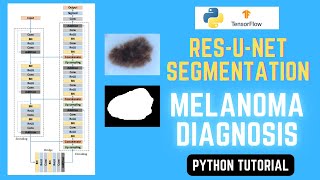
Res-UNet for Melanoma Segmentation - TensorFlow Tutorial
Step-by-step guide to implement and train a Res-UNet model for Melanoma detection using TensorFlow and Keras. Learn to build, train, test, and visualize results for accurate skin lesion segmentation.

Unlocking Hearts by Locking Models: Solving Echocardiogram Problems Using a Self-Supervised Approach
Explore self-supervised learning for echocardiogram analysis, overcoming labeling challenges. Discover how ALAN concept enables feature extraction for segmentation and classification tasks across multiple datasets.
Expert-Informed, User-Centric Explanations for Image Classification with Deep Learning
Explore expert-informed, user-centric explanations for image classification using deep learning. Gain insights into diagnostic feature labeling and its applications in various fields.
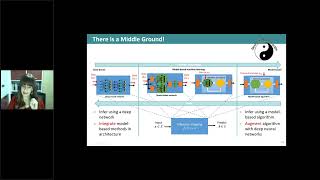
Model-Based Deep Learning with Applications to Imaging - Yonina Eldar, PhD
Explore model-based deep learning approaches for efficient, interpretable networks in signal and image processing, with applications in imaging, ultrasound, and COVID-19 detection.
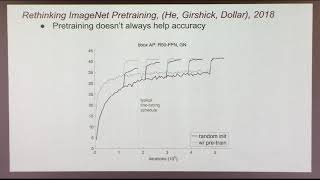
Towards Understanding Transfer Learning with Applications to Medical Imaging
Explore transfer learning in medical imaging, focusing on deep learning applications, performance evaluation, and feature similarity analysis using CCA. Insights on ImageNet models and chest X-rays included.
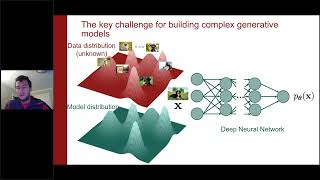
Denoising Diffusion-Based Generative Modeling
Explore diffusion-based generative modeling, its advantages over other approaches, and applications in image generation and inverse problems. Learn about score functions, training methods, and recent advancements.
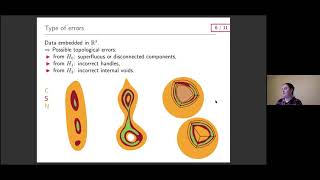
Topological Simplification of Voxelized Data
Explore topological simplification of voxelized data, focusing on homological methods to enhance graphical data analysis in scientific fields like medicine and biology.
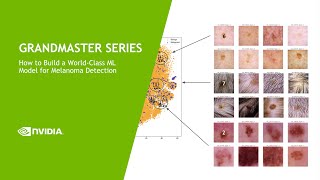
Grandmaster Series - Building a World-Class ML Model for Melanoma Detection
Learn how Kaggle Grandmasters built a world-class ML model for melanoma detection, outperforming average dermatologists. Discover key strategies in model architecture, augmentation, and training for accurate skin lesion classification.

Latest AI News Roundup: From AGI Stages to Multimodal Models
Explore cutting-edge AI developments: AGI stages, medical applications, multimodal models, autonomous driving, and more. Stay informed about the latest advancements in artificial intelligence across various domains.

Explainable AI in Healthcare: Oxford-Style Debate - November 2023
Engaging Oxford-style debate on the necessity of explainable AI in healthcare, featuring expert speakers discussing its role in shaping the future of medical technology.

AI in Healthcare - The Next Frontier
Exploring AI's potential to revolutionize healthcare, from enhancing diagnostics to automating tasks. Discusses advancements, ethical challenges, and the future of AI in biomedicine.

OpenFL: A Federated Learning Framework for Secure Collaborative Model Training
Explore OpenFL, a Python framework for federated learning that enables collaborative model training without sharing sensitive data. Learn its features, applications, and security benefits.
Integrating AI and Machine Learning in Life Sciences - Allen School Colloquia
Exploring AI integration in life sciences, covering explainable AI, COVID-19 detection, cancer precision medicine, and biological discovery through advanced machine learning techniques.
Computer Vision to Phenotype Human Diseases Across Physical and Molecular Scales
Innovative computer vision algorithms for disease phenotyping across scales, from video-based heart function assessment to spatial transcriptomics and immune cell dynamics, with focus on robust and human-compatible AI.
AI in Cancer Detection and Treatment
Explore AI applications in cancer detection and treatment, covering advanced techniques for early diagnosis, personalized therapies, and improved patient outcomes.