
Introduction to Radiology
Radiographic techniques are explored in this course: Conventional Radiography, Computed Tomography (CT), Ultrasound, and Magnetic Resonance Imaging (MRI).

Ultrasound of the Abdomen
Comprehensive guide to abdominal ultrasound techniques, covering key anatomical structures and imaging windows for accurate diagnosis and assessment.
Introduction to Musculoskeletal Radiology
Explore musculoskeletal radiology essentials, covering shoulder dislocations, bone tumors, fractures, and soft tissue infections. Learn key imaging techniques and diagnostic approaches.

Abdominal X-Rays
Learn to interpret abdominal X-rays with expert guidance from Yale's Dr. Mahan Mathur. Gain essential skills for accurate radiological diagnosis in just 13 minutes.
Emerging CT Technology: Photon Counting CT
Explore cutting-edge Photon Counting CT technology with Dr. David Bluemke, delving into its potential to revolutionize medical imaging and diagnostic capabilities.

Breast Cancer Screening and Treatment Advances - Community Talk
Stanford specialists discuss latest breast cancer screening and treatment advances, including genetic testing, imaging technologies, and innovative therapies beyond surgery.
Stanford Seminar - Patrick Goodwill, Magnetic Insight
Explore magnetic particle imaging with Dr. Patrick Goodwill, covering its development, applications in medical imaging, and potential for tumor detection and cerebrovascular imaging.
Advances in Lung Cancer Screening and Treatment
Stanford doctors discuss new lung cancer screening guidelines, increasing incidence in non-smokers, and latest treatment approaches including minimally invasive surgery, targeted therapies, and precise radiation therapy.
AI Regulation in Radiology
Explore AI regulation in radiology with expert Dr Hugh Harvey. Gain insights into regulatory approval processes for radiology AI products and their implications.
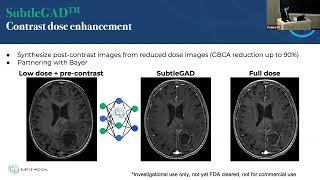
Deep Learning Powered Faster and Low-Dose Imaging, MR, PET and Beyond
Explore cutting-edge deep learning applications for accelerated, low-dose medical imaging across MR, PET, and other modalities, enhancing diagnostic efficiency and patient safety.
MRI in Lung Cancer - Current Status and Experience
Explore the latest advancements and clinical applications of MRI in lung cancer diagnosis and management, presented by an expert in the field of radiology.

Ion Beams for Cancer Therapy - New Technologies for Treating Inoperable Tumours - July Lectures 2020
Explore precision particle therapy for cancer treatment, including proton therapy's advantages, medical accelerator physics, and emerging technologies in radiation oncology.
Complications After Transplant - UCLA Liver Transplant Services
Overview of post-transplant complications for liver patients, including early signs of rejection or infection. Covers diagnostic procedures, lifestyle considerations, and care instructions for transplant recipients.
Practice Changing Urology Pearls - Ramin Tabatabai, MD - 37th EM & Acute Care Course
Explore evidence-based urology practices for emergency care, covering topics like acute urinary retention, stone scoring, ultrasound techniques, and pediatric UTIs, to enhance diagnostic and therapeutic decision-making.
Segmentation and Quantification of Breast Arterial Calcifications - Xiaoyuan Guo
Explore innovative techniques for segmenting and quantifying breast arterial calcifications in mammograms, aiming to improve cardiovascular risk assessment for women through non-invasive methods.
Few-Shot Chest X-Ray Diagnosis Using Clinical and Literature Images
Explore innovative few-shot learning methods for chest X-ray diagnosis using clinical and literature images, enhancing radiology image analysis with advanced machine learning techniques.
Denoising Diffusion Models for Denoising Diffusion MRI - Tiange Xiang
Explore innovative self-supervised denoising techniques for diffusion MRI using denoising diffusion models. Learn about a three-stage framework integrating statistic-based theory for improved medical imaging quality.
Generative Models With Domain Knowledge for Weakly Supervised Clustering
Explore deep generative models for weakly supervised clustering, incorporating domain knowledge and survival data to guide algorithms towards medically meaningful findings in biomedical datasets.
Curation and Analysis of Annotated Medical Images Across Institutions - Xiaoyuan Guo
Explore techniques for curating and analyzing annotated medical images across institutions, focusing on data sharing challenges, anomaly detection, and OOD-aware image retrieval for improved dataset quality and future analysis.
Self-Training - Weak Supervision Using Untrained Neural Nets for MR Reconstruction - Beliz Gunel
Exploring untrained neural networks for MR reconstruction, comparing self-training and weak supervision methods to improve performance with limited data while addressing slow inference times.
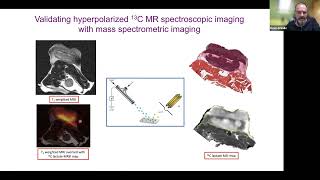
Imaging Tumor Metabolism - From Mouse to Man
Explore cutting-edge techniques for imaging tumor metabolism, from preclinical mouse models to human applications, with insights from a leading expert in biomedical magnetic resonance.