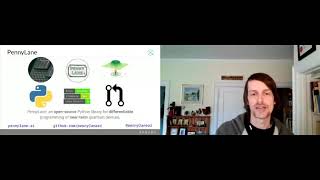
Software for Quantum Machine Learning
Explore quantum machine learning algorithms, adapting deep learning concepts to train quantum computers using familiar tools like TensorFlow and PyTorch.
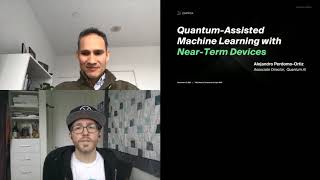
Quantum-Assisted Machine Learning with Near-Term Quantum Devices
Explore quantum-assisted machine learning applications for near-term devices, focusing on generative models in unsupervised and semi-supervised learning. Discover recent experimental implementations.
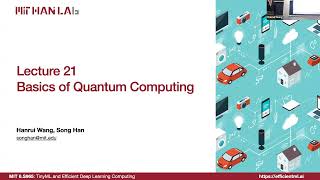
Basics of Quantum Computing - Lecture 21
Explore quantum computing fundamentals, including key concepts and potential applications in computational problem-solving and information processing.
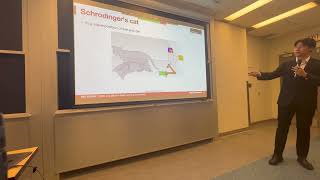
Basics of Quantum Computing - Lecture 21
Explore quantum computing fundamentals, including key concepts and potential applications in computational problem-solving and information processing.
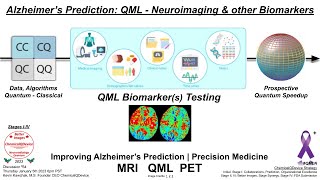
Alzheimer's Prediction: QML for Neuroimaging and Other Biomarkers
Explore quantum machine learning applications in Alzheimer's prediction, focusing on language impairment, blood/CSF biomarkers, and neuroimaging. Discover potential QML advantages in early detection and diagnosis.
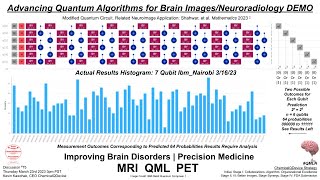
Advancing Quantum Algorithms for Brain Images Neuroradiology - Live Demo
Explore quantum algorithms for neuroradiology through live demos in IBM Qiskit and Pennylane. Learn about hybrid networks, recent advancements, and their potential impact on brain image processing.
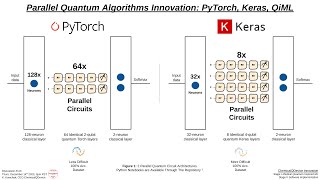
Parallel Quantum Algorithms Innovation: PyTorch, Keras, and QiML
Explore parallel quantum algorithms for machine learning using PyTorch and Keras. Enhance model accuracy and efficiency by incorporating quantum layers in neural networks.
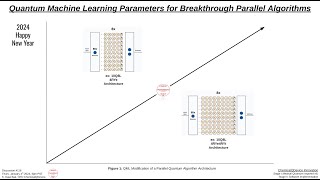
Quantum Machine Learning Parameters for Breakthrough Parallel Algorithms
Explore breakthrough parallel quantum algorithms for machine learning, improving performance and efficiency. Learn key benefits and optimal parameter settings for quantum-classical hybrid models.
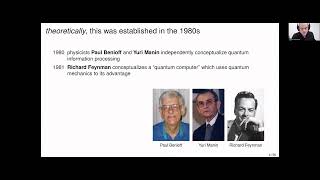
Quantum Computing for AI - Hype or Hope?
Explore quantum computing's potential impact on AI, examining promises, limitations, and realistic applications in machine learning and Bayesian network inference.
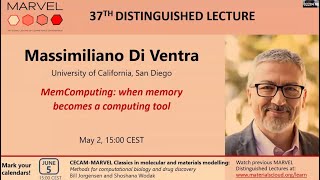
MemComputing: When Memory Becomes a Computing Tool - Lecture 37
Explore MemComputing, a revolutionary approach where memory acts as a computing tool, presented by Prof. Massimiliano Di Ventra from UC San Diego.
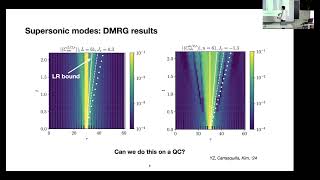
Observation of a Non-Hermitian Supersonic Mode on a Trapped-Ion Quantum Computer
Explore non-Hermitian supersonic modes using trapped-ion quantum computing in this advanced quantum information seminar by Yuxuan Zhang from the University of Toronto.
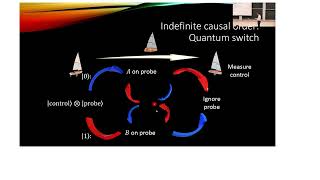
Measuring Impossible Parameters with Indefinite Causal Order
Explore cutting-edge quantum measurement techniques using indefinite causal order to uncover previously inaccessible parameters in quantum systems.
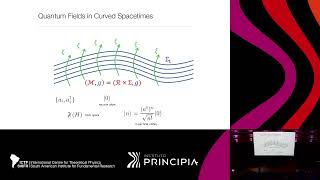
Quantum Communication in Curved Spacetimes
Explore quantum communication in curved spacetimes, examining its implications for gravity and potential lab applications.
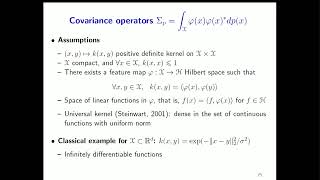
Information Theory with Kernel Methods
Explore entropy estimation in data science using kernel methods and quantum information theory for covariance matrices.
Post Quantum Cryptography - 25 July 2024
Explore post-quantum cryptography with expert Hart Montgomery, delving into cutting-edge techniques to secure data against future quantum computing threats.
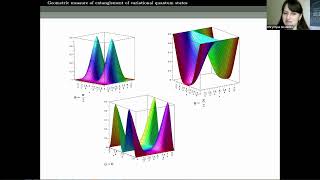
Geometric Measure of Entanglement of Variational Quantum States
Explore geometric entanglement measure of variational quantum states through analytical calculations and quantum computer implementations, focusing on graph structures and GAN states.
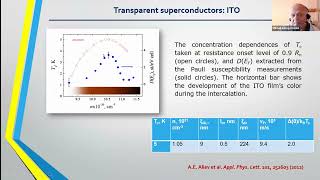
Superconducting Electronics: Transparent Samples and SQUID-like Josephson Junctions
Explore advancements in superconducting electronics, focusing on transparent samples and SQUID-like Josephson junctions for quantum computing, communications, and sensing applications.
Geometric Properties of Quantum States Representing Directed Graphs on Quantum Computer
Explore geometric properties of multi-qubit states represented by directed graphs, examining curvature, torsion, and entanglement using quantum computers and simulators.
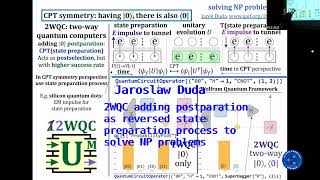
2WQC - Adding Postparation as Reversed State Preparation Process to Solve NP Problems
Explore analytical solutions for position-based charge qubits and N-interacting qubits in quantum dot networks. Examine Hadamard and phase-rotating gates, and the interface between superconducting and semiconductor qubits.

IBM Quantum State of the Union 2022
Explore IBM's quantum computing breakthroughs, roadmap updates, and mission to make the world quantum-safe in this comprehensive leadership presentation.
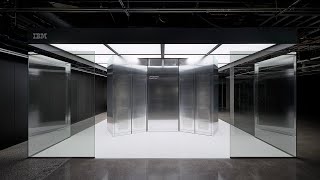
Entering the Era of Quantum Utility
Explore IBM's latest quantum computing advancements, including hardware and software releases, tools for problem-solving, and the unveiling of IBM Quantum System Two for quantum-centric supercomputing.