Computational Complexity of Quantum Systems - From Theory to Ground State Analysis
Delve into quantum systems' computational complexity, exploring ground states, quantum computing challenges, and algorithmic approaches for simulating quantum phenomena.
Fault-Tolerant Coding for Quantum Communication - Threshold Theorems and Error Rates
Delve into quantum communication theory, exploring fault-tolerant coding methods, threshold theorems, and practical implementations for reliable message transmission across noisy channels.
Reinforcement Learning for Quantum Technologies
Discover how reinforcement learning techniques can revolutionize quantum devices, from state preparation to error correction, with insights from theoretical proposals and real-time quantum feedback experiments.
Demonstration of Algorithmic Quantum Speedup in Modern Computing Systems
Explore groundbreaking experimental demonstrations of quantum computing speedups using IBM's superconducting computers and D-Wave quantum annealers, with focus on error suppression methods and scaling advantages.
NLTS Hamiltonians from Good Quantum Codes - Understanding Low-Energy States and Circuit Complexity
Delve into the complexity of NLTS conjecture, quantum LDPC codes, and their connection to local Hamiltonians, exploring circuit lower bounds and many-body entanglement principles.
Quantum Simulation - Engineering and Understanding Quantum Systems Atom by Atom
Explore quantum simulation using neutral atoms in optical arrays to study topological phases and quantum system thermalization, with insights into cutting-edge experimental techniques.
TensorCircuit - A Quantum Software Framework for the NISQ Era
Explore TensorCircuit, an advanced quantum circuit simulator leveraging tensor networks and machine learning frameworks for enhanced quantum computing simulation and variational algorithms.
Quantum Resource Theories for Sets of Measurements
Delve into quantum measurement resource theories, exploring quantification methods, hierarchies, and applications in quantum information processing tasks and Bell inequality demonstrations.
Hands-on Quantum Computing - Programming and Problem-Solving with Quantum Algorithms
Dive into practical quantum computing fundamentals through hands-on exercises, exploring quantum gates, qubit manipulation, and algorithm implementation for real-world problem-solving.
Hands-on Quantum Programming: From Circuit Design to Production Implementation
Master quantum programming fundamentals through hands-on implementation, from circuit assembly to result decoding, with practical Python integration for real-world quantum computing applications.
Quantum Experiments in Satellite Technology - Quantum Key Distribution and Long-Haul Communications
Explore quantum key distribution protocols for satellite-based secure communications, focusing on uplink-based implementation methods and their advantages in long-distance quantum cryptography.
Quantum Technologies with Ultra-cold Rydberg Atoms
Explore the fascinating world of ultra-cold Rydberg atoms and their applications in quantum technologies, from information networks to precision measurements and secure communications.
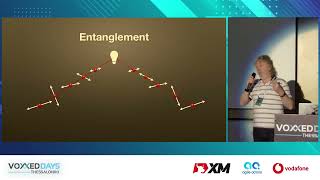
Hello Quantum World - Introduction to Quantum Computing and Algorithms
Explore quantum computing fundamentals, from basic concepts to practical applications, and witness a real quantum program in action while learning about its revolutionary potential in optimization and cryptography.
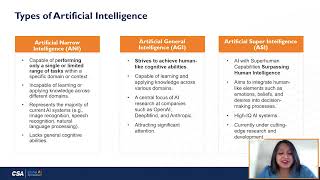
Quantum Artificial Intelligence - Exploring the Future of Intelligent Computing
Explore the convergence of AI and quantum computing, understanding key concepts, real-world applications, and future implications while addressing ethical considerations in these transformative technologies.
PCIe 7.0 Specification - 128 GT/s Bandwidth for Future Data-Intensive Markets
Explore the next-generation PCIe 7.0 specification, featuring 128 GT/s transfer rates, PAM4 signaling, and enhanced power efficiency for advanced computing and data-intensive applications.
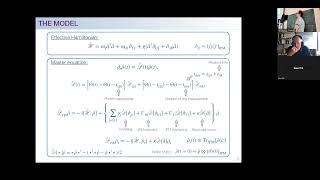
Photon Counting in Microwave Superconducting Circuits
Explore advanced photon detection techniques in superconducting circuits, focusing on Josephson photomultipliers for quantum information processing and microwave photon counting applications.
The Quantum Decoding Problem - From Classical to Quantum Superposition
Delve into quantum cryptography research exploring the Quantum Decoding Problem, its relationship with classical decoding, and implications for lattice-based cryptography through theoretical analysis and quantum algorithms.
On the Role of Entanglement and Statistics in Learning in Quantum Statistical Query Models
Delve into quantum statistical query models and explore the intricate relationships between learning systems using entangled, separable, and statistical measurements in quantum computing.
Pseudoentanglement Ain't Cheap - Entropy and Non-Clifford Gates in Quantum States
Explore groundbreaking research on pseudoentangled state ensembles, revealing how their preparation requires significant non-Clifford gates and introducing a novel algorithm for quantum entanglement entropy estimation.
Quantum Complexity Theory Meets TFNP - Product Quantum Satisfiability on Qudits
Delve into advanced quantum complexity theory, exploring the intersection of Total Function NP and Quantum Satisfiability through innovative frameworks and theoretical breakthroughs in qudit systems.
Quantum 2-SAT on Low Dimensional Systems is QMA_1-Complete
Delve into groundbreaking research exploring quantum satisfiability problems, examining complexity transitions in low-dimensional quantum systems and their computational implications for quantum information theory.