
Getting Started with DSPy - Building LLM Programs Tutorial
Discover how to build robust LLM programs using DSPy framework, from basic concepts to creating retrieve-then-read RAG systems with optimized instructions and structured data handling.
Fine-tuning Vision Language Models with PaLiGemma-3B - A Practical Guide
Master fine-tuning techniques for Vision Language Models using PyTorch and JAX FLAX, with practical examples for PaliGemma-3B implementation on free compute platforms like Google Colab and Vertex AI.

Pre-Training BERT from Scratch for Domain-Specific Knowledge Using PyTorch - Part 51
Master BERT model pre-training from scratch using PyTorch, focusing on domain-specific data. Build custom tokenizers, design architecture, and implement masked language modeling for specialized neural information retrieval systems.
PyTorch Vision Transformer - Guide to Fine-Tuning for Object Identification
Master fine-tuning Vision Transformers (ViT) in PyTorch through hands-on coding, focusing on object identification implementation with practical examples and real-time coding demonstrations in Google Colab.

PyTorch Vision Transformer: Applying Pre-trained and Fine-tuned ViT Models for Image Classification
Master Vision Transformer implementation in PyTorch using pre-trained and fine-tuned ViT models for image classification, with hands-on practice in Google Colab and Huggingface integration.
Optimizing LLM Fine-Tuning with PEFT and LoRA Adapter-Tuning for GPU Performance
Master efficient fine-tuning of large language models using PEFT and LoRA techniques, optimizing GPU memory usage through INT8 quantization and adapter-tuning for cost-effective model development.
Link Prediction with Graph Neural Networks Using DGL and PyG
Master link prediction in graph neural networks using DGL and PyG frameworks, implementing node connectivity prediction through practical code examples and negative sampling techniques.
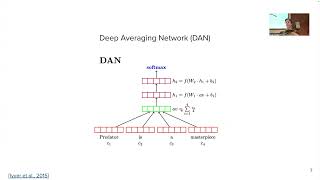
Neural Classification with Word Embeddings - PyTorch Tutorial
Master neural classification techniques and word embeddings implementation in PyTorch through hands-on practice with essential deep learning concepts and practical applications.
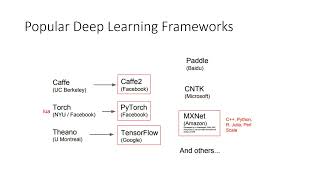
PyTorch Tutorial for Machine Learning - Fall 2023
Master PyTorch fundamentals and essential deep learning concepts through hands-on practice with neural networks, tensors, and gradient-based optimization techniques.
The ALPACA Code: Self-Instruct Fine-Tuning of Large Language Models
Dive into the technical implementation of self-instruct fine-tuning for Large Language Models using ALPACA, covering synthetic dataset generation and parallel task optimization.
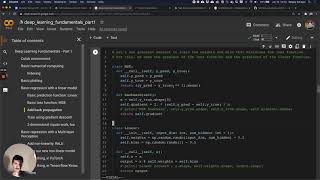
Coding a Neural Network - Full Stack Deep Learning - Spring 2021
Code a neural network from scratch using Google Colab, NumPy, PyTorch, and Keras. Learn linear regression and multi-layer perception models through hands-on implementation and visualization.

Productionize AI and ML Algorithms in Cloud Environments
Explore AI and ML algorithm productionization in cloud environments. Learn development phases, NLP tasks, Hugging Face, MLflow, and AWS deployment for effective model management and serving.
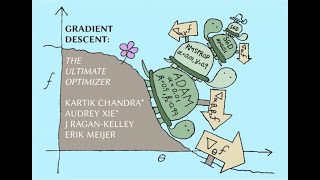
Gradient Descent: The Ultimate Optimizer - Automating Hyperparameter Optimization
Discover how to automatically optimize hyperparameters in gradient-based ML algorithms through an elegant modification to backpropagation, making optimizer tuning more efficient and less sensitive to initial choices.
PyTorch Sentiment Classifier From Scratch With Huggingface NLP Library - Full Tutorial
Build a sentiment classifier using PyTorch, BERT, and Huggingface's NLP library. Learn to process datasets, tokenize text, create tensors, and implement training steps for an IMDB sentiment analysis model.

Variational Autoencoder From Scratch in PyTorch
Learn to implement a Variational Autoencoder from scratch using PyTorch, covering architecture, training loop, and inference with practical examples and code demonstrations.
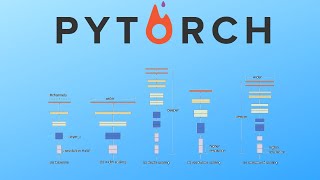
EfficientNet From Scratch in Pytorch
Learn to implement EfficientNet from scratch using PyTorch, covering key concepts like CNNBlock, SqueezeExcitation, and InvertedResidualBlock with stochastic depth.

PyTorch Image Segmentation Tutorial with U-NET - Everything From Scratch
Learn to implement U-NET for image segmentation from scratch, covering model architecture, dataset preparation, training process, and evaluation techniques in PyTorch.
Albumentations Tutorial for Data Augmentation - PyTorch Focused
Learn data augmentation techniques using Albumentations library for image classification, segmentation, and object detection tasks, with a focus on PyTorch implementation and practical examples.
WGAN Implementation From Scratch With Gradient Penalty
Implement WGAN and WGAN-GP in PyTorch, focusing on improving GAN training stability through loss function modifications. Includes theoretical explanations and practical coding.

How to Build Custom Datasets for Text in PyTorch
Learn to build custom datasets for text in PyTorch, focusing on image captioning with the Flickr8k dataset. Covers dataset creation, vocabulary setup, batch padding, and data loading for various NLP tasks.
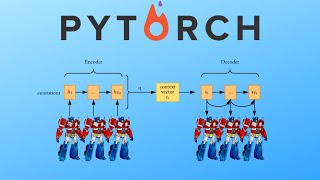
Pytorch Transformers for Machine Translation
Build a Seq2Seq Transformer model in PyTorch for German-to-English translation using the Multi30k dataset. Learn data preprocessing, model architecture, training setup, and evaluation with BLEU score.