
How to Train Object Detection Transformer on Custom Dataset
Learn to train Object Detection Transformers using DETR, from environment setup to custom dataset training and model evaluation. Covers PyTorch, COCO datasets, and PyTorch Lightning for efficient deep learning workflows.
Understanding the Machine Learning Process and Embedding Models into Apps
Learn to build ML models with Azure ML and VS Code, operationalize them in apps, and implement MLOps practices. Covers PyTorch Lightning, model prediction, and integration with DevOps and Kubernetes.
PyTorch Sentiment Classifier From Scratch With Huggingface NLP Library - Full Tutorial
Build a sentiment classifier using PyTorch, BERT, and Huggingface's NLP library. Learn to process datasets, tokenize text, create tensors, and implement training steps for an IMDB sentiment analysis model.
Getting Started with PyTorch Lightning for Deep Learning
Explore PyTorch Lightning for easier Deep Learning projects, using Google's GoEmotions dataset to build an emotion classification model with practical coding examples.
Multi-Label Classification on Unhealthy Comments - Finetuning RoBERTa with PyTorch - Coding Tutorial
Learn to finetune RoBERTa for multi-label classification of unhealthy comments using PyTorch Lightning. Practical coding guide covers data preparation, model creation, training, and evaluation.
Supercharge Your Training With PyTorch Lightning and Weights & Biases
Learn to enhance ML pipelines using PyTorch Lightning and Weights & Biases. Discover efficient experiment tracking, advanced logging techniques, and how to leverage callbacks for improved model development and visualization.
Building a GAN From Scratch With PyTorch - Theory + Implementation
Learn to build a Generative Adversarial Network from scratch using PyTorch and PyTorch Lightning, covering theory, implementation, and testing in this comprehensive tutorial.
Finetuning Whisper with Huggingface and Pytorch Lightning
Explore fine-tuning Whisper using Hugging Face and PyTorch Lightning for advanced speech recognition. Learn techniques to enhance model performance and adapt it to specific use cases.
Introduction to Deep Learning with PyTorch
Learn to implement deep learning models efficiently using PyTorch Lightning, reducing boilerplate code and enabling advanced features like multi-GPU training and model sharding.
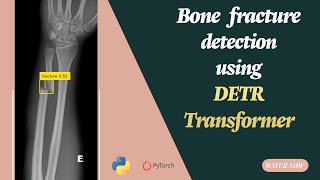
Object Detection Using Detection Transformer (DETR) for Bone Fracture Dataset
Learn to build an advanced object detection system using DETR, covering data preparation, model implementation, training, and inference with PyTorch, Transformers, and PyTorch Lightning.
Accelerating the LLM Lifecycle on the Cloud
Explore PyTorch Lightning and Lightning Studios for reproducible AI development on the cloud, enabling seamless accelerated computing and solving challenges of reproducibility and collaboration.
The Fundamentals of Modern Deep Learning with PyTorch
Learn PyTorch for deep learning: train neural networks for image and text classification, explore tensor operations, automatic differentiation, and modern libraries like PyTorch Lightning for efficient GPU training.
Accelerate PyTorch Workloads with PyTorch/XLA
Optimize PyTorch performance on Google Cloud AI Accelerators using XLA compiler. Learn about high-speed training and inference for LLaMA 2 and LLM fine-tuning with PyTorch Lightning.
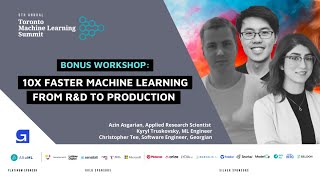
10X Faster Machine Learning: From R&D to Production
Supercharge ML experimentation with PyTorch Lightning and DVC, and streamline production using Kubeflow. Learn to overcome challenges in complex ML model development and deployment.