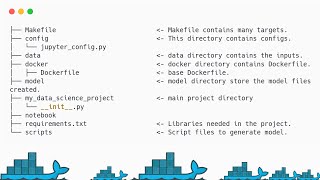
Structuring Data Science Projects with Docker
Structure data science projects using Docker for seamless model deployment. Learn advanced techniques, explore code, address vulnerabilities, and weigh pros and cons of Docker in data science workflows.
Matrix Multiplication, Signals, and Convolutions
Explore matrix multiplication, natural signals, and convolutions in deep learning. Includes practical demonstrations using IPython and PyTorch.
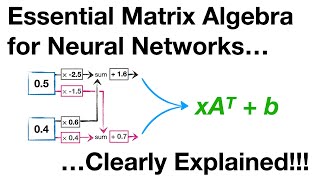
Essential Matrix Algebra for Neural Networks
Learn essential matrix algebra for neural networks, covering linear transformations, matrix operations, and their application in PyTorch and Attention mechanisms.
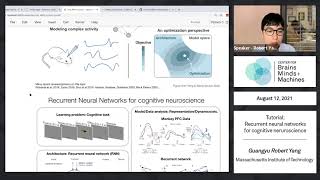
Recurrent Neural Networks for Cognitive Neuroscience
Hands-on tutorial exploring RNNs in cognitive neuroscience through coding exercises. Learn to train and analyze RNNs for various tasks, with lecture and workshop components using Google Colab Notebooks.

Toward Brain Computer Interface - Deep Generative Models for Brain Reading
Explore deep generative models for brain reading, covering GAN implementation, image reconstruction from brain signals, and evolving latent codes using genetic algorithms.
Expert API LLM Gorilla-7B: Writing Code for APIs Using Large Language Models
Discover how Gorilla-7B, an API-optimized language model, generates complete code sequences from natural language prompts for tasks like image recognition and language translation.
Create and Deploy a Lightweight Microservice in WebAssembly
Learn to create and deploy lightweight microservices using WebAssembly, exploring its advantages over traditional containers. Hands-on experience with Rust, JavaScript, AI integration, and cloud deployment.
On-Demand Systems and Scaled Training Using the JobSet API
Explore JobSet API for efficient orchestration of complex workflows, enabling scaled ML training and on-demand HPC systems. Learn deployment techniques and see results from large-scale experiments.
Essential AI Tools and Libraries - Installation Guide for Python, Git, C++, FFmpeg, CUDA, and PyTorch
Comprehensive guide to installing and configuring essential AI tools and libraries on Windows, covering Python, Git, C++ tools, FFmpeg, CUDA, and PyTorch. Includes troubleshooting tips and advanced techniques for optimal setup.
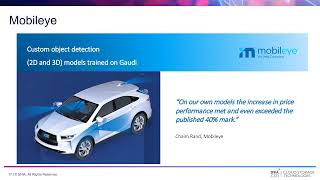
Training Deep Learning Models in the Cloud - Infrastructure Considerations and Best Practices
Explore deep learning infrastructure considerations for cloud and on-premises deployments, covering scalability, performance optimization, and operational challenges in AI model training.
Introduction to DsPy Framework and Building Blocks - Part 1
Discover the fundamentals of DsPy framework for optimizing LLM pipelines, exploring its core components and how it differs from LangChain and LlamaIndex in this introductory guide.
DSPy: Building Self-Improving Language Model Pipelines - Beyond LangChain Templates
Explore DSPy's innovative approach to building self-improving LLM pipelines, featuring automatic prompt engineering and graph-based optimization - moving beyond traditional prompt templates.
LLM as Next-Generation Operating System - Memory Augmented Systems and Continuous Chat
Explore how memory-augmented LLMs can revolutionize operating systems, focusing on multi-AI integration and continuous chat capabilities for next-generation computing architectures.
Introduction to KERAS 3 Core for PyTorch and JAX
Explore KERAS 3's framework-agnostic capabilities for building neural networks and transformers across TensorFlow, PyTorch, and JAX platforms with advanced customization options.

Quantization in Deep Learning: Types, Algorithms, and Implementation
Explore quantization techniques in deep learning, from uniform to non-uniform approaches, and learn practical implementation strategies for optimizing large-scale neural networks.
Coding Multi-Agent Reinforcement Learning with PyTorch and JAX - Including ReDel and AgentScope Frameworks
Dive into practical multi-agent reinforcement learning implementation using PyTorch and JAX, featuring new frameworks ReDel and AgentScope for advanced distributed systems and LLM-powered simulations.
Fine-tune T5 Language Model for Text Summarization on Google Colab
Master fine-tuning techniques for T5 language models using HuggingFace's latest code, focusing on text summarization tasks with hands-on implementation in Google Colab's free GPU environment.
Fine-tuning FLAN-T5 Models for Text Summarization with PyTorch
Master Flan-T5 model fine-tuning for text summarization through hands-on PyTorch implementation, complete with practical code examples and real-time demonstrations.
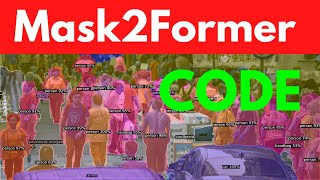
Code Panoptic Image Segmentation with Vision Transformer and Mask2Former - A PyTorch Tutorial
Dive into advanced image segmentation using Mask2Former architecture, exploring masked attention and universal segmentation techniques for enhanced computer vision applications.

Panoptic Image Segmentation - Understanding Mask2Former
Dive into Mask2Former's universal approach to image segmentation, covering instance, semantic, and panoptic segmentation techniques with practical examples and implementations.
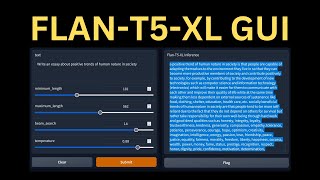
Building a FLAN-T5 XL Model GUI with Gradio in Google Colab - A Step-by-Step Tutorial
Learn to build a Gradio GUI for FLAN-T5-XL model on Google Colab, enabling free text generation, summarization, and translation capabilities with minimal computational resources and step-by-step implementation.