
YOLOv3 From Scratch
Comprehensive tutorial on implementing YOLOv3 object detection algorithm from scratch using PyTorch, covering architecture, dataset loading, loss function, and training setup.
Reinforcement Learning with TorchRL and TensoDict - NeurIPS Hacker Cup AI
Explore TorchRL and TensoDict for advanced reinforcement learning in PyTorch, covering RLHF, data handling, and practical applications for streamlined RL workflows.
NeuroMANCER - Differentiable Programming Library for Data-driven Modeling and Control
Explore NeuroMANCER: an open-source library for integrating machine learning with scientific computing, focusing on parametric optimization, system identification, and optimal control.
Multi-GPU Fine-tuning with DDP and FSDP
Master multi-GPU fine-tuning techniques using DDP and FSDP. Explore VRAM optimization, distributed training strategies, and practical implementation with code examples and demos.
MRI Brain Scan Classification Using FastSurfer, XGBoost and 3D CNNs
Master medical image classification techniques using FastSurfer pipeline, XGBoost, and 3D CNNs for MRI brain scan analysis. Learn preprocessing steps and implement neural networks in PyTorch for advanced medical data analysis.

Informer: Complete Code from Scratch - Time Series Transformer Analysis
Line-by-line exploration of the time series transformer, focusing on implementation details and code structure for deep learning enthusiasts and practitioners.
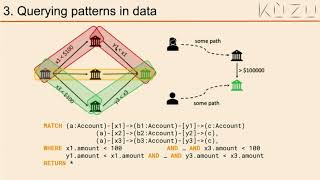
Kùzu - A Fast, Scalable Graph Database for Analytical Workloads
Discover how to build and analyze knowledge graphs using Kùzu, an open-source graph database. Learn practical implementations, from data transformation to running Cypher queries and training graph neural networks for advanced RAG systems.
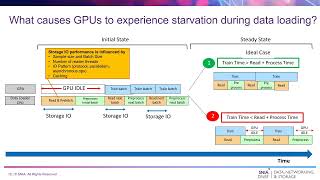
The Critical Role of Storage in Optimizing AI Training Workloads
Explore how storage systems and AI frameworks interact during model training, focusing on data loading mechanisms, checkpointing, and storage solutions for optimizing AI workloads.
Tensor Query Processing - Accelerating Database Analytics with AI Hardware
Discover how Microsoft's framework compiles SQL to tensor abstractions, enabling efficient database analytics on GPUs and exploring the fusion of SQL with machine learning capabilities.
Advanced Python Libraries for Data Science
Explore advanced Python libraries for data science, focusing on scikit-learn, TensorFlow, and PyTorch Geometric. Learn implementation, methodologies, and practical applications through code exercises.
10X Faster Machine Learning: From R&D to Production
Supercharge ML experimentation with PyTorch Lightning and DVC, and streamline production using Kubeflow. Learn to overcome challenges in complex ML model development and deployment.
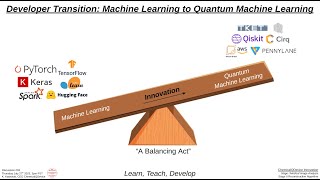
Developer Transition: Machine Learning to Quantum Machine Learning
Explore quantum machine learning frameworks, tools, and resources to transition from classical ML. Gain insights into QML algorithms, simulators, and future developments in the field.
Python PyTorch Quantum ML Ports and Models for Potential Medical Use
Explore quantum machine learning models using Python and PyTorch for medical applications. Learn to build and implement ports tailored for healthcare advancements.
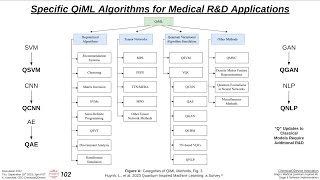
Specific QiML Algorithms for Medical R&D Applications
Explore quantum-inspired machine learning algorithms for medical R&D, focusing on practical solutions and their integration with classical workflows using PyTorch.
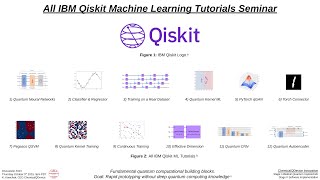
IBM Qiskit Machine Learning Tutorials
Explore IBM Qiskit Machine Learning tutorials for quantum-inspired models using Python. Learn rapid prototyping techniques, practical R&D workflows, and quantum simulators for state-of-the-art machine learning applications.
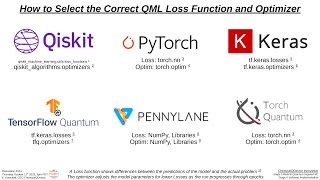
How to Select the Correct QML Loss Function and Optimizer
Explore loss functions and optimizers for quantum machine learning libraries. Learn to choose optimal parameters for accurate predictions and efficient model convergence in QML applications.
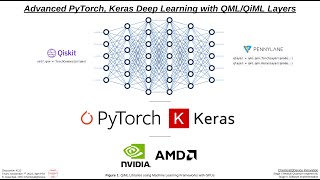
Advanced PyTorch and TensorFlow Deep Learning with QML and QiML Layers
Incorporate quantum algorithms into machine learning frameworks using PyTorch and Keras. Learn benchmarking, strategic layer insertion, and explore potential applications with quantum layers.
Torch.fx Explained - Accelerating ML Code with PyTorch
Explore PyTorch's torch.fx toolkit for accelerating ML code through symbolic tracing, program manipulation, and optimization of neural network modules.

The Centralization of Power in AI - MLOps Podcast Episode 181
Explore AI power centralization, language limitations, and open-source initiatives. Gain insights on AI transparency, accountability, and the evolving landscape of machine learning frameworks.
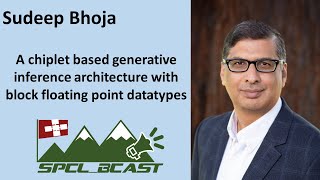
A Chiplet-Based Generative Inference Architecture with Block Floating Point Datatypes
Explore a chiplet-based architecture for generative inference, featuring block floating point datatypes and optimizations for large language models in AI accelerated computing.
PyTorch Tutorial for Deep Learning
Explore PyTorch for deep learning: implement neural networks, leverage GPU acceleration, and train convolutional models for digit recognition using efficient coding practices.