Handling Revision Prompts - Iterative Code Generation with LLMs
Explore interactive code generation with LLMs, focusing on refining prompts for PyTorch neural networks. Learn to guide AI for better results and adhere to coding standards.
Supercharging AI Training with Mosaic Streaming and Lance Columnar Format
Explore innovative data infrastructure for efficient AI model training, featuring Mosaic StreamingDataset and Lance columnar format for improved performance and cost-effectiveness in large-scale datasets.
Build and Deploy Production Ready PyTorch Models
Explore Azure Machine Learning for PyTorch model lifecycle management, from data handling to deployment on Kubernetes, emphasizing scalability and production readiness.

Neuromancer: Differentiable Programming Library for Data-driven Modeling and Control
Explore NeuroMANCER, an open-source library for integrating machine learning with scientific computing, solving optimization problems, and creating differentiable models with physics-based constraints.
Accelerate PyTorch Workloads with PyTorch/XLA
Optimize PyTorch performance on Google Cloud AI Accelerators using XLA compiler. Learn about high-speed training and inference for LLaMA 2 and LLM fine-tuning with PyTorch Lightning.

Deep Dive: Array API Tests in Ivy - Tutorial 14
Explore the Array API test suite integration in Ivy's testing pipeline, covering standard implementation, test execution, and skipping methods.
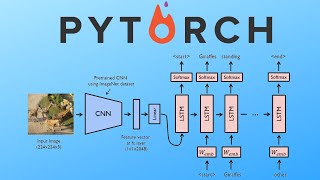
Pytorch Image Captioning Tutorial
Learn to build an image captioning system from scratch using PyTorch, covering CNN and RNN implementation, training setup, and evaluation on the Flickr8k dataset.
Complete Pytorch Tensor Tutorial - Initializing Tensors, Math, Indexing, Reshaping
Comprehensive tutorial on PyTorch tensors covering initialization, math operations, indexing, and reshaping. Essential foundation for deep learning with practical examples and useful operations.
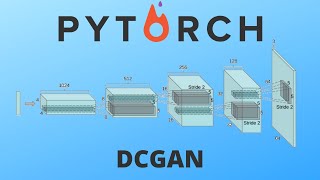
Pytorch DCGAN Tutorial
Implement a DCGAN in PyTorch to generate new MNIST digits. Learn GAN fundamentals, architecture, and training techniques through hands-on coding and visualization.

How to Install Detectron2 for Computer Vision with OpenCV Python - Part 2
Step-by-step guide to installing Detectron2 for computer vision projects using OpenCV and Python, covering essential requirements, software setup, and testing procedures.

New Approaches to Image and Video Reconstruction Using Deep Learning
Explore cutting-edge deep learning techniques for image and video enhancement, including colorization and resolution improvement, using efficient PyTorch-based tools trainable on a single GPU.

Introducing PyTorch 1.0 - A Research-Focused, Production-Ready Deep Learning Framework
Explore PyTorch 1.0, a powerful deep learning framework that bridges research and production, accelerating AI development with innovative features and tools.
A Friendly Introduction to Deep Learning for Computer Vision
Explore deep learning for computer vision, from basic concepts to advanced neural networks, with easy-to-understand examples and PyTorch demonstrations.
Tracing the Path to Self-adapting AI Agents
Discover how Trace, a groundbreaking AutoDiff-like framework, enables end-to-end training of AI workflows using general feedback, revolutionizing how AI agents learn and adapt through Python-based implementation.
Deploying GenAI on Edge Devices with ExecuTorch - Technical Overview
Discover how to deploy machine learning models on edge devices using ExecuTorch, featuring insights on memory optimization, hardware compatibility, and efficient model conversion techniques.

Extending PyTorch for Custom Compiler Targets - Accelerator Hardware Integration
Discover how to annotate PyTorch code with custom metadata for optimizing model inference on specialized hardware accelerators, focusing on LPU deployment and performance enhancement.
Helping the PyTorch Community Improve the Security Posture of this Popular AI Framework
Discover how to enhance PyTorch's security through OpenSSF Best Practices, dependency management, and proactive measures for safer AI framework implementation and neural network development.
Exploring Distributed Caching for Faster GPU Training with NVMe, GDS, and RDMA
Discover how to optimize GPU training performance through distributed caching techniques, leveraging NVMe storage, GDS, and RDMA networks for enhanced data access and reduced GPU wait times.
Unlocking Local LLMs with Quantization
Discover how quantization optimizes LLMs for local deployment, from pre-training techniques to fine-tuning methods and inference optimization using cutting-edge approaches and community tools.
Grand Theft Actions - Abusing Self-Hosted GitHub Runners for Supply Chain Attacks
Dive into critical security vulnerabilities in GitHub Actions, exploring real-world attacks on self-hosted runners and learning how to prevent supply chain compromises in major open-source projects.

Incubated ML Exploits: Backdooring Machine Learning Pipelines with Input Handling Bugs
Explore machine learning pipeline vulnerabilities and learn to identify, exploit, and defend against model backdoors through input handling bugs and systematic security approaches.