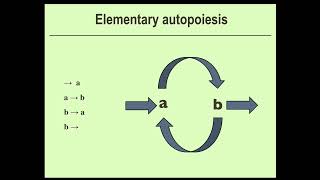
The Origins of Agency, Cognition, and Consciousness
Explore the fundamental concepts of agency, cognition, and consciousness through expert insights from leading researchers in cognitive science and philosophy of mind.
A Deep Computational Phenomenology of MPE as Metacognitive Free Energy Optimization
Explore the computational modeling of minimal phenomenal experience through Bayesian mechanics and free energy principles, examining belief dynamics and metacognitive processes.

Computational Phenomenology, Mathematical Phenomenology and Pre-Reflective Self-Awareness
Explore the intersection of computational and mathematical phenomenology, examining methodological foundations and their application to pre-reflective self-awareness in consciousness studies.
The First Experience: Searching for the Emergence of Consciousness in Infants and Fetuses
Explore the scientific evidence and ethical implications of consciousness emergence in infants and fetuses, examining neural markers, developmental milestones, and research findings.

Subjectivity vs Phenomenal Character - Understanding Consciousness Theory
Explore the fundamental distinction between subjectivity and phenomenal character in consciousness, examining their roles in contemporary debates and theoretical frameworks.
Identifying and Securing Psychologically Vulnerable Users
Explore psychological traits that make users vulnerable to security threats and learn data-driven strategies to enhance organizational security and red team effectiveness.
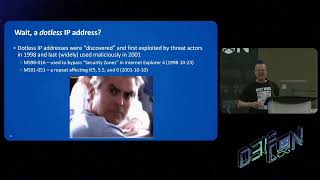
Social Engineering and Real-Time Malware Attack Strategies - War Stories
Explore real-world social engineering tactics in targeted malware attacks, where attackers use direct communication and psychological manipulation to achieve successful system compromises.
Cognitive Agents for Primary School Education - A Visual Approach
Discover how interactive cognitive agents, designed by primary school students through drawings, enhance learning outcomes and introduce AI concepts while providing personalized tutoring support.

New Challenges in Education Development in the Era of SDGs
Explore the evolving landscape of educational development through JICA's perspective on SDGs, focusing on new challenges and innovative approaches for sustainable human development in Asia.

Optimizing Time and Resources in Engineering Team Hiring
Optimize engineering team hiring processes: streamline talent acquisition, improve communication, and build high-performing teams efficiently without compromising other managerial responsibilities.

What Exactly Is Your Machine Learning? Exploring Ethical Implications and Challenges
Explore the depths of machine learning, discussing data, biases, technology, and human behaviors. Challenge ethical questions in predicting accurate outcomes.

Abstraction and Analogy in Natural and Artificial Intelligence
Explore the role of analogy-making in conceptual abstraction and understanding, and its importance for developing AI systems with humanlike intelligence.

Understanding Human Functioning and Enhancing Human Potential through Computational Methods
Explore computational methods for analyzing human functioning, enhancing potential, and improving efficiency through multimodal approaches in diverse contexts.

Developers' Kryptonite: Factors Affecting Effectiveness and Satisfaction in Software Projects
Explore factors impacting developer effectiveness and satisfaction, covering architectural and psychological aspects in software development.
Human Wakefulness: The Deepest Motivation for Open Source
Explore the psychological motivations behind open source development, uncovering the self-interest beneath altruism and examining enterprise perspectives on practical benefits and contributions.

How to Come Together in a Meaningful Way
Discover strategies for intentional and creative gatherings. Learn to foster connection, avoid common hosting mistakes, and design impactful get-togethers that bring lasting change to relationships and communities.

Emotions - Part 3: Emotional Labour, Emotional Contagion, Assertiveness, and Stress
Explore emotional labor, contagion, assertiveness, and stress management techniques to enhance interpersonal skills and well-being.
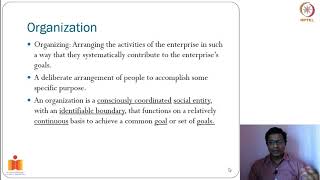
Introduction to Organizational Behaviour - Part 1
Explore fundamental concepts of organizational behavior, including individual and group dynamics in workplace settings.

Language Games - NDC Oslo 2024
Explore rigorous frameworks for effective communication in software engineering, addressing challenges with both humans and computers, and learn strategies to improve project outcomes.

Mastering Controllable AI - Ensuring Safe Autonomy
Explore innovative norm-based control mechanisms for autonomous systems, focusing on social laws, norms, and sanctions to ensure safe AI behavior and desirable outcomes.

Cooperative Data-driven Modeling: Addressing Catastrophic Forgetting in Neural Networks
Explore cooperative data-driven modeling techniques to address catastrophic forgetting in deep neural networks for class-incremental learning scenarios.