
Create AI Images with Your Face Using Photomaker - Free and Easy Tutorial
Explore Photomaker to generate AI images featuring your face. Learn installation, Python libraries, and text-prompt techniques for creating personalized, stunning photos effortlessly.

Pose Estimation with ml5.js - Body Tracking and Skeleton Visualization
Explore pose estimation using ml5.js, learning to track body keypoints and visualize skeleton connections with MoveNet and BlazePose models through hands-on coding examples and creative applications.

Next.js Full Stack Project with Next.js 15 and React 19
Master full-stack development with Next.js 15, React 19, TypeScript, Tailwind CSS, ShadCN/ui, Sentry, Kinde Auth, Neon Postgres, and Drizzle ORM. Build a comprehensive project covering key concepts and technologies.

Gradients for Everyone: A Quick Guide to Autodiff in Julia
Explore automatic differentiation in Julia, comparing approaches with Python frameworks and learning to make code differentiable for various backends. Gain insights into forward and reverse modes, custom rules, and performance optimization.
Docs, CI Tests, Error Messages, and Interfaces in Julia's SciML - JuliaCon 2024
Explore SciML's infrastructure practices in Julia, covering documentation, testing, error handling, and benchmarking. Gain insights into scalable and reproducible numerical ecosystems for Julia developers.
Enabling Spectral Indices Computation with SpectralIndices.jl
Explore SpectralIndices.jl, a Julia package simplifying spectral indices computation in remote sensing. Learn its features, data compatibility, and user-friendly interface for efficient Earth system research analysis.
Natural Science, Computer Modeling and Literate Programming
Explore literate programming techniques for enhancing reproducibility in scientific research, focusing on Entangled's approach to synchronizing code and documentation in natural science modeling.
RayTraceHeatTransfer.jl: 2D Enclosure Radiative Heat Transfer - JuliaCon 2024
Explore radiative heat transfer in 2D enclosures using RayTraceHeatTransfer.jl. Master Monte Carlo ray tracing, Exchange Factor matrices, and the Zonal Method for efficient problem-solving in high-temperature environments and engineering applications.
This is C++ - Uncompromised Performance, Undefined Behavior, and Move Semantics
Dive into C++'s superpower for uncompromised performance. Explore undefined behavior and move semantics to write better code and understand C++'s evolution, including current controversial issues.
Modern CI/CD Machine Learning Workflows Using Julia
Explore streamlined machine learning workflows in Julia, integrating package development principles and MLflow for robust, reproducible, and scalable model creation and management.
Attractors.jl - Next-Gen Multi-Stability Analysis for Dynamical Systems
Explore next-gen stability analysis in dynamical systems with Attractors.jl. Discover multistability detection, global stability quantification, and extendable interfaces for advanced applications in Julia.
Finite Element Modeling of Magnetic Fields in Julia
Explore finite element modeling of magnetic fields using Julia in this TU Delft master course. Implement mathematical models and collaborate on real-world projects with industry partners.
GreenSpeed: Sustainable Chemical Synthesis Right from the Start
Explore GreenSpeed, an innovative Julia-based application for calculating sustainability KPIs in chemical synthesis. Learn how it integrates lab data, visualizes material flow, and empowers informed decision-making for greener production practices.

Fine-Tuning BERT for Text Classification - Python Code Tutorial
Dive into fine-tuning BERT for text classification, focusing on phishing URL detection. Learn key concepts and implement Python code to enhance your natural language processing skills.
How to Make Your First Open-Source Contribution - Featuring Gradio
Dive into open-source contribution with a step-by-step guide on fixing a real bug in Gradio and submitting your first pull request.

Klaviyo's Journey to Robust Model Serving with Ray Serve
Explore Klaviyo's journey in building DART, a model serving platform using Ray Serve. Gain insights into architecture, deployment strategies, and practical advice for implementing Ray Serve in your own projects.
Java's Cyclic Object Graphs Challenges
Explore Java's complex relationship with cyclic object graphs, their challenges, and effective techniques to represent cycles while avoiding common pitfalls in Java programming.
Project Leyden: Improving Java Startup Time and Performance - Inside Java Newscast
Explore Project Leyden's goals, early access builds, and performance improvements for Java applications. Learn how to evaluate and provide feedback on this OpenJDK initiative.

Beyond Copilot - Leveraging the Latest AI Tools to Build Better Software
Explore cutting-edge AI tools beyond GitHub Copilot to enhance your software development workflow, from code optimization to automated documentation and bug detection.
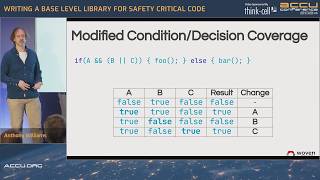
Writing a Base Level Library for Safety Critical Code in C++ - Lecture
Dive into safety-critical C++ development for modern cars. Explore tools, testing methodologies, coding standards, error handling, and design impacts for creating reliable software where lives are at stake.

Unlock the Power of Parallel Computing With SWAR (SIMD Within A Register)
Unlock parallel computing power with SWAR technique. Explore SIMD-like operations using conventional CPU registers, boosting performance for hash tables, string functions, and more. Dive into benchmarks and real-world applications.