Building Confidently in Julia with Interface Driven Design
Explore interface-driven design in Julia to build robust, composable systems. Learn to leverage tools, implement functional code styles, and create uniform testing structures for improved productivity and reliability.
Forecasting Mental Wellness of Students Using Julia
Explore forecasting techniques for student mental wellness using Julia. Learn to analyze academic, social, and environmental factors impacting mental health through data-driven approaches and predictive modeling.
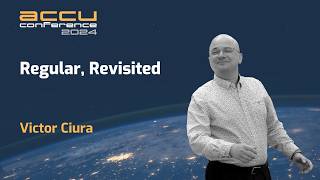
Regular Types: From Stepanov to C++ Concepts
Explore the evolution of regular types from Stepanov's principles to C++ concepts. Learn their importance in STL design and everyday programming for intuitive, well-constrained code.

20 Fan-Favorite Extensions for Visual Studio Code
Discover 20 popular VS Code extensions to enhance productivity, streamline workflows, and supercharge coding. Explore tools for debugging, collaboration, formatting, and automation.
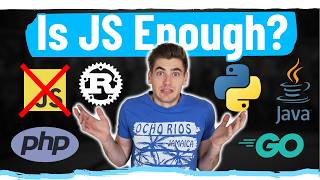
Do You Need to Learn a Second Programming Language?
Explore the benefits, timing, and strategies for learning a second programming language to enhance your development skills and career prospects.
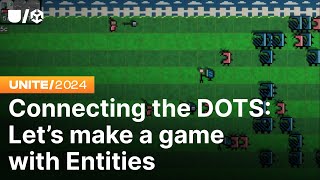
Connecting the DOTS: Making a Game with Unity's Entity Component System
Explore Unity's Entity Component System (ECS) API, from fundamentals to Entities 1.3, and gain confidence to develop ECS-based games.

Ditching Try/Catch - 3 Alternatives for Better Error Handling in JavaScript and TypeScript
Explore 3 alternatives to try/catch in JavaScript, addressing TypeScript compatibility, block scoping issues, and selective error handling for improved code efficiency.
Interpretability Agents: Automating and Scaling Model Interpretation
Explore automated interpretability agents for scaling model interpretation, enabling efficient analysis of AI systems through hypothesis-driven experimentation and modular design.

PyCharm IDE Setup for Python Development - Part 4
Configure PyCharm IDE with Anaconda, set up GitHub repos, and optimize your Python development environment for efficient coding.
Full Golang Tutorial - Learn Go by Building a TodoList App
Learn Go programming by building a TodoList app. Master core concepts, syntax, and web server creation for practical application development.
AI Agents and Tools in Action - Demos and Tutorials
Explore cutting-edge AI demos and tutorials on agent collaboration, RAG systems, game development, and voice transcription. Master advanced techniques in Python, OpenAI API, and Claude AI.
Parallelizing Your ETL with Dask on Kubeflow
Leverage Dask's parallelism capabilities on Kubeflow for advanced ETL processing. Learn to use the Dask Operator to optimize resource utilization in interactive Jupyter sessions and pipeline workflows.
Feature Engineering Made Simple
Master feature engineering techniques to streamline your machine learning workflow. Explore systematic approaches using Anovos, an open-source library for efficient data processing and model building.
MLOps for Fairness - Creating Comprehensive Fairness Workflows
Explore MLOps techniques for identifying, measuring, and mitigating bias in ML systems at scale. Learn to create comprehensive fairness workflows using Python tools for industry-level challenges.
Automated Machine Learning Tuning with FLAML
Explore automated machine learning and tuning using FLAML, a fast Python library. Learn to automate ML tasks, perform general tuning, and conduct zero-shot AutoML efficiently.
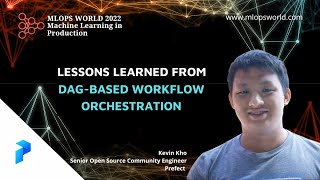
Lessons Learned from DAG-Based Workflow Orchestration
Explore DAG-based workflow orchestration challenges and learn about Prefect Orion's DAG-less system for enhanced runtime flexibility and developer experience in data pipelines.
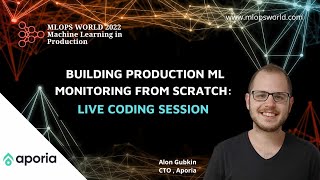
Building Production ML Monitoring from Scratch - Live Coding Session
Build a cloud-native ML monitoring stack using open-source tools. Create a live web dashboard to measure model drift, feature statistics, and performance metrics in production, with Python-based custom metrics integration.
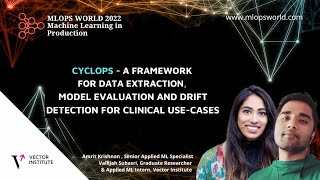
CyclOps: A Framework for Data Extraction, Model Evaluation and Drift Detection in Clinical Machine Learning
Explore CyclOps, a unified framework for healthcare ML, enabling data extraction, model evaluation, and drift detection in clinical settings. Streamline development of robust AI models.

Serialization - A New Hope: A Data-Oriented Approach
Explore a data-oriented approach to Java serialization, addressing modern requirements and leveraging recent language enhancements for safer, more flexible object externalization.
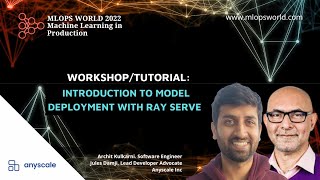
Introduction to Model Deployment with Ray Serve
Learn to deploy ML models using Ray Serve. Explore Ray Core APIs, create scalable architectures, and integrate with MLflow and FastAPI. Gain hands-on experience in distributed computing and model deployment.
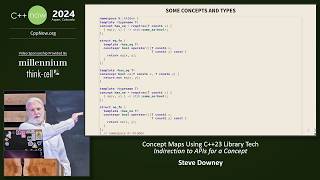
Concept Maps Using C++23 Library Tech - Indirection to APIs for a Concept - Lecture
Explore concept maps in C++23, using inline variable templates to achieve benefits similar to C++0x Concepts. Learn advanced techniques for implementing flexible data structures with monoid-based tags.