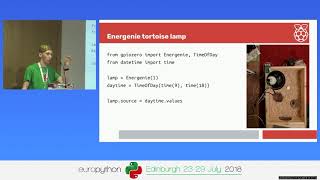
Programming Paradigms for Physical Computing and IoT
Explore multi-paradigm programming for GPIO devices on Raspberry Pi, from simple scripts to complex interactions, using Pythonic code for IoT and physical computing applications.
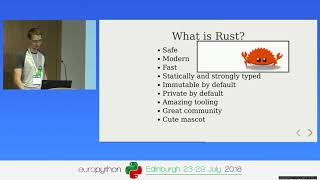
Rust and Python - Oxidize Your Snake
Explore integrating Rust with Python for faster, safer native modules. Learn about PyO3 library, compare it with alternatives, and see how to enhance Python's performance and concurrency.
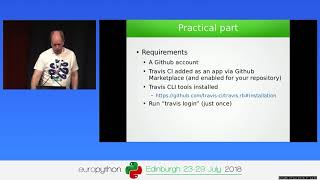
Automating Testing and Deployment with Github and Travis
Streamline open-source project maintenance by automating testing and deployment using Github and Travis. Learn to create an efficient release pipeline, reducing errors and simplifying the process.
How Async and Await Ended Up in Python
Explore the evolution of asynchronous programming in Python, from regular functions to async/await syntax. Learn about iterators, generators, and coroutines while discovering how to write efficient async code.
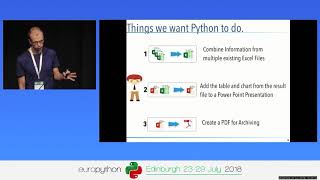
The Boring Python Office Talk - Automate Powerpoint, Excel, and PDF with Python
Discover Python's power to automate office tasks, from creating Excel reports and PowerPoint presentations to manipulating PDFs, enhancing productivity and reducing manual work.
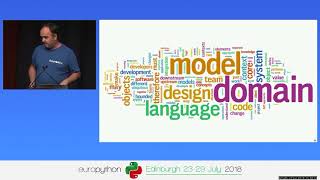
Domain Driven Design Patterns in Python
Explore Domain-Driven Design patterns in Python, learning to model complex domains and implement tactical patterns for robust, maintainable software in large-scale projects.
Python and GraphQL
Explore GraphQL implementation in Python using Flask and SQLAlchemy, covering basics, advanced techniques, and tools for efficient API development and documentation.
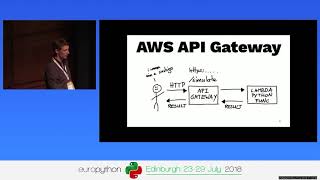
Winning Card Games with 1000+ CPUs
Explore how AWS Lambda and Python concurrency can optimize a genetic algorithm for winning the SushiGo card game, discussing implementation, challenges, and results.
Rehabilitating Pickle
Explore Pickle's security risks, potential defenses, and alternatives for safe Python object serialization in distributed systems.
Quart - A asyncio Alternative to Flask
Explore Quart, an asyncio-based alternative to Flask, offering enhanced features like HTTP/2 and websockets while maintaining Flask's API for efficient web development.
Air Quality & Python - Developing Online Analysis Tools
Explore Python-based online tools for analyzing air quality data, integrating libraries like Pandas and NumPy with Django and Plot.ly to create interactive visualizations and support research and education.
Citizen Science with Python
Explore data-driven humanitarian and healthcare projects using Python, with audience experiments and inspiration for running your own scientific experiments using the Python stack.
Walking the Random Forest and Boosting the Trees
Explore tree-based ensemble models like Random Forest and Gradient Boosting, understanding their theory and implementation in Python for effective data science applications.
Bytecodes and Stacks - A Look at CPython’s Compiler and Its Execution Model
Explore CPython's inner workings: from code compilation to execution. Learn about tokenization, parsing, bytecode, and the stack-based virtual machine, suitable for Python developers of all levels.
Sprint Orientation
Orientación para participar en sprints de desarrollo colaborativo en Python, explorando oportunidades de contribución y mejora de proyectos de código abierto.

Get Productive with Python in Visual Studio Code
Maximize Python productivity with Visual Studio Code: from basic setup to advanced features like debugging, testing, and collaborative coding. Learn tips and tricks for efficient development.
From Linear Algebra to Machine Learning
Explore the mathematical foundations of machine learning, from linear algebra to optimization, with practical Python implementations using NumPy, SciPy, and TensorFlow.
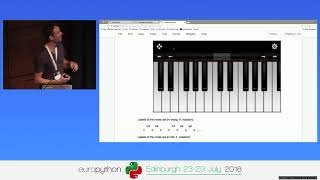
Change Music in Two Epochs
Explore deep learning applications in music: instrument detection, isolation, and generation. Learn to build synthesizers, create datasets, and adapt models for increasing complexity.
Integration Tests with Super Powers
Aprenda estratégias eficazes para escrever testes de integração robustos usando Pytest, injeção de dependências e Docker Compose, melhorando a manutenibilidade e extensibilidade de suas aplicações.
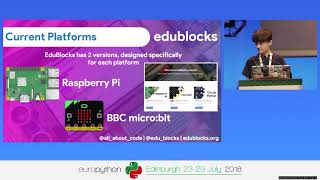
EduBlocks - Making the Transition to Python Easier
Discover EduBlocks, a drag-and-drop Python 3 tool created by 14-year-old Josh Lowe to bridge the gap between block-based programming and Python, making coding more accessible for students and teachers worldwide.
Python vs Rust for Simulation
Comparison of Python and Rust for simulation engines, exploring performance, simplicity, code efficiency, utilities, and compatibility. Insights for developers choosing between these languages.